07 December 2020

Hi everyone

We’re really missing you in school and we can’t wait to have you back. We hope you’re managing to stay happy, healthy and safe while you’re not with us here in school. You are still very much a part of our school community so please get in touch with us. My email is [email protected].

Maths

This week’s maths learning is linked to place value, comparing and ordering numbers.

You don’t have to print the worksheets. Your child can write or draw their answers on paper. Your child’s learning will be most effective if you sit with them to pause the clip and check / praise / support your child as the clip moves on.

Don’t forget to practise number bonds on Numbots or times tables on Times Table Rock Stars. Email your child’s class teacher if you need your login and password details.

(Suggested time: 30 minutes of Maths and 15 minutes of Numbots/Rock Stars daily)

Reading fluency

This is the reading fluency that we’ll read in class this week. In school, we generally follow this sequence:

  • Day 1: Read the text aloud with your child listening. Read it clearly and slowly, pointing to each word as you read. Have a chat about any unfamiliar words.
  • Day 2: Read aloud each sentence (a full short sentence or part of a longer sentence), and have your child read it back to you. Do this ‘echo reading’ for the whole text.
  • Day 3: Read the text and talk about the effect of the punctuation on how you read it – pauses for full stops and expression for exclamations (!) or questions (?). Your child reads the text aloud.
  • Day 4: Read together with expression (just like you practised on Day 3).
  • Day 5: Your child reads independently and fluently.

(Suggested time: 15 minutes daily)

Phonics

We teach a phonics lesson daily at school. Your child should have a ‘Practise Phonics’ book that they bring home from school. The sticker on the front will indicate which phase they’re working at. On Phonics Play, the activities and games match the phases. If you’re unsure which phase your child is working on, email your class teacher.

If your child has completed the phonics reading books, they can use some Phase 5b, 5c, 5d or Phase 6 resources.

Use a different Phonics Play activity for :

Login details are Sphere (user name) and Spher3 (password).

(Suggested time: 20 minutes daily)

Reading

We’ll be using this ‘RIC’ text  in class to practise comprehension skills.

RIC stands for:

  • Retrieve: finding information in a text
  • Interpret: using clues in the text or pictures to unlock information
  • Choice: thinking about the author’s choice of words, techniques or organisation that make the text interesting and enjoyable to read

Read for 10-15 minutes daily. You could read the books you have brought home from school or any other books you have at home. Remember that the ‘Practise Phonics’ book is designed to be read more than once, to help with segmenting (sounding out), blending (putting the sounds back together) and fluency.

(Suggested time: 10-15 minutes daily)

Writing

Follow these 10 lessons on diary writing from Oak National Academy. There’s a whole series of lessons, but start at Lesson 1 and work through, doing one (or maybe even two) each day. (If you’re self-isolating in your second week, stick with the series of lessons you’ve already started and aim to complete the full series.)

(Suggested time: 30-40 minutes for each)

Spelling

This week’s spellings are on our spelling page. Complete one task each day:

  • Day 1: Copy the words out in your best handwriting (like in our handwriting guide) – using a lead-in line or joined handwriting. (You could look out for the words in the book you’re reading at home, or any other text.)
  • Day 2: Practise the spellings using two of the ideas in our super spelling strategies guide. (Set yourself and others at home a challenge of using some of the words when you’re speaking, too!)
  • Day 3: Write separate sentences, each containing one of the spellings. (Don’t forget to show off really neat handwriting and make sure you sentence starts with a capital letter and ends with a full stop, exclamation mark (!) or question mark (?).
  • Day 4: Repeat Task 2 or 3.
  • Day 5: Get an adult at home to test you on your spellings. Practise any you spell incorrectly – you could write them out carefully until you’re sure.

(Suggested time: 15-20 minutes daily)

Topic

Our topic this half-term is about history – all about the Great Fire of London.

Follow these lessons about the Great Fire of London from Oak National Academy. There are ten lessons in total, but start at the first lesson and work through, doing two or three in the week.

(Suggested time: 30-40 minutes)

Science

Our focus this half-term is about the human body and keeping it healthy.

These six lessons from Oak National Academy link to what we’ve been doing in class. Start at Lesson 1 and work through, doing two or three in the week.

If Science really motivates your child, you could also use these lessons about famous scientists.

(Suggested time: 30-45 minutes)

PE

Don’t forget to do some daily exercise!

Do two of these Five Minute Moves from Joe Wicks each day – spread them across the day as if they were playtimes, maybe!

Have a go at one of the Change for Life indoor activities or a Cosmic Kids yoga session each day.

(Suggested time: 30 minutes daily)

Extra stuff…

As an extra (or as an alternative, if this helps to motivate your child)…

Geography isn’t a topic-driver this half-term, but you could brush up on your locational knowledge – something that was missed when schools closed earlier this year. You could explore some online maps, find your house or school and find London too. Here are some lessons about the UK and London that might help.

Living and Learning is important to help us get along with each other and learn. While you’re away from school, you could look at these lessons about friends. 

Our weekly message (04 December 2020)

I’m writing this week’s message after being on morning gate duty and it’s just started snowing – hopefully, my fingers will thaw out soon so I can press the right keys. If you do spot some typos, you’ll know why…

For some children and families, this time of year will be very difficult, especially for those who have experienced trauma or bereavement. Young Minds has created another Wellbeing Advent Calendar. It’s intended for use in schools, but it might help support you and your family throughout December. Each day, try a different 5 minute activity to help boost wellbeing and look after your child’s mental health. Today’s is a nice conversation starter: share something that has really cheered you up when you were feeling down.

Talking of conversation starters, this resource for parents and carers might help. Starting a conversation can be difficult, especially if you’re worried that your child is having a hard time. It doesn’t matter what topic the conversation starts with – it’s about the opportunity it gives you both to talk about feelings and to provide comfort.

Next, a message from Leeds City Council…

Sal Tariq, the Director of Children and Families, and Councillor Jonathan Pryor, Executive Member for Learning, Skills and Employment, have written a joint letter for parents and carers. (It came too late to include in last week’s message.) Read the full letter here, but these two paragraphs stand out as matching our own thoughts:

The overwhelming majority of parents have been extremely understanding of the challenges that schools have encountered and have co-operated fully with the school’s range of measures put in place to provide a covid-safe environment for the children, staff and parents.

We are grateful to parents, for example, for wearing face coverings when requested to by the school and for not sending their child to school when they, or a member of the family, have been requested to self-isolate.

Finally, today, just a quick repeat of a message we sent earlier in the week…

It’s common for children to catch colds and have coughs around this time. Normally, we’d still encourage children to come to school with a mild cough or cold, but not this year. If your child starts coughing, we really need you to keep your child at home and get a test for Covid. The results will quite likely be negative, meaning your child can quickly return to school. However, there’s always that slim chance your child might test positive. That would mean the whole class having to self-isolate for 14 days – that’s just not worth the risk. Please keep your child home if they’ve got any any hint of the three main symptoms of Covid.


Have a happy and healthy and warm weekend!

30 November 2020

We’re really missing you in school and we can’t wait to have you back. We hope you’re managing to stay happy, healthy and safe while you’re not with us here in school. You are still very much a part of our school community so please get in touch with us. You can email me at

[email protected].

This week’s maths learning is linked to addition and subtraction

These five video lessons will roughly match the teaching and learning happening in class:

Lesson 1: video, worksheets and answers

Lesson 2: video, worksheets  and answers

Lesson 3: video, worksheets  and answers 

Lesson 4: video, worksheets and answers 

Lesson 5: video

You don’t have to print the worksheet. Your child can write or draw their answers on paper. Your child’s learning will be most effective if you sit with them to pause the clip and check / praise / support your child as the clip moves on.

Spelling

  • Day 1: Write the words and draw shapes round them to show the ascenders and descenders. (Set yourself and others at home a challenge of using some of the words when you’re speaking, too!)
  • Day 2: Write the words using rainbow writing. (Try some of the other activities in our Super Spelling Strategies guide.)
  • Day 3: Write separate sentences, each containing one of the spellings. (Don’t forget to show off really neat handwriting and make sure you sentence starts with a capital letter and ends with a full stop, exclamation mark (!) or question mark (?).
  • Day 4: Repeat Task 2 or 3.
  • Day 5: Get an adult at home to test you on your spellings. Practise any you spell incorrectly – you could write them out carefully until you’re sure.

(Suggested time: 15-20 minutes daily)

Reading fluency

This is the text we’ll read in class to to build up fluency skills this week.

In school, we generally follow this sequence:

  • Day 1: Read the text aloud with your child listening. Read it clearly and slowly, pointing to each word as you read. Have a chat about any unfamiliar words.
  • Day 2: Read aloud each sentence (a full short sentence or part of a longer sentence), and have your child read it back to you. Do this ‘echo reading’ for the whole text.
  • Day 3: Read the text and talk about the effect of the punctuation on how you read it – pauses for full stops and expression for exclamations (!) or questions (?). Your child reads the text aloud.
  • Day 4: Read together with expression (just like you practised on Day 3).
  • Day 5: Your child reads independently and fluently.

(Suggested time: 15 minutes daily)

Reading comprehension

Day 1: We will be using this RIC lesson in class. RIC stands for:

  • Retrieve: finding information in a text
  • Interpret: using clues in the text to unlock information
  • Choice: thinking about the author’s choice of words, techniques or organisation that make the text interesting and enjoyable to read

Day 2:  Watch this video and learn about the ‘ew‘ digraph.

Day 3: Watch this video and learn about the ‘aw‘ digraph.

Day 4: Watch this video and learn about the ‘ow‘ digraph

The three videos above were made by one of our teacher friends from another school in the federation.

Day 5: Book Club. Once a week, we have a relaxing lesson where we sit and read quietly, often with an adult. At home, we’d like you to read your favourite book or text, too. If possible, discuss the book with an adult, talking about some or all of the sections of this grid.

(Suggested time: 30 minutes daily)

Writing

Activity  1

In school, we will be finding out about verbs and how to identify them in a sentence. Watch this video and have a go at this sheet.

Activity  2

Year 2 children: Write three sentences about a picture or photograph you choose. Your child should remember capital letters, finger spaces, joining up letters if they can (use our handwriting guide to help), and a full stop, exclamation mark (!) or question mark (?) to end the sentence.

(Suggested time: 30 minutes daily)

Topic

We’re continuing our new topic learning about The Great Fire of London.

This week, we’re looking at how we know about the Great Fire of London. This Oak National Academy lesson will really help to support learning at home. Once your child has watched the video, try the quiz that follows.


(Suggested time: 30-45 minutes)

Science   

This half term, we’re learning about animals including humans. This Oak National Academy lesson will really help to support learning at home. Once your child has watched the video, try the quiz that follows.

(Suggested time: 30-45 minutes)

30 November 2020

We’re really missing you in school and we can’t wait to have you back. We hope you’re managing to stay happy, healthy and safe while you’re not with us here in school. You are still very much a part of our school community so please get in touch with us. You can email me at

[email protected].

This week’s maths learning is linked to addition and subtraction

These five video lessons will roughly match the teaching and learning happening in class:

Lesson 1: video, worksheets and answers

Lesson 2: video, worksheets  and answers

Lesson 3: video, worksheets  and answers 

Lesson 4: video, worksheets and answers

Lesson 5: Numbots

You don’t have to print the worksheet. Your child can write or draw their answers on paper. Your child’s learning will be most effective if you sit with them to pause the clip and check / praise / support your child as the clip moves on.

Spelling

  • Day 1: Write the words and draw shapes round them to show the ascenders and descenders. (Set yourself and others at home a challenge of using some of the words when you’re speaking, too!)
  • Day 2: Write the words using rainbow writing. (Try some of the other activities in our Super Spelling Strategies guide.)
  • Day 3: Write separate sentences, each containing one of the spellings. (Don’t forget to show off really neat handwriting and make sure you sentence starts with a capital letter and ends with a full stop, exclamation mark (!) or question mark (?).
  • Day 4: Repeat Task 2 or 3.
  • Day 5: Get an adult at home to test you on your spellings. Practise any you spell incorrectly – you could write them out carefully until you’re sure.

(Suggested time: 15-20 minutes daily)

Reading fluency

This is the text we’ll read in class to to build up fluency skills this week.

In school, we generally follow this sequence:

  • Day 1: Read the text aloud with your child listening. Read it clearly and slowly, pointing to each word as you read. Have a chat about any unfamiliar words.
  • Day 2: Read aloud each sentence (a full short sentence or part of a longer sentence), and have your child read it back to you. Do this ‘echo reading’ for the whole text.
  • Day 3: Read the text and talk about the effect of the punctuation on how you read it – pauses for full stops and expression for exclamations (!) or questions (?). Your child reads the text aloud.
  • Day 4: Read together with expression (just like you practised on Day 3).
  • Day 5: Your child reads independently and fluently.

(Suggested time: 15 minutes daily)

Reading comprehension

Day 1: We will be using this RIC lesson in class. RIC stands for:

  • Retrieve: finding information in a text
  • Interpret: using clues in the text to unlock information
  • Choice: thinking about the author’s choice of words, techniques or organisation that make the text interesting and enjoyable to read

Day 2:  Watch this video and learn about the ‘ure‘ digraph.

Day 3: Watch this video and learn about the ‘ear‘ digraph.

Day 4: Watch this video and learn about the ‘air‘ digraph

The three videos above were made by one of our teacher friends from another school in the federation.

Day 5: Book Club. Once a week, we have a relaxing lesson where we sit and read quietly, often with an adult. At home, we’d like you to read your favourite book or text, too. If possible, discuss the book with an adult, talking about some or all of the sections of this grid.

(Suggested time: 30 minutes daily)

Writing

Activity  1

Finger strengthening activities support the development of fine motor skills needed for writing.

Challenge your child to have a go at 3 or more of these activities: practise tying shoe laces, fasten and unfasten buttons, attach nuts and bolts, separate dried pasta and dried peas (or similar) into two separate piles, do some mindfulness colouring in, do a jigsaw, cut up drinking straws and thread them on to a shoe lace, attach clothes pegs (the squeezable type) to a shoe box or similar, use a paint brush and water to make pictures or words on a wall, chalk words or pictures on the ground, make a Lego model.

Activity  2Year 1 children: Talk to your child about a picture or photograph you choose. Write three words or phrases to label different things in the picture (eg ‘a car’ or ‘a red car’). Your child should aim to spell in a sensible way and use finger spaces between the words, joining up letters if they can (use our handwriting guide to help).

(Suggested time: 30 minutes daily)

Topic

We’re continuing our new topic learning about The Great Fire of London.

This week, we’re looking at how we know about the Great Fire of London. This Oak National Academy lesson will really help to support learning at home. Once your child has watched the video, try the quiz that follows.

(Suggested time: 30-45 minutes)

Science   

This half term, we’re learning about animals including humans. This Oak National Academy lesson will really help to support learning at home. Once your child has watched the video, try the quiz that follows.

(Suggested time: 30-45 minutes)

27 November 2020

This week, the whole school has the same Practice Makes Perfect homework which children should be ready to discuss as part of our homework review on Thursday 03 December. It is all about our history topic. The vocabulary is linked to the Great Fire of London. Find the words in the wordsearch. Challenge : write each word in a sentence.

  • old 
  • modern   
  • artefact         
  •  firebreak
  • diary
  • rebuild    

Living and Learning: Strong emotions

In our last L&L, we were learning about emotions.

First, we named lots of emotions we might feel.

Then, we focused on exploring and describing what makes us feel unhappy.

The Children then were given the opportunity to explain when they might feel unhappy, and also to practice asking, and listening to, others about what makes them unhappy.

After that, we discussed things we can do when we are feeling unhappy.

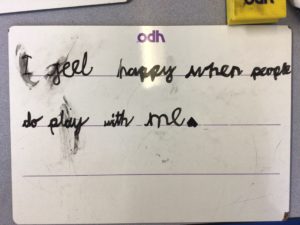
Finally, we discussed things that make us happy.