16 November 2020

We’re really missing you in school and we can’t wait to have you back. We hope you’re managing to stay happy, healthy and safe while you’re not with us here in school. You are still very much a part of our school community so please get in touch with us. You can email me at

[email protected].

This week’s maths learning is linked to addition and subtraction

These five video lessons will roughly match the teaching and learning happening in class:

Lesson 1: video, worksheets and answers

Lesson 2: video, worksheets  and answers

Lesson 3: video, worksheets  and answers 

Lesson 4: video, worksheets and answers

Lesson 5: video, worksheets  and answers

You don’t have to print the worksheet. Your child can write or draw their answers on paper. Your child’s learning will be most effective if you sit with them to pause the clip and check / praise / support your child as the clip moves on.

Spelling

  • Day 1: Write the words and draw shapes round them to show the ascenders and descenders. (Set yourself and others at home a challenge of using some of the words when you’re speaking, too!)
  • Day 2: Write the words using rainbow writing. (Try some of the other activities in our Super Spelling Strategies guide.)
  • Day 3: Write separate sentences, each containing one of the spellings. (Don’t forget to show off really neat handwriting and make sure you sentence starts with a capital letter and ends with a full stop, exclamation mark (!) or question mark (?).
  • Day 4: Repeat Task 2 or 3.
  • Day 5: Get an adult at home to test you on your spellings. Practise any you spell incorrectly – you could write them out carefully until you’re sure.

(Suggested time: 15-20 minutes daily)

Reading fluency

This is the text we’ll read in class to to build up fluency skills this week.

In school, we generally follow this sequence:

  • Day 1: Read the text aloud with your child listening. Read it clearly and slowly, pointing to each word as you read. Have a chat about any unfamiliar words.
  • Day 2: Read aloud each sentence (a full short sentence or part of a longer sentence), and have your child read it back to you. Do this ‘echo reading’ for the whole text.
  • Day 3: Read the text and talk about the effect of the punctuation on how you read it – pauses for full stops and expression for exclamations (!) or questions (?). Your child reads the text aloud.
  • Day 4: Read together with expression (just like you practised on Day 3).
  • Day 5: Your child reads independently and fluently.

(Suggested time: 15 minutes daily)

Reading comprehension

Day 1: We will be using this RIC lesson in class. RIC stands for:

  • Retrieve: finding information in a text
  • Interpret: using clues in the text to unlock information
  • Choice: thinking about the author’s choice of words, techniques or organisation that make the text interesting and enjoyable to read

Day 2:  Watch this video and learn about the ‘th‘ digraph.

Day 3: Watch this video and learn about the ‘oa‘ digraph.

Day 4: Watch this video and learn about the ‘ar‘ digraph

The three videos above were made by one of our teacher friends from another school in the federation.

Day 5: Book Club. Once a week, we have a relaxing lesson where we sit and read quietly, often with an adult. At home, we’d like you to read your favourite book or text, too. If possible, discuss the book with an adult, talking about some or all of the sections of this grid.

(Suggested time: 30 minutes daily)

Writing

Activity  1

Finger strengthening activities support the development of fine motor skills needed for writing.

Challenge your child to have a go at 3 or more of these activities: practise tying shoe laces, fasten and unfasten buttons, attach nuts and bolts, separate dried pasta and dried peas (or similar) into two separate piles, do some mindfulness colouring in, do a jigsaw, cut up drinking straws and thread them on to a shoe lace, attach clothes pegs (the squeezable type) to a shoe box or similar, use a paint brush and water to make pictures or words on a wall, chalk words or pictures on the ground, make a Lego model.

Activity  2

Talk to your child about a picture or photograph you choose. Write three words or phrases to label different things in the picture (eg ‘a car’ or ‘a red car’). Your child should aim to spell in a sensible way and use finger spaces between the words, joining up letters if they can (use our handwriting guide to help).

Topic

We’re continuing our new topic learning about The Great Fire of London.

This week, we’re looking at how the fire was put out. This Oak National Academy lesson will really help to support learning at home. Once your child has watched the video, try the quiz that follows.


(Suggested time: 30-45 minutes)

Science   

This half term, we’re learning about animals including humans. This Oak National Academy lesson will really help to support learning at home. Once your child has watched the video, try the quiz that follows.

(Suggested time: 30-45 minutes)


16 November 2020

We’re really missing you in school and we can’t wait to have you back. We hope you’re managing to stay happy, healthy and safe while you’re not with us here in school. You are still very much a part of our school community so please get in touch with us. You can email me at

[email protected].

This week’s maths learning is linked to addition and subtraction

These five video lessons will roughly match the teaching and learning happening in class:

Lesson 1: video, worksheets and answers

Lesson 2: video, worksheets and answers 

Lesson 3: video, worksheets  and answers 

Lesson 4: video

Lesson 5: video, worksheets  and answers

You don’t have to print the worksheet. Your child can write or draw their answers on paper. Your child’s learning will be most effective if you sit with them to pause the clip and check / praise / support your child as the clip moves on.

Spelling

  • Day 1: Write the words and draw shapes round them to show the ascenders and descenders. (Set yourself and others at home a challenge of using some of the words when you’re speaking, too!)
  • Day 2: Write the words using rainbow writing. (Try some of the other activities in our Super Spelling Strategies guide.)
  • Day 3: Write separate sentences, each containing one of the spellings. (Don’t forget to show off really neat handwriting and make sure you sentence starts with a capital letter and ends with a full stop, exclamation mark (!) or question mark (?).
  • Day 4: Repeat Task 2 or 3.
  • Day 5: Get an adult at home to test you on your spellings. Practise any you spell incorrectly – you could write them out carefully until you’re sure.

(Suggested time: 15-20 minutes daily)

Reading fluency

This is the text we’ll read in class to to build up fluency skills this week.

In school, we generally follow this sequence:

  • Day 1: Read the text aloud with your child listening. Read it clearly and slowly, pointing to each word as you read. Have a chat about any unfamiliar words.
  • Day 2: Read aloud each sentence (a full short sentence or part of a longer sentence), and have your child read it back to you. Do this ‘echo reading’ for the whole text.
  • Day 3: Read the text and talk about the effect of the punctuation on how you read it – pauses for full stops and expression for exclamations (!) or questions (?). Your child reads the text aloud.
  • Day 4: Read together with expression (just like you practised on Day 3).
  • Day 5: Your child reads independently and fluently.

(Suggested time: 15 minutes daily)

Reading comprehension

Day 1: We will be using this RIC lesson in class. RIC stands for:

  • Retrieve: finding information in a text
  • Interpret: using clues in the text to unlock information
  • Choice: thinking about the author’s choice of words, techniques or organisation that make the text interesting and enjoyable to read

Day 2:  Watch this video and learn about the ‘oy‘ digraph.

Day 3: Watch this video and revist the ‘ue‘ digraph.

Day 4: Read about The Great Fire of London and answer the question about it.

The two videos above were made by one of our teacher friends from another school in the federation.

Day 5: Book Club. Once a week, we have a relaxing lesson where we sit and read quietly, often with an adult. At home, we’d like you to read your favourite book or text, too. If possible, discuss the book with an adult, talking about some or all of the sections of this grid.

(Suggested time: 30 minutes daily)

Writing

Activity  1

Finger strengthening activities support the development of fine motor skills needed for writing.

Challenge your child to have a go at 3 or more of these activities: practise tying shoe laces, fasten and unfasten buttons, attach nuts and bolts, separate dried pasta and dried peas (or similar) into two separate piles, do some mindfulness colouring in, do a jigsaw, cut up drinking straws and thread them on to a shoe lace, attach clothes pegs (the squeezable type) to a shoe box or similar, use a paint brush and water to make pictures or words on a wall, chalk words or pictures on the ground, make a Lego model.

Activity  2

Year 2 children: Write three sentences about a picture or photograph you choose. Your child should remember capital letters, finger spaces, joining up letters if they can (use our handwriting guide to help), and a full stop, exclamation mark (!) or question mark (?) to end the sentence.

(Suggested time: 30 minutes daily)

Topic

We’re continuing our new topic learning about The Great Fire of London.

This week, we’re looking at how the fire was put out. This Oak National Academy lesson will really help to support learning at home. Once your child has watched the video, try the quiz that follows.


(Suggested time: 30-45 minutes)

Science   

This half term, we’re learning about animals including humans. This Oak National Academy lesson will really help to support learning at home. Once your child has watched the video, try the quiz that follows.

(Suggested time: 30-45 minutes)


13 November 2020

This week’s homework is Practice Makes Perfect and is due in on Thursday 20 November.

LO: number bonds to 10, 20 and 100.

We’ve been learning about bonds to 100 in class and I’d now like children to practise what they’ve learnt. I’ve given them sheet with lots of different bonds as it’s important that the children are confident with bonds to 10, 20 and 100.

Our weekly message (13 November 2020)

It’s so good to keep receiving positive feedback about how we’re doing in these challenging times, including our weekly messages. Many thanks for this. This message kicks off with a gentle reminder. Lower down, there are details about some ways to support your child’s learning at home (whether they’re self-isolating or just in general). We’ve also important advice about your child keeping warm in school and some news about Christmas.

Continuing to take care

This is the end of the ninth week in school and we’re so fortunate that we’ve not burst a bubble – yet. Within your household group and beyond, it can sometimes feel a bit too much of an effort to maintain all the precautions…

  • hands (wash and sanitise them lots during the day)
  • face (wear a mask around people outside of your household)
  • space (maintain 2 metres distance around others)

…however, please do keep helping us keep our schools open for all. In general, respect the national lockdown restrictions, and in school, wear a mask and keep your distance from others at the start and end of the school day.

Supporting your child at home 1 – online activities

Since September, there’s a fairly steady number of children having to stay at home due to Covid. Whether your child is self-isolating or if you’re keen to provide a bit of extra support at home, please do remember we publish an overview of learning for your child to get on with at home on our Home learning page. Contact us if this online approach doesn’t work for you – we can provide paper-based learning if you’re child is self-isolating at home. It’s definitely also worth checking out our Help your child and Calculations and times tables pages which both contain a range of ideas, links and activities – even just a bit of regular practice of times tables and handwriting can make loads of difference!

Talking of times tables, Times Tables Rock Stars is an app and website that we use in school to quicken the recall of tables facts. It’s something that you can use at home, too – your child has their own username and password. (If you don’t have these, or you have any questions, email your child’s class teacher.) Each game is short so you don’t need lots of time. ‘Garage’ is where you’ll find tables set by us whilst ‘Soundcheck’ includes all facts up to 12 x 12.

We’ve just signed up to Numbots, too. Perhaps more suited to younger children or children who need a bit of extra support with the basics, this is a great app and website for practising addition and subtraction facts. Your child can use it at home – they login using the same details they use for Times Tables Rock Stars. There are 15 different games, each with a different focus. Topics covered include doubles and number bonds to 10, 20 and 100.

PhonicsPlay is a great website that teachers in Reception to Year 2 (and sometimes Year 3) use in their daily phonics lessons. In each game, you can select the phase of phonics and, more specifically, which letters (graphemes) and sounds (phonemes) to focus on.  The games are a fun way to practise reading sounds, real words, ‘alien words’ and sentences. Login details are Sphere (user name) and Spher3 (password). Check out the Resources page.

Supporting your child at home 2 – Zoom workshops for you

Normally in the Autumn term, we provide a range of workshops to help you support your child’s learning at home. This year, we’re happy to offer something similar via Zoom…

The sessions – each lasting just 30 minutes – are:

  • Wednesday 18 November: Curriculum
  • Monday 23 November: Reading (mainly for Key Stage 2)
  • Wednesday 25 November: Phonics (mainly for Reception / Key Stage 1)
  • Wednesday 02 December: Maths
  • **Re-scheduled date** Monday 07 December: EYFS (mainly for Reception)
  • Wednesday 09 December: Times Tables

All six sessions start at 6pm. If you’re interested in attending, please send us a message on the School Gateway app or email us at [email protected]. We’ll email the joining details out to all those who express an interest.

Keeping warm

Even though it’s getting colder, it’s important that we keep all areas of school as ventilated as possible. Ideally, the windows and doors should be open all of the time but we obviously don’t want staff or children shivering! We’ve asked teachers to judge the temperature and make a decision on whether it’s realistic to keep windows open during lessons. There’ll be times when it’s just too cold so we’ll open windows and doors when children aren’t in the rooms to blast some fresh air in.

Over the coming months, it’d be great if you could make sure your child has an extra layer on under their uniform or an extra jumper or fleece (unbranded and in the school colour where possible). Don’t forget suitable coats, too.

Christmas is coming…

…really?! Whilst we all wait eagerly for news of what Christmas might look like for ourselves and our families, we can say with some certainty that Christmas at school will be quite different.

Unfortunately, many of the things we do involve gathering large groups of children (and adults) together. Sadly, we won’t be performing any nativity plays for you to come and see. Instead, we’ll aim to share Christmas with you virtually with a few festive fun times. Details of these will be shared nearer the time.

Christmas parties will be held in individual classes with each child asked to bring their own party ‘pack-up’ to enjoy. Again, we’ll share details nearer the time.

Christmas will still be fun – just a little different!

Week beginning 09 November 2020

We’re really missing you in school and we can’t wait to have you back. We hope you’re managing to stay happy, healthy and safe while you’re not with us here in school. You are still very much a part of our school community so please get in touch with us. You can email me at

[email protected].

Here’s a short video message from me introducing the week.

Maths

This week’s maths learning is linked to addition and subtraction

These five video lessons will roughly match the teaching and learning happening in class:

Lesson 1: video, worksheets and answers

Lesson 2: video, worksheets and answers 

Lesson 3: video, worksheets  and answers 

Lesson 4: video, worksheets and answers

Lesson 5: video, worksheets  and answers

You don’t have to print the worksheet. Your child can write or draw their answers on paper. Your child’s learning will be most effective if you sit with them to pause the clip and check / praise / support your child as the clip moves on.

Spelling

  • Day 1: Write the words and draw shapes round them to show the ascenders and descenders. (Set yourself and others at home a challenge of using some of the words when you’re speaking, too!)
  • Day 2: Write the words using rainbow writing. (Try some of the other activities in our Super Spelling Strategies guide.)
  • Day 3: Write separate sentences, each containing one of the spellings. (Don’t forget to show off really neat handwriting and make sure you sentence starts with a capital letter and ends with a full stop, exclamation mark (!) or question mark (?).
  • Day 4: Repeat Task 2 or 3.
  • Day 5: Get an adult at home to test you on your spellings. Practise any you spell incorrectly – you could write them out carefully until you’re sure.

(Suggested time: 15-20 minutes daily)

Reading fluency

This is the text we’ll read in class to to build up fluency skills this week.

In school, we generally follow this sequence:

  • Day 1: Read the text aloud with your child listening. Read it clearly and slowly, pointing to each word as you read. Have a chat about any unfamiliar words.
  • Day 2: Read aloud each sentence (a full short sentence or part of a longer sentence), and have your child read it back to you. Do this ‘echo reading’ for the whole text.
  • Day 3: Read the text and talk about the effect of the punctuation on how you read it – pauses for full stops and expression for exclamations (!) or questions (?). Your child reads the text aloud.
  • Day 4: Read together with expression (just like you practised on Day 3).
  • Day 5: Your child reads independently and fluently.

(Suggested time: 15 minutes daily)

Reading comprehension

Day 1: We will be using this RIC lesson in class. RIC stands for:

  • Retrieve: finding information in a text
  • Interpret: using clues in the text to unlock information
  • Choice: thinking about the author’s choice of words, techniques or organisation that make the text interesting and enjoyable to read

Day 2:  Watch this video and learn about the ‘ir‘ digraph.

Day 3: Watch this video and learn about the ‘ou‘ digraph.

Day 4: Watch this video and revisit all phase 5 sounds

The two videos above were made by one of our teacher friends from another school in the federation.

Day 5: Book Club. Once a week, we have a relaxing lesson where we sit and read quietly, often with an adult. At home, we’d like you to read your favourite book or text, too. If possible, discuss the book with an adult, talking about some or all of the sections of this grid.

(Suggested time: 30 minutes daily)

Writing

Activity  1

Finger strengthening activities support the development of fine motor skills needed for writing.

Challenge your child to have a go at 3 or more of these activities: practise tying shoe laces, fasten and unfasten buttons, attach nuts and bolts, separate dried pasta and dried peas (or similar) into two separate piles, do some mindfulness colouring in, do a jigsaw, cut up drinking straws and thread them on to a shoe lace, attach clothes pegs (the squeezable type) to a shoe box or similar, use a paint brush and water to make pictures or words on a wall, chalk words or pictures on the ground, make a Lego model.

Activity  2

Year 2 children: Write three sentences about a picture or photograph you choose. Your child should remember capital letters, finger spaces, joining up letters if they can (use our handwriting guide to help), and a full stop, exclamation mark (!) or question mark (?) to end the sentence.

(Suggested time: 30 minutes daily)

Topic

We’re continuing our new topic learning about The Great Fire of London.

Why did the fire spread so quickly?

Look at the diary extract from Samuel Pepys and the photographs and suggest reasons why the fire spread so quickly.

Have a go at completing this sheet.


(Suggested time: 30-45 minutes)

Science   

This half term, we’re learning about animals including humans. This Oak National Academy lesson will really help to support learning at home. Once your child has watched the video, try the quiz that follows.

(Suggested time: 30-45 minutes)


Week beginning 09 November 2020

We’re really missing you in school and we can’t wait to have you back. We hope you’re managing to stay happy, healthy and safe while you’re not with us here in school. You are still very much a part of our school community so please get in touch with us. You can email me at

[email protected].

Here’s a short video message from me introducing the week.

Maths

This week’s maths learning is linked to addition and subtraction

These five video lessons will roughly match the teaching and learning happening in class:

Lesson 1: video, worksheets and answers

Lesson 2: video, worksheets and answers 

Lesson 3: video, worksheets  and answers

Lesson 4: video, worksheets and answers

Lesson 5: video, worksheets  and answers

You don’t have to print the worksheet. Your child can write or draw their answers on paper. Your child’s learning will be most effective if you sit with them to pause the clip and check / praise / support your child as the clip moves on.

Spelling

  • Day 1: Write the words and draw shapes round them to show the ascenders and descenders. (Set yourself and others at home a challenge of using some of the words when you’re speaking, too!)
  • Day 2: Write the words using rainbow writing. (Try some of the other activities in our Super Spelling Strategies guide.)
  • Day 3: Write separate sentences, each containing one of the spellings. (Don’t forget to show off really neat handwriting and make sure you sentence starts with a capital letter and ends with a full stop, exclamation mark (!) or question mark (?).
  • Day 4: Repeat Task 2 or 3.
  • Day 5: Get an adult at home to test you on your spellings. Practise any you spell incorrectly – you could write them out carefully until you’re sure.

(Suggested time: 15-20 minutes daily)

Reading fluency

This is the text we’ll read in class to to build up fluency skills this week.

In school, we generally follow this sequence:

  • Day 1: Read the text aloud with your child listening. Read it clearly and slowly, pointing to each word as you read. Have a chat about any unfamiliar words.
  • Day 2: Read aloud each sentence (a full short sentence or part of a longer sentence), and have your child read it back to you. Do this ‘echo reading’ for the whole text.
  • Day 3: Read the text and talk about the effect of the punctuation on how you read it – pauses for full stops and expression for exclamations (!) or questions (?). Your child reads the text aloud.
  • Day 4: Read together with expression (just like you practised on Day 3).
  • Day 5: Your child reads independently and fluently.

(Suggested time: 15 minutes daily)

Reading comprehension

Day 1: We will be using this RIC lesson in class. RIC stands for:

  • Retrieve: finding information in a text
  • Interpret: using clues in the text to unlock information
  • Choice: thinking about the author’s choice of words, techniques or organisation that make the text interesting and enjoyable to read

Day 2:  Watch this video and learn about the ‘ure‘ digraph.

Day 3: Watch this video and learn about the ‘er‘ digraph.

Day 4: Watch this video and learn about the ‘air‘ digraph.

The two videos above were made by one of our teacher friends from another school in the federation.

Day 5: Book Club. Once a week, we have a relaxing lesson where we sit and read quietly, often with an adult. At home, we’d like you to read your favourite book or text, too. If possible, discuss the book with an adult, talking about some or all of the sections of this grid.

(Suggested time: 30 minutes daily)

Writing

Activity  1

Talk to your child about a picture or photograph you choose. Write three words or phrases to label different things in the picture (eg ‘a car’ or ‘a red car’). Your child should aim to spell in a sensible way and use finger spaces between the words, joining up letters if they can (use our handwriting guide to help).

Activity  2

Finger strengthening activities support the development of fine motor skills needed for writing.

Challenge your child to have a go at 3 or more of these activities: practise tying shoe laces, fasten and unfasten buttons, attach nuts and bolts, separate dried pasta and dried peas (or similar) into two separate piles, do some mindfulness colouring in, do a jigsaw, cut up drinking straws and thread them on to a shoe lace, attach clothes pegs (the squeezable type) to a shoe box or similar, use a paint brush and water to make pictures or words on a wall, chalk words or pictures on the ground, make a Lego model.


Topic

We’re continuing our new topic learning about The Great Fire of London.

Why did the fire spread so quickly?

Look at the diary extract from Samuel Pepys and the photographs and suggest reasons why the fire spread so quickly.

Have a go at completing this sheet.


(Suggested time: 30-45 minutes)

Science   

This half term, we’re learning about animals including humans. This Oak National Academy lesson will really help to support learning at home. Once your child has watched the video, try the quiz that follows.

(Suggested time: 30-45 minutes)


Last week in Year 2

Last week, we were learning about nouns in our writing sessions. The children were able to sort common, proper and collective nouns. They also had a go at writing their own.

Next week, we’re moving onto adjectives.

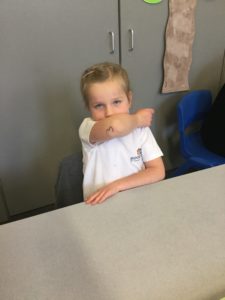
In living and learning, we reminded ourselves about the ‘vampire sneeze’.

This is helping us to keep everyone safe and not spread germs.

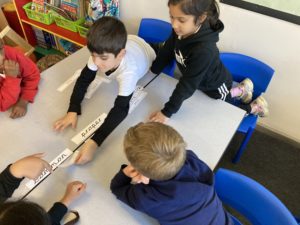
In PE, the children have been practicing their dribbling skills. I’ve been impressed with some of the amazing footballers we have in Year 2!

In our history topic, we’re continuing to learn about The Great Fire of London. Come back next week to see what we’ve been finding out!