
01 April 2020: Home learning
Morning, Year One!
I’ve been taking part in PE with Joe Wicks and going for one walk a day to stay fit and healthy. What exercise have you been doing to stay healthy?
If you can, remember to practice some of the PE skills you learnt in school.
If you’ve got a garden, go outside and practice throwing and catching a ball. Remember to always keep your eyes on the ball and have your hands ready! Can you throw the ball into the air and clap your hands before catching it?
Can you throw it against a wall and catch it?
How many catches can you do in 1 minute?
As you can tell, I’m missing teaching PE!
Writing
Write sentences about what you can see.
Can you use ‘and’ in your sentences?
E.g.
A zebra is crossing the road and a lion is sitting on top of a van.

If you want to see the picture clearer, click on the link below.
http://www.pobble365.com/animal-town/
Reading
Read (or ask an adult to read) a story of your choice. Once you’ve read the story, ask an adult in your house to be one of the main characters from the story.
Then, write five questions that you want to ask the character and interview them.
This is called ‘hot seating’.
Below are some questions I wanted to ask Dave after I read, ‘Dogger’:
Why do you love Dogger so much?
How did you feel when you lost Dogger?
Where did you find Dogger?
Who got Dogger back for you?
How did you feel when you got Dogger back?
Maths
Today’s maths focuses on bridging through 10.
You will use the strategy of partitioning to make 10 first and then subtract the remaining amount.
Partitioning means breaking the number into two parts. This will make the calculation easier.
E.g.

Using the examples, complete the calculations below.


Challenge:

01 April 2020: Home learning
Hooray! It’s April. I never thought I would but I actually miss writing the date on the board. Obviously, I miss you all telling me I’ve written the wrong date from time to time, too! Congratulations on making it to Wednesday – we’re half way though our week, our home learning and it’s almost Easter. I wonder how many of you have pulled an April fools’ joke at home… let me know!

Reading
Today, you’re going to draw the boy and the fox from the video ‘The Catch’ that you’ve been looking at this week.
Then, write a speech bubble suggesting what the two characters would say to each other at the beginning of the story. And then another one for each character, at the end. Make sure you rewatch the clip and check you feelings graph from yesterday to show how they were both feeling at the time.
Spellings
Practise your spellings today by using the ‘silly sentences’ method.
Maths
Today, we look at multiplication.

History
You guys have learned loads about the Romans and Celts (especially Boudicca) in this topic and you’ve really impressed me with your history knowledge and historical enquiry skills.
We’re going to end this topic by looking briefly at the people who invaded and settled in Britain after the Romans left: the Anglo-Saxons.
I’d like you to watch the video, do the activity and read the text on the following webpage (make sure Flash isn’t blocked as this might stop you watching the video).
https://www.bbc.co.uk/bitesize/topics/zxsbcdm/articles/zq2m6sg
Please answer the following questions about the Anglo-Saxons in any way you like. You could simply write or type the answers, create a poster, create a digital presentation, interview an Anglo-Saxon or Britain from the time. It is us to you (and your parents).
- When did the Anglo Saxon age begin in Britain?
- Where did the Anglo Saxons come from?
- Tick the answer that is true:
- The Anglo-Saxons were ruled by one king who took control of the whole of Britain.
- The Anglo-Saxons were made up of different tribes who settled in different parts of Britain.
- Who were the biggest tribes?
- When they weren’t fighting, what was the main job that Anglo Saxons did?
- What was life like for Anglo Saxon girls and boys?
- Name three types of crops that Anglo Saxon farms grew.
- Name two types of animal that Anglo-Saxon hunters used to help them catch their prey.
Challenge: Which period of history do you think was more advanced: Roman or Anglo-Saxon Britain? Explain your reasons.
01 April 2020: Home learning
Spellings
Practise your spellings today by using the ‘silly sentences’ method.
happiness / loneliness / thoughtfully / painless / colourful / humming / wrapping / dripped / clapped / funniest / hottest / hopeful / wishful
Reading
Today, you’re going to draw the boy and the fox.
Then, write a speech bubble suggesting what the two characters would say to each other at the beginning of the story. And then another one for each character, at the end. Make sure you rewatch the clip and check you feelings graph from yesterday to show how they were both feeling at the time.
Maths answers


Maths

Challenge
Create your own addition pyramid for an adult (or older sibling) to solve. You need to make sure you have the answers ready for them! Email your pyramids to me and I’ll get back to you with my answers too.
Surely no one could make a pyramid four blocks high?!
History answers
1. When did the Anglo Saxon age begin in Britain? 410AD
2. Where did the Anglo Saxons come from? Germany, Denmark and the Netherlands. Also accept Scandinavia.
3. Tick the answer that is true:
a. The Anglo-Saxons were ruled by one king who took control of the whole of Britain.
b. The Anglo-Saxons were made up of different tribes who settled in different parts of Britain. TRUE
4. Who were the biggest tribes? The Angles, Saxons and the Jutes.
5. When they weren’t fighting, what was the main job that Anglo Saxons did? Farmers.
6. What was life like for Anglo Saxon girls and boys? They didn’t go to school. Girls helped around the home. They looked after animals, helped with cooking and cleaning and would fetch water. Boys learnt the skills of their fathers. They looked after animals and collected firewood. They also liked playing with toys made from wood.
7. Name three types of crops that Anglo Saxon farms grew. Wheat, oats and barley.
8. Name two types of animal that Anglo-Saxon hunters used to help them catch their prey. Hawks and dogs.
Writing
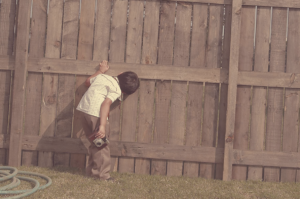
There was that noise again. This time it was louder and the ground trembled. I looked around to see if anyone else had heard it but my sister was too busy playing video games and my mum was on another Zoom conference call. I went into the garden and there it was again. A low rumbling noise. It was coming from next door’s garden. I tiptoed warily to the garden fence and peered through a hole. I couldn’t believe what I saw.
Your task is to continue the story. What did you see on the other side?
Make sure that you use punctuation correctly so that there are no squashed sentences. Well chosen vocabulary will help to make your writing more interesting. Conjunctions will add extra detail to your sentences. Most importantly, re-read your work to check for mistakes. Reading it out loud to an adult is the best way to re-read your work.
31 March 2020: Home learning
Morning, everyone!
I hope that you are all well and still smiling.
At school we have our daily Wake Up Shake Up at 10am. Today, why not put on a favourite song and have a dance around – maybe even making up your own routine.
Today’s tasks…
Writing
Write sentences about someone in your family.
Yesterday, I wrote sentences about my grandad. He loved telling me about his life! Asking questions and finding out things about someone can keep them company when they might be feeling quite lonely – even if they are living in the same house as you.
Choose someone in your family who is special to you, ask them questions about their life and write sentences about them.
Remember:
- capital letters
- finger spaces
- full stops
- makes sense
Reading
Whilst I’ve been isolating at home, I’ve been reading lots of books. Sadly, I’m running out of ideas of books to read!
Please can you recommend a book for me to read. Please read your book to someone in your house and use the sentence stems below to tell me about it.
Use the sentence stems:
My favourite book is ______________________
I recommend this book because ________________________
My favourite part of the book is _________________________
You can either write about your favourite book or ask someone in your house to film you. I look forward to your recommendations.
Maths
Complete the calculations below:
15 – 7 =
11 – 5 =
9 – 4 =
17 – 6
9 – 9 =
To solve these calculations, draw circles to represent the first number then cross out the amount you need to take away.
E.g.

Challenge:
11 – __ = 4
__ – 5 = 10
__ – 7 = 12
15 – __ =
Tips:
- If the second number is missing in the calculation, take the answer away from the first number.

- If the first number is missing in the calculation, add the second number and the answer together.

Good luck with today’s task.
Remember, if you are stuck or need help with anything, email me at [email protected]
30 March 2020: Home learning – answers
Year 5 and 6 Reading – Monday’s answers
You can find the answers for the FirstNews comprehension by clicking this link: comprehension answers to Monday’s task
Year 5 Maths – Monday’s answers


Year 6 Maths – Answers


31 March
Happy Tuesday, Year 2! We hope you’ve had your breakfast and you are ready for today’s learning.
Here are your daily physical and mindfulness activities for you to try.
Physical activity: #ThisisPE has just been launched by Yorkshire Sport Foundation to support parents and carers to teach some PE at home and we love this first video based on tennis skills. Videos will be posted at 1pm on a Monday, Wednesday and a Friday. You don’t need sports equipment – all the videos will use items that you can find around the home.
Mindfulness activity: Each day we take about 20,000 breaths. Try this flower breathing exercise to bring attention to your breathing.
Lexia
There’s even more Lexia success to announce – Olivia, Betsy and Ralph have achieved their next level.
Task 1 reading
Based on the fluency text from yesterday, here are some words with definitions.
spill – where a liquid goes over the edge of a container
broth – a kind of soup
tablecloth – a cover for a table
disgusting – something not very nice
loud – not quiet
chew – to use your teeth to break up food in your mouth
glad – happy
Did you spot the rhyming pattern in the poem?

Firstly, spend ten minutes on Lexia (if you can access this at home).
Today, we are looking at another image from Pobble365 titled Animal Town.

1.What jobs might the animals in the picture do in Animal Town?
2.How might Animal Town be different to a human town?
3.What problems could happen in Animal Town?
4.Would animals be better off without humans?
Challenge: If you could be any animal, what would it be and why?
Task 2 maths
Here are your answers from yesterday.
A face is a flat or curved surface on a 3D shape.
An edge is where two faces meet.
A vertex is a corner where edges meet. The plural is vertices.

Today’s learning
Complete the following reasoning questions based on the properties of 3D shapes.
1.
2.
3.
4.
5.
Test this by sorting these 3D shapes onto the venn diagram – sphere, cone, cube, cylinder, square based pyramid and cuboid.
Task 3 writing
How many errors did you spot yesterday? Here are the answers.

Here is the Animal Town image again.
Most visitors are a little shocked (to put it mildly) when they arrive at Animal Town. Despite the fact that the name of the town gives a slight indication to passers-by that the inhabitants of the town are ‘not normal’, it’s as if people don’t believe things until the see them with their own eyes!
1.Imagine you are a visitor in Animal Town. Try to describe your experience. What might you see? What might you hear?
Challenge: Would you like to visit Animal Town? Give three reasons why or why not.
31 March 2020: Home learning
Morning, everyone!
Thank you for sending over emails telling us what you have been up to and how you are – it was really lovely to hear from you!
If you haven’t done so already, don’t worry! Feel free to let us know what you’ve been up to and how you are by sending an email.
It seems the Joe Wicks workouts, baking treats – such as scones – (which has inspired me to do the same) and using Duolingo to practise language skills have been very popular; keep it up!
Today’s tasks…
Year 5 Maths – LO: improper fractions to mixed numbers


Challenge:

Year 6 Maths – LO: adding fractions

Challenge:

Year 5 and 6 Reading – LO: FirstNews debate
Today’s reading task is to conduct a debate based around the question:
Should the government do more to reduce food waste?
By clicking on this link: First News debate – Tuesday, you will be able to access the information based around our question.
Here’s what you need to do:
First, click on the link to open up the document.
Once this is open, you will read through the different sections which are:
- background information
- facts and figures
- environmental impact
- individual/government action
- arguments for and against the question
After you have read through these sections, you will be presented with a series of question cards (this is found on the last page).
These question cards are to be discussed with somebody in your home. If this isn’t feasible, then you could write down your thoughts in your home learning book.
R2s for a debate:
- Form your arguments based on the information provided
- Listen to any opposing arguments with respect
- Don’t interrupt – wait your turn to speak
- Try your best to speak clearly and confidently – this is a great skill to practise
- Have fun!
Here are some sentence openers to help you form answers to the questions:

Year 5 and 6 Geography LO: 8 points of a compass
Let’s journey back to our topic before Christmas: Geography – Where in the World?
Today you will be creating your own treasure hunt. This could be given to someone else in your family or for you to complete yourself!
Your task is to create an algorithm, that, if followed, will lead to a piece of treasure hidden somewhere in your home!
However, when creating your algorithm you must use points of a compass such as ‘north, north east, east, south east, south etc…’.
Here are a few example steps in an algorithm:
- Starting next to the front door, move north 5 steps.
- Now you’re here, move north-east 6 steps.
- Turn so that you are facing west. Move 8 steps.
Although you will need use of a compass in order to create your algorithm with north, north east, east, south east, south etc…, if you don’t have access to one, you can make up and agree on these points in your home.
As always, we would love to see how you’ve got on with any of the learning you have done!
Good luck, everyone!
31 March 2020: Home learning
Good morning, everybody! Happy Tuesday. I hope you remembered your Love of Reading, guided reading books and your swimming kits! Here’s your home learning for today. Have fun!
Reading
Rewatch the short animation ‘The Catch’ (click here). Then, draw a feelings graph to show how the boy is feeling during key moments of the clip. An example of how to set out a feelings graph as shown, below.

The events go across the bottom of the graph. Suggested events to list are:
– Waiting with anticipation for the first catch,
– The distress caused by seeing the injured fox,
– Anger at the fox stealing the fish,
– Chasing the fox,
– Surprise and excitement at seeing the giant fish,
– Trying to catch it,
– The catch at the end.
Make sure to label the exact emotion to the event in the story.
Spellings
Practise your spellings today by using the ‘connect the dots’ method.
Maths
Today’s Maths continues with money and some more tricky problems. Make sure to ask an adult for help if you’re stuck.
Warm up by playing this game which helps you to practise giving change. Make sure it’s on pounds Stirling and 1 to 10 pounds.


Times Tables
Don’t forget to use the times tables resources on the Moortown website – link here.
History
We’ve learnt loads about the Roman invasion of Britain and the effect that this had on Britains living there at the time – specifically Boudicca and the Iceni.
What we haven’t talked about is when and why the Roman Empire ended. Read the text below to find out why they left:
In AD410, the Roman Emperor Honorius sent a goodbye letter to the people of Britain. He wrote, “fight bravely and defend your lives…you are on your own now”. The city of Rome was under attack and the empire was falling apart, so the Romans had to leave to take care of things back home.
After they left, the country fell into chaos. Native tribes and foreign invaders battled each other for power. Many of the Roman towns in Britain crumbled away as people went back to living in the countryside.
In this history lesson, I’d like you to answer the following question:
Were the Romans good for Britain?
I’d like you to make a list or table of pros and cons and debate these with someone at home. Here are some key points to get you started (you decide of they’re pros or cons):
- It nice to invade. You wouldn’t like it if I invaded your home!
- The Romans treated Britains badly. They took their land, made them pay taxes, whipped them and killed them if they stood up to them.
- The Romans tried to change how we lived (houses, religion, language).
- The Romans protected us from other invaders.
- The invented lots of things that made our lives better: straight roads, central heating, sewage systems.
- They introduced things which had a big impact on Britain: calendar, language, Christianity.
31 March 2020: Home learning
Reading
Watch the short animation ‘The Catch’ (click here). Then, draw a feelings graph to show how the boy is feeling during key moments of the clip. An example of how to set out a feelings graph as shown, below.

The events go across the bottom of the graph. Suggested events to list are:
– Waiting with anticipation for the first catch,
– The distress caused by seeing the injured fox,
– Anger at the fox stealing the fish,
– Chasing the fox,
– Surprise and excitement at seeing the giant fish,
– Trying to catch it,
– The catch at the end.
Spellings
Practise your spellings today by using the ‘connect the dots’ method.
Maths answers


Maths

Challenge

Challenge

History
You guys have learned loads about the Romans and Celts (especially Boudicca) in this topic and you’ve really impressed me with your history knowledge and historical enquiry skills.
We’re going to end this topic by looking briefly at the people who invaded and settled in Britain after the Romans left: the Anglo-Saxons.
I’d like you to watch the video, do the activity and read the text on the following webpage (make sure Flash isn’t blocked as this might stop you watching the video).
https://www.bbc.co.uk/bitesize/topics/zxsbcdm/articles/zq2m6sg
Please answer the following questions about the Anglo-Saxons in any way you like. You could simply write or type the answers, create a poster, create a digital presentation, interview an Anglo-Saxon or Britain from the time. It is us to you (and your parents).
- When did the Anglo Saxon age begin in Britain?
- Where did the Anglo Saxons come from?
- Tick the answer that is true:
- The Anglo-Saxons were ruled by one king who took control of the whole of Britain.
- The Anglo-Saxons were made up of different tribes who settled in different parts of Britain.
- Who were the biggest tribes?
- When they weren’t fighting, what was the main job that Anglo Saxons did?
- What was life like for Anglo Saxon girls and boys?
- Name three types of crops that Anglo Saxon farms grew.
- Name two types of animal that Anglo-Saxon hunters used to help them catch their prey.
Challenge: Which period of history do you think was more advanced: Roman or Anglo-Saxon Britain? Explain your reasons.
30 March 2020: Home learning – Maths update
Below are updated pictures of the Y5 maths learning for today.


