Spellings:
This week’s spellings are common exception words (words that we use a lot but do not follow the usual spelling patterns).
pass
grass
father
hold
told
gold
prove
move
last
fast

Spellings:
This week’s spellings are common exception words (words that we use a lot but do not follow the usual spelling patterns).
pass
grass
father
hold
told
gold
prove
move
last
fast
Whole-school
Talk Time:
Moral
I know the positives and negatives of gaming.
This week’s Talk Time homework links to our topic, computing.
You could talk about:
On Thursday 16 May, we will discuss the statement as a class during our homework review.
Like this week, next week is a four day week – Friday 14 May is a training day so school will be closed. Before then, of course, we’ve this Friday’s Weekly Message…
Last week, we decided our school charity for the year ahead. This began with some Talk Time homework where children discussed charities at home and then came to school with a particular charity to nominate. Then, in class, a second discussion was had to agree one charity to put forward to the newly-elected Junior Leadership Team. They then reviewed all the class suggestions and arrived at the final whole-school decision:
As part of the Captain Tom 100 initiative, we’ve already raised some money for the chosen charities – thanks for all your donations so far.
Our Living and Learning statement next week is I know the importance of sleep. You can help at home by making sure your child gets enough sleep, well away from tempting electronic devices. The NHS recommend that a primary school age child gets 9 – 12 hours.
Check out these sites for more information…
Pupil premium is additional funding for schools that depends on the number of children who are registered for free school meals.
300,000 more pupils became eligible in first seven months of Covid.
Even if your child is in Reception or Key Stage 1, where school meals are free, we need you to register for free school meals – this will lead to extra funding.
Even if your child has a packed lunch, we need you to register for free school meals – this will lead to extra funding.
Speak to our office staff about how to do this.
Finally this week, a few of you have asked about Sports Day, which is scheduled for the week beginning 12 July.
The government’s roadmap out of lockdown sets out two dates for the further easing of restrictions if all goes well: 17 May and 21 June.
By 21 June, ‘the government hopes to be in a position to remove all legal limits on social contact’. A key word here is ‘hopes’.
We can’t guarantee that Sports Day will go ahead, but we hope that it will happen as scheduled. There may need to be restrictions in place, such as asking families to stay socially distanced or inviting just one parent/carer to attend. We’ll have to wait and see…
Have a good weekend, even if it’s a bit of a wet one.
This week, Year 2 took part in their Captain Tom 100 challenge by completing 100 skips in the playground. The class really enjoyed the challenge and some children even carried on skipping after they had reached 100!
All of the funds that were raised from this event have gone to our new school charity, Dogs Trust. Thank you for all your donations.


Year 2 have been learning about about sun safety in our living and learning session this week. We have been reading the text below daily to help us know how to reduce the risk of sun damage. 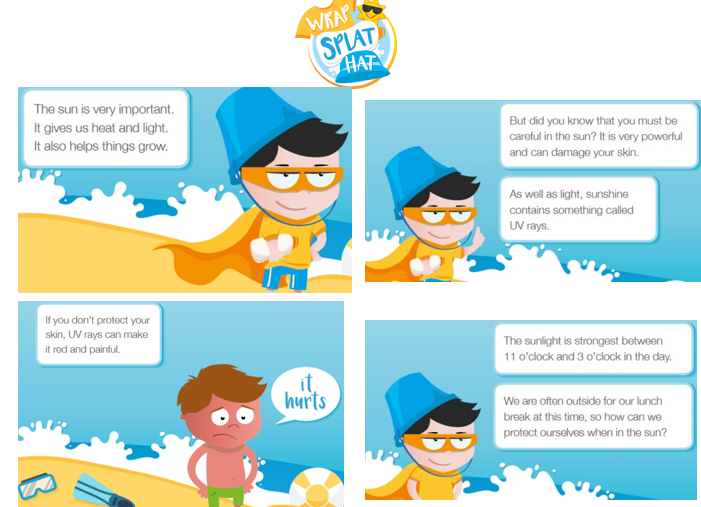
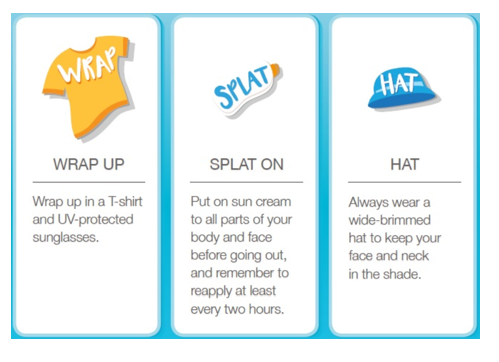
The children used the text to create posters. We are going to to stick them on our living and learning display to help us remember how to stay safe in the sun.


This week’s homework is Practice Makes Perfect.
In class, we have been writing four different types of sentences:

Your homework is to copy and punctuate the sentences below and then write two sentences of each type.
What a dangerous mountain he climbed
What time is it
Leeds is a city in England
Line up
The homework is due on Thursday 06 May.
There’s a growing sense of optimism at the moment with numbers of positive cases of Covid-19 going down and the numbers of Leeds residents who have been vaccinated going up. On 19 April, the case rate was 48.4 per 100,000. This is the lowest rate seen in Leeds since September 2020. The highest case rate is amongst young people aged 11-18 (87.6 per 100,000), so we do all need to keep following Covid restrictions.
Our Homework Policy and the accompanying Homework Guide currently sets out daily expectations (read, practise spellings, and practise times tables) and weekly expectations (Creative, Talk Time or Practice Makes Perfect).
Our assessments show that lockdown may have had an impact on some children’s reading fluency, spellings and times tables. Nationally, there’s growing evidence that the lockdown has had an impact on young children’s language skills.
For these reasons, from next week, we’re tweaking our policy a little for the rest of the school year. We’re dropping the Creative and Practice Makes Perfect tasks.
We really want you to make sure your child is meeting the daily expectations set out the Homework Guide:
Each week, we’ll set a Talk Time homework. Its purpose is to promote lots of conversation and debate at home, which in turn should promote oracy and vocabulary.
Check out these five tips to boost your child’s vocabulary.
This article might also interest you – it’s about the value of more play time for your child’s mental health and social skills.
As always, you’re welcome to let us know your views. Later this term, we’ll include a question about the tweaked homework in the annual survey, too.
Children in Years 1-6 have a Computing topic this half-term. Read more about the learning that’s going on in our Curriculum Statement. Our age-related expectations for Computing are on pages 13 and 14. These are followed by Staying Safe Online expectations on pages 15 and 16.
To help at home… have chats with your child about what they’re learning. Ask them what vocabulary they’re using in the topic – it could be words like ‘de-bug’, ‘algorithm’, ‘sequence’ and ‘decomposing’. (All these words feature in the age-related expectations.)
Talking of Computing and staying safe online, over the Easter holiday, we published five news articles about staying safe online. In case you missed them, the content from all five posts comes from a Thinkuknow newsletter.
Does your child play Roblox? It’s one of the most popular video games of recent times. Read this guide for tips on a number of potential risks such as in-app purchases, online dating and chat functionality.
This weekend is a longer one – enjoy the extra day, whatever the weather!
This week’s spellings are common exception words (words that we use a lot but do not follow the usual spelling patterns).
Welcome back!
We’ve already had a busy start and it is set to continue. Here is a quick overview of what we’ve already been doing and what’s coming up.
Writing
In writing, we’ve been recapping different sentence types.
Inspired by the novel, ‘The Boy Who Grew Dragons’, the children will be applying their knowledge to writing about a beast and what you need to do to grow it.
We’re going to be recapping expanded noun phrases and conjunctions. Also, the children will be learning how to edit and improve their writing so that it is ready for Year 3.
Maths
In maths, we will be revisiting a range of addition and subtraction topics.
Not only this, we will be continuing number facts learning as well as practicing our 2, 3, 5 and 10 times tables.
PE
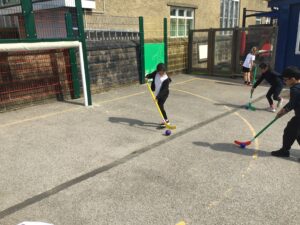
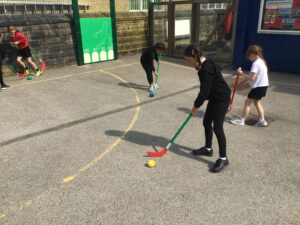
The children have been enjoying learning the basics of hockey.





Science
The children will be investigating, observing and describing how seeds and bulbs grow into mature plants. They will find out and describe how plants need water, light and suitable temperature to grow and be healthy. Below is the specific vocabulary that will be used in our science lessons. Talk about these words at home. Does your child know any of them? Can you child tell you the definitions?
In our first session, we looked at the inside of a fruit and identified the seeds.


Computing Topic 
The children will be learning about computer programming. They are going to discover what an algorithm is and what it needs to work effectively. We will be creating and debugging simple programs and will use logical reasoning to predict what will happen when an algorithm is executed.
In some of our lessons, we have regular ongoing online safety messages. These are usually prompts and reminders about the important of staying safe on and offline. Asking for a person’s consent is very important and this is something we regularly rehearse.
May I take your photo?
Yes, of course you can.
Would you mind if we show your learning to the whole class?
No, I really don’t want to share it.
As well as programming, the children will be having specific lessons about the following;
Age Restrictions
• I know that some online activities have age restrictions because they have content which is not appropriate.
Digital Content
• I am beginning to understand what a digital footprint is.
Misinformation, disinformation and hoaxes
• I know that I shouldn’t believe everything I see or read online.
Fake websites and scam emails
• I know that some websites have secure markings (eg padlock symbol next to URL) that makes them more trustworthy.
Password safety
• I know that passwords are important and that I should not share them. Personal data
• I know that I’m too young to share personal information (eg full name, address, school, age) online.
Persuasion
• I know that there are adverts online which, if clicked on, may take me away from the page I’m looking at.
Online vs. offline behaviours
• I know that people should treat others respectfully when they are online.
• I know what to do if someone is mean to me or someone else online.
Impact on quality of life
• I know that being online offers lots of positives but that
there needs to be a balance between time being spent on
and offline.
Below is the vocabulary that links to the computing topic.
| algorithm | program | debug |
| computer | password | personal information |
| appropriate |
We’ve continued learning about alternative spellings as part of our Phase 5 phonics learning, focusing on the ‘ai’ sound.