Maths Stay and Play
Join us on Thursday for our Stay and Play session which will focus on maths. Come along and join your child in their learning of number, shape, space and measures.
See you there!
There will be no Relax and Read this week.


Going underground!
This week, we came to to end of our ‘Rocks and Soils‘ mini topic. For our final two lessons, we studied the job of an archaeologist and had our very own archaeological dig.
Our first lesson focused on generating, developing and communicating our ideas through discussion.
In groups, on large paper, children were asked to answer the questions through discussion, make notes and annotations.
- What is an archaeologist?
- What is their job? What skills do you think they need?
- Is the job of an archaeologist important? Why?
- What tools are needed for this job?


The children were given sentence stems to use. This helps to evidence and back-up their ideas and reasons. For example:
- I think that an archaeologist would have to be good at maths. I think this because they would have to know about dates and times from different ages.
- If we don’t have evidence from the past, then we won’t be able to learn more about history.
For the next lesson things got MESSY! We had previously learnt that archaeologists find out about the past by discovering artefacts left behind by our ancestors, examining what they have found and then recording their discoveries for the future. With all this in mind, the children were asked to select appropriate tools for their excavation. Year 4 were able to choose suitable tools and give reasons as to why they select them.
- “You need to be very careful not to damage your fossil or artefact,” said Henry.
- “I think that a cotton bud would be useful to get into tiny areas,” commented Zara.
A container with layers of rock and sand was given to each group. The children then had to work carefully by removing tiny pieces of rock or layers of sand.

 We excavated in layers rather than digging holes as this is how a real archaeologist works. When an artefact or fossil had been uncovered, the groups had to carefully clear the sand and rock from around the edges avoiding damage to the surface of the artefact itself.


After excavating in layers, the children had to make notes about each find until they reached the bottom of their container.
Once the dig had been completed, we looked at our finds and compared the details of each artefact or fossil.
We discussed things that were hard or challenging.
“I found it hard to get the fossil out in one piece. It was easier to leave room around it and then try to chip at the rock carefully,” commented Arundeep. 


Following a very successful dig, the children were asked to create a fact file for one of their finds.
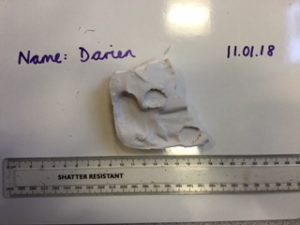
The children examined their objects using a magnifying glass, measured the dimensions, sketched the find and recorded texture and appearance. In order to get an idea of the scale, we took photos of the objects alongside a ruler.




Well done to Year 4. They worked with patience and care. We all enjoyed these lessons. In fact, we have decided to make our class assembly a ‘Rocks and Soils’ themed one – YEAR 4 ROCK!
We’ll be performing this on Wednesday 17 January. We look forward to seeing you there!
Reading aloud what we’ve written
The children made a plan for their writing and loved sharing it with the rest of the class! We’re trying hard to read aloud what we have written down.


Music and art!
In our music lesson this week, The children were learning to respond to a piece of music with their opinion. They listened to contrasting pieces of music and whilst listening to the music, they made marks on a piece of paper, letting the music ‘take control’ of their hands.
They then discussed how the music made them feel and how this inspired their art!


Skipping
This afternoon, Year 2 had a very energetic and challenging skipping workshop led by Jodi from Skipping School. We covered lots of skipping skills that we’ll be practising in PE in the lead up to a Year 2 competition in March with other schools.
We learnt click jump, double bounce, speed bounce, hop and swap, side swing, partner skipping face to face and with the long rope we tried run jump out and keep the pot boiling.
Some tips that Jodi shared with us were:
- hold the rope like a smiley face
- have the smiley face behind your legs
- keep your hands wide at the side
- when you hear the click of the rope on the floor you need to jump
We look forward to seeing lots of progress over the coming weeks.




Preparing to multiply
We’ve now started learning about multiplication in our maths lessons this week using the concept of equal and unequal groups. When describing equal groups, the children have used sentence stems to support them.
There are ____ equal groups with ____ in each group.
 There are six equal groups with four in each group. There are six fours.
It is important at this stage that children know what groups are equal and which are unequal.
We then made our own equal groups in lots of different ways.
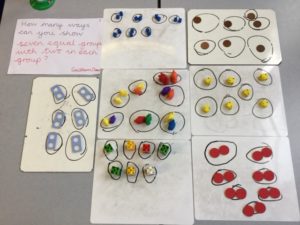
What is this image showing?
How many groups?
How many in each group?
Well done, Jai – you showed great understanding of this concept.
Working together
In our Living and Learning session this week, we focused on how we can achieve, our strengths and our areas to develop. This included how we can work well as a team so each group was set a challenge. There was some great teamwork, turn taking, sharing and we eventually had a group that achieved the challenge.


This was also a good test of our resilience, one of our 8Rs for learning.
Take a look at this video all about not giving up.
Handwriting
We’ve been having a big focus on handwriting and presentation across all our learning – not just in writing books.
Our cursive handwriting scheme has just three rules. Please refer to this when your child is writing at home, for example learning their spellings. Before writing, ask your child about the lazy eight handwriting warm up that we do.
 There are groups of letters that follow the same pattern when we write them.

We’ve been using an exciting prop this week to do big movements when writing letters.


Material testers
This week during our What’s the matter? science mini topic, Year 2 had an interesting investigation to carry out from Mr Vango.
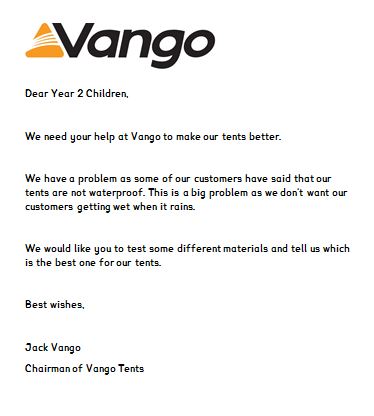
Throughout the investigation, we used lots of science skills.
Starting with questioning, considering what equipment we’d need and the method for the investigation, we then focused on predicting which material would be the best for the tent. We recognised that predicting is a skill we also use in reading. We were then ready to get testing. Using observation skills was key to our investigation so we could make a conclusion about the materials.
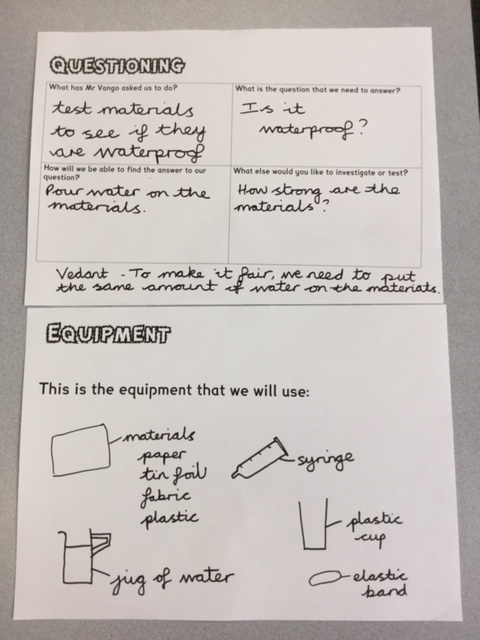


Ask your child what material they concluded was the best one to use for the tent.
Well done to Vedant who realised that to make the test fair we would need to add the same amount of water from the syringe when testing each material.
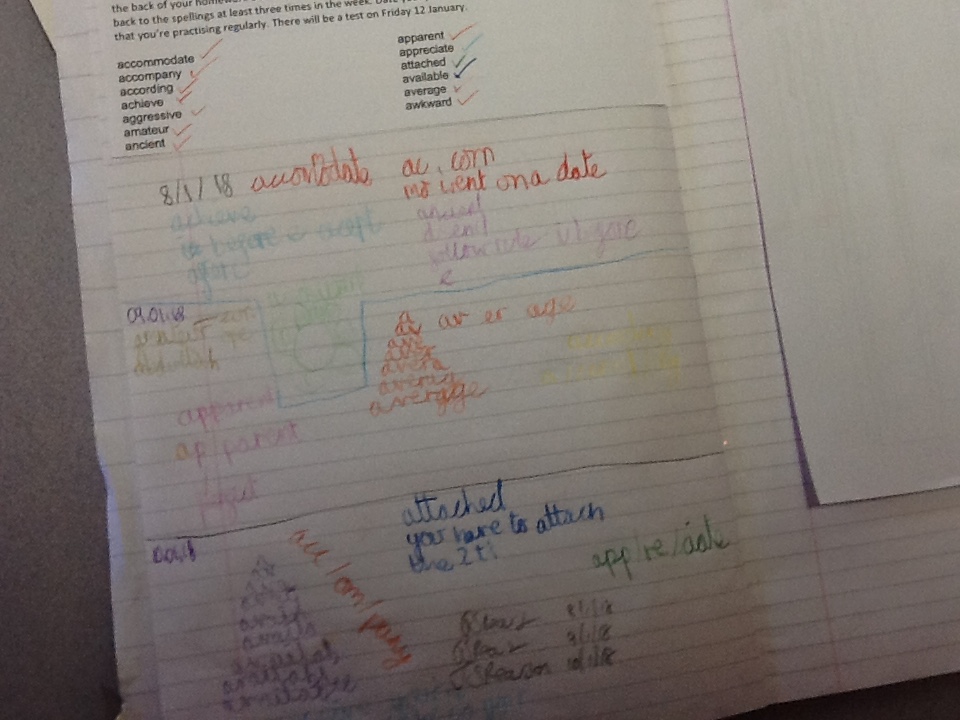
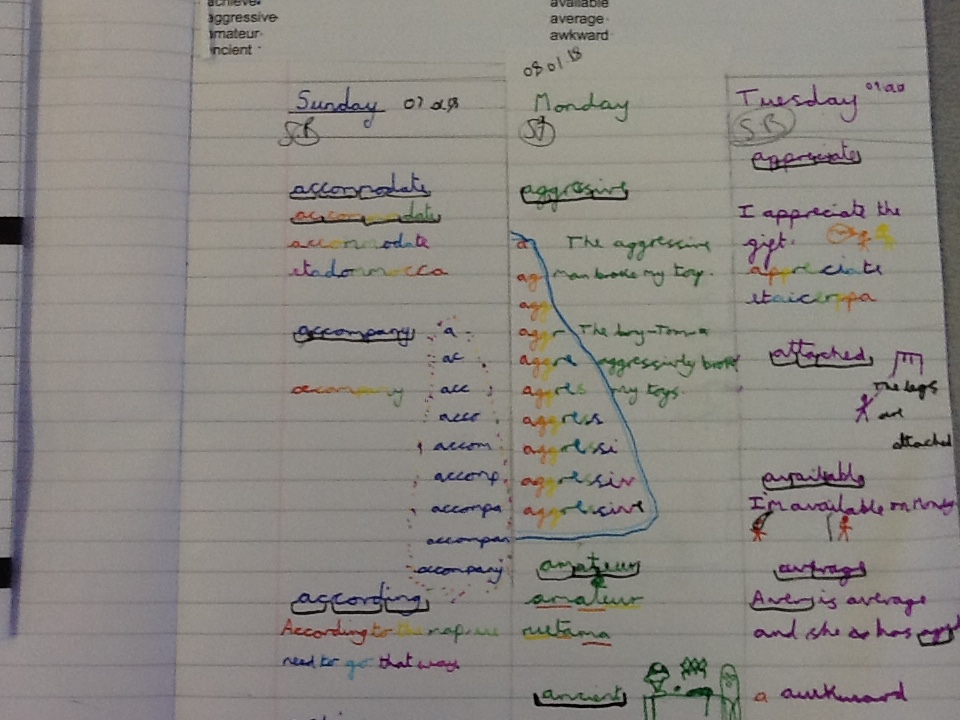
Examples of good spelling practice
There were lots of great examples of spellings practice from Year 6 this week. Most children had made sure they’d practised across at least three days (just for 5-10 minutes each time) and they’d got a parent to sign that they’d done this.