
Super Skipping
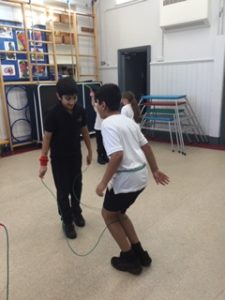
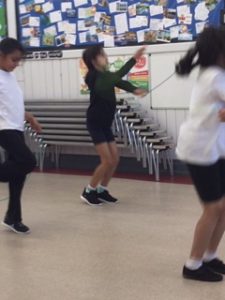
This morning, Year 4 took part in a skipping workshop. The children were taught many different skipping styles, some of which were really quite complicated. However, this did not deter the class! Instead, the approaches taken by the children were full of both resilience and determination.
Later in the year, we’ll be taking part in a skipping competition alongside other schools.




Odd socks day
We launched anti-bullying week today by taking part in Odd Socks Day.

There were all kinds of sock colours and designs on show celebrating the fact that we are all different and unique. Thank you for supporting this.
Here’s some of the Year 2 selection.

Sport at Allerton Grange High School
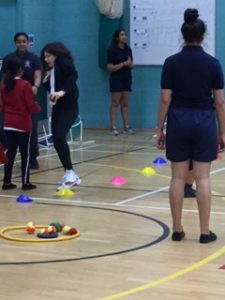
Last week, Year 4 walked to Allerton Grange High School for a sports session. We were all impressed with the organisation demonstrated by the older students. Year 4 were engaged right from the start thanks to the motivating energy from the leaders. It was great to see the high school students interacting with all the children and offering support to those who lack confidence in sport.
Thank you, Allerton Grange!




New kit awarded from Premier League Primary Stars
Following our application to the Premier League Primary Stars Kit and Equipment Scheme, we’ve heard our bid has been successful!
As a result, we’ll receive a new kit for school later in the year. This will be of great use for the football team and for other competitions.

School Council, when they meet for the first time on Wednesday, will be discussing the possible team colours. The final choice will be made democratically: each school councillor will vote for their favourite.
Which would you choose?
Allerton Grange sports leaders
Over the year, Year 2-Year 6 will visit Allerton Grange to take part in PE sessions organised by their sports leaders.
There are many benefits of these sessions:
- Allerton Grange sports leaders have the opportunity to practise and develop their skills with a class
- the sessions support our positive relationship with Allerton Grange
- our pupils visit a local high school
- the children get to enjoy a PE session in a different environment and see positive role models (the leaders)
- the sessions give a positive image to physical activity
- pupils reinforce their road safety knowledge as they walk to Allerton Grange
Topic – Did wealth matter?
LO: RIC
To link reading to our current topic (Time Travel – Transport), the children in Year 4 were asked: “Did wealth affect the way people travelled?”
One of the history age related requirements for Year 4 is that, children recognise that the lives of wealthy people were very different from those of poor people.
With this in mind, the class were given a RIC reading starter as a fifteen minute activity at the beginning of our topic lesson. You have probably heard your child talking about RIC reading activities. These sessions are fairly short and the children have just three questions to answer all with a different focus. This is done independently and, when complete, we discuss the responses to the questions. Purple pens are used to mark, correct, edit and improve answers.
This was our topic themed RIC this week.
Retrieve (fact finding)
What can you see, that is the same, in all three pictures?
Interpret / Inference
Would you need to be rich to stay in these rooms? Explain
Choice (language, structure, presentation, thinking about the choices made by the author/director/artist)
What do you think the illustrator is trying to do by showing these images?


R I can see beds, doors, mirrors, walls and pillows.
I Yes. They look like bedrooms from old Victorian houses. The third one looks like it would cost a lot of money.
One bedroom looks posh because it has a sofa in. The top room looks very small. I’m not sure if that is a sink or a toilet? Rich people wouldn’t have a toilet next to a bed. Two of the rooms look comfortable because they are bigger.
C I think the pictures show what Victorian bedrooms looked like. Maybe how much houses cost and how big they were? They are all different sizes and only rich people had a sofa in their bedroom. To show that if you had a lot of money you could have a bigger house.
After this activity, we discussed the class system in Victorian times and the impact wealth had on peoples’ lives. I questioned the children more about the images.
“Where do you think they were taken?
What have they got to do with transport?
Are they all in the same place?”
There were some superb responses and the children were intrigued to find out more. With a few clues, I informed the class that the rooms were all cabins on the Titanic! This then created lots more discussion about the famous disaster. Next, we will look at a cross section of the ship and where each type of cabin was situated. Did this affect survival rates?
October active travel prize winners
We’ve awarded the final voucher prizes for our October active travel prize draw.
Well done to Isla, Year 2, and Jasraj, Year 4, who won the week 4 and overall October month prizes for travelling to school in an active way.
The Living Streets’ WOW interactive travel tracker allows children to record, in class, their daily journey to school and children will continue to be awarded themed badges at the end of every month for travelling actively.
An active journey includes:
- walking
- scooting
- biking
- park and stride
We want to reduce the number of cars outside school so if you do have to travel by car, we recommend parking away from the school gate maybe at our preferred park and stride location, Marks & Spencer.
As always, keep safe while travelling.
School Council 2018-2019
Meet our newly elected school councillors, chosen democratically by their class.
Their first meeting will be held next week. On the agenda is to discuss bullying (as part of anti-bullying week), Takeover Day and to consider what they might want to spend their library and class reward budgets on.
All children are encouraged to make suggestions to their school councillors (by posting their suggestion slip in each class’ Living and Learning box) for ideas/concerns to be discussed.

Creative Character Descriptions
Year 4 have been writing some character descriptions. After reading some examples, the class thought about the type of vocabulary that creates a good descriptions.
Here are a few ideas we experimented with:
Use adjectives to describe the physical details of a character.
His scaly, wrinkled nose sniffed the air.
Nouns to fit the personality of the character.
Clothes, particularly need to match the personality of the character.
scruffy, torn trousers
The way a character moves gives much away about their personality or feelings.
Shoulders hunched, feet dragging he shuffled towards the darkened windows of home.
Then, the children thought about including prepositions. These can be used for the following:
To show the position of something.
Her bag was under the chair.
The dog crawled between us and lay down at our feet.
His flat was over the shop.
To note the time when something happens.
They arrived on Sunday.
The class starts at 9 a.m.
To the way in which something is done.
We went by train.
They stared at each other without speaking.
Some prepositions are made up of more than one word, for example:
They moved here because of the baby.
We sat next to each other.
The hotel is perched on top of a cliff.
With all this in mine, the children wrote some impressive sentences. We based our descriptions on a legendary hero, Beowulf. Using this famous warrior as our focus, proved to be a great link to our current topic.

Lots of the children searched for ambitious and appropriate words to use in their writing. There are some superb examples below.
A brown, leather belt was draped around his strong waist. Phoebe
The fierce, Anglo Saxon warrior came upon the hideous creature.
The gem encrusted, silver sword lay in his hand.
Noah
A mighty, fearless warrior sailed across the choppy seas. Liam
The revolting, three headed beast flew over the seven seas.
He held his powerful, dangerous dagger in the palm of his hand.
The fearsome warrior hides his silver sword behind his back.
Sakina
The brave hearted warrior trawled through the seas as if he was immortal.
Felix
The ugly, hunched backed monster lurked in the shadows.
Daisy
His bright, yellow, blood shot eyes gleam wickedly in the light of the moon.
Jemima
Anti-bullying week – odd socks day
Next week is Anti-bullying Week. This year’s theme is ‘Choose Respect’ and we will be joining in with Odd Socks Day on Monday 12 November.
This day is to raise awareness of our differences, individuality and personal choice. There is no need for any payment – your child should simply wear odd socks and join in the fun!
Thank you for your support.
