Creative Homework

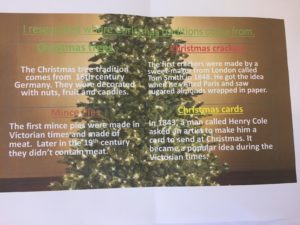
For this week’s homework, most children decided to share what they know about a religious festival. We learnt about Christmas, Diwali, Korean New Year, Eid and the Mexican Day of the Dead.

We enjoyed learning from each other…

Here are some piece of homework we really liked…

Humariah created a quiz about Christmas and The Day of Dead.

Martha wrote a letter to Stanley (the main character in our class novel) Ben created information about Christmas using PowerPoint

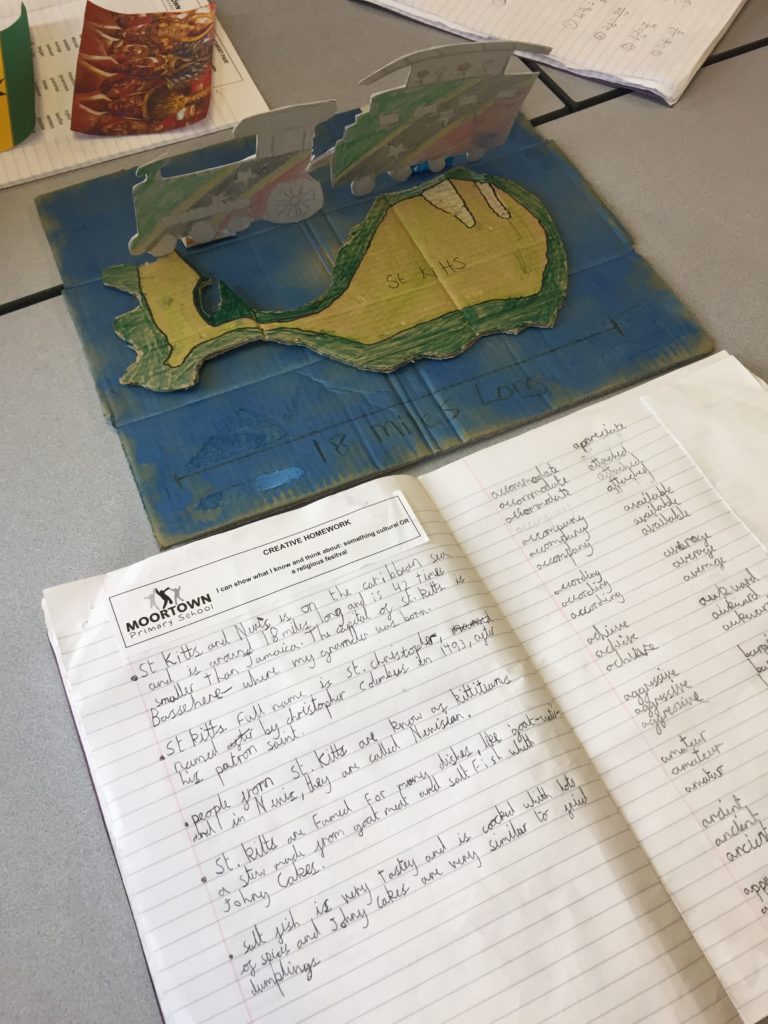
Rohan learnt all about St Kitts (where members of his family come from)

14 December 2018

This week’s homework is Practice Makes Perfect, consolidating learning we’ve been doing in maths on comparing numbers. The children have a worksheet which requires them to work out if a number is more than, less than or equal to another number within 20.

This homework is due on Thursday 20 December when we will go through the answers together.

14 December 2018

This week’s spellings require the children to apply a number of the skills we’ve learnt so far this year.

We’ve learnt all sorts of rules about adding prefixes and suffixes to words this term. Using the table below, see how many different (and real) words you can build using the prefixes, root words and suffixes supplied. If you can think of your own too, that’s great.

There will be no test on Friday 21 December but we will share the words we’ve built with each other.

Art inspired by Stuart Davis

We’ve been looking at art by Stuart Davis for the last couple of weeks. He creates shapes which cross over each other and change colour as they do. We used this to explore complimentary colours and have used watercolour pencils too.

After exploring how to create this style of art and different media, we used our own ideas to do a final piece of art.

Sport at Allerton Grange

Year 6 walked to Allerton Grange this morning to work with the sports leaders there.

We enjoyed drills on football skills, teamwork skills, basketball skills, agility and all sorts of other sporting skills developed through a myriad of activities.

First, we warmed up.

We worked on our control.

We worked on our balance.

We worked on speed and agility.

The room was constantly busy and all of the children we focused and enjoying themselves.

Living and Learning: Don’t be a sheep

As part of our Living and Learning: Identity theme, Year 6 have thought about what it means to be a sheep.

We discussed when we might act ‘sheepish’ and the children were really honest with their behaviour creating a rich and useful discussion around this subject.

We decided that you needed to have courage and be resilient in order to not act ‘sheepish’ and mind mapped ideas for what we could do in those situation where we’re not necessarily making decisions for ourselves.

Ask your child whether they think they act like a sheep sometimes, whether they wish they didn’t and what they could do to be more independent in those situations.

What is water resistance?

Our Science learning continues with water resistance this week. We’ve applied our previous learning about air resistance to investigate how the shape of an object affects the amount of water resistance acting upon it.

First, we planned the sort of shapes we thought would sink fastest and slowest through water.

Then, we worked together to create these shapes out plasticine in order to test them.

Finally, we tested the shapes against each other to see which would sink faster and discuss what forces were working on them to give the outcomes we saw.

Why not try the same at home? Albert wondered whether the size of the container we were testing them in would affect the results greatly. Could you investigate this at home?

What makes a parachute successful?

Continuing our learning about air resistance, we decided to investigate what improved the success of a parachute. Because we had already learnt about what air resistance is and seen it in action with our running parachute, we already knew what we expected to see from our investigation.

We worked in groups, each changing one aspect of our parachute to see whether this affected how safely it brought an egg down to the ground. Each group chose what they wanted to investigate.

  • material it’s made out of
  • its size
  • the number of parachutes
  • the number of holes in the parachute

Changing the number of holes

Changing the material its made out of

We tested them by holding the bottom of the cup 1m above the floor (carefully covered by plastic bags) and dropping them. We could then see how damaged – if at all – the egg was and evaluate the success of the parachute.

We were surprised by some of our results and others were what we expected. We’re now going to discuss what we observed in class and consider why we didn’t always see what we expected – a crucial part of the scientific enquiry process.