We are historians!

This half term, we are historians.

We’re learning about Ancient Greece.

To kickstart our history topic, we have been learning about chronology and learning the order of time periods in history.

Year 3 placed some time periods of British history into chronological order on a timeline. Then, we added Ancient Greece to our timeline to compare what was happening elsewhere in the world with Britain. Ask your child if they can remember this learning!

The vocabulary that we are learning this half term is:

  • period: a phase in time 
  • civilisation: a period of human development that is considered most advanced 
  • golden-age: a time when an activity or society is at its best
  • government: the group of people responsible for ruling a country 
  • monarchy: a type of government ruled by a king or queen
  • democracy: a type of government where the people living there make decisions 
  • oligarchy: a type of government where a small group of people make the decisions 
  • Parthenon: an important temple in Athens built during the Ancient Greek golden-age

This week’s message (Friday 23 September 2022)

This week’s message has some information about an event coming up for Key Stage 1 and 2 parents and carers. The rest of the message includes some updates about our annual surveys, one for parents and carers and one for children. 

Watch us while we work

Coming up at school is a short open session for current KS1 and KS2 parents/carers to join us in class to watch the teaching and learning of some essential Maths and Reading skills. The session is a great way to find out how you can support your child at home.

The session is at 9am on Tuesday 04 October. You’re welcome to visit us – there’s no need to reserve a place. We invite you to spend time in just one class. (For those of you with more than one child, you might want to come again for a second session on 26 January to visit a second classroom.)

Parents and carers of children in Reception have the opportunity to attend separate Stay and Learn sessions.

Annual survey follow-up

In the summer (18 August), we presented some of the main findings of this year’s annual survey. (You can still read this by scrolling through a few news items here.)

We always consider the feedback we get from the survey.

Some of you raised issues with parents parking without consideration or, worse, illegally. The parking issue remains a problem but we’d like to acknowledge it’s much improved. We encourage children to walk, scoot or cycle to school wherever possible; if the car is needed then the safest place to park is Marks and Spencer. Direct communication has taken place with some parents and we try to be vigilant to keep our families safe.

Some parents mentioned communications – a subject that often comes up. Some of you praise the communications from school while others say there’s not enough or too much. It’s really hard to get the balance right – too much communication or not enough. Email communication (including this weekly message, which is published to our website and emailed) is much preferred by the majority of parents, rather than paper, but we’ll continue to consider the amount and relevance of the emails that we send.

A few parents mentioned that it would be good to have a wider choice of after-school club activities. We’ll hopefully be able to introduce more of these in the next cycle of clubs. We’ve approached staff to ask them to consider options that aren’t necessarily sport-based, too.

Pupil survey

At around the same as the parent/carer survey is released, we ask children in KS2 to complete a quick survey, too. This helps us identify strengths and possible areas to develop.

Compared to the national figure, a significantly higher rating was given to the statement ‘I love to read for pleasure at home.’ Thank you for supporting us with this essential aspect of our homework expectations.

Our children rated provision in Science, Art, DT, Geography, History and Music and PE higher than nationally – three of these were rated significantly higher.

Statements relating to personal development such as ‘I understand what democracy means’ and ‘I join in activities outside normal lesson time’ were typically rated higher than the national average.

Finally, and importantly, responses from children about feeling safe, bullying and other behaviour issues were better than national, and two responses significantly better. Similarly, responses from children about learning behaviour were better than national.

This all goes to prove that our school is a happy and healthy place to learn.

Talking of which, have a happy and healthy weekend!

23 September 2022

This week’s Talk Time brings together the learning that has happened in our Reading sessions last week. The Acceptable Use Agreements have been used in all classes as the stimulus for the reading lessons, as well as a copy being sent home to be agreed and signed.

Check out the KS1 and KS2 agreements.

After reading and discussing these agreements, do you feel these rules could apply outside of school too (e.g. at home or using the internet on your mobile phone)?

 Do you think it’s a good idea to have agreed rules in place when using the internet?


This week’s message (Friday 16 September 2022)

This week’s message comes from Mr Wilks, who’s our Science and Foundation Subjects Leader. In this message, Mr Wilks introduces your child’s current topic…

What do we mean by topics?

Topics are the vehicle for delivering much of the learning in the foundation subjects (eg Art, History, Geography). Each half-termly topic has a driving subject – the main focus for teaching pupils knowledge and skills.

There are opportunities for enrichment through other subjects. For example, learning in an art topic may be enriched by geography learning about where an artist was born and lived.

Read more about the intent, implementation and impact of our topics.

What is this half-term’s topic?

This half-term, we’re historians. We’ll develop our understanding of the past, both in Britain and the wider world.

Each phase has age-related specific knowledge, skills and vocabulary: see pages 27 and 28 of our Curriculum Statement.

Each phase also has key historical concepts which will feature within most lessons. These historical concepts are themes that are revisited, strengthened and deepened during your child’s journey through the history curriculum. See page 24 of the Curriculum Statement.

Years 1 and 2

In this topic, children learn about a significant British historical event: The Great Fire of London.

Children will learn about life at the time of the Great Fire of London. They’ll learn where the fire started and how it spread so quickly and the innovative ways that it was extinguished. Importantly, they’ll learn about the different sources of evidence that have helped us answer these questions, including Samuel Pepys’ diary. Finally, they’ll learn about the significant changes that occurred as a result of the fire, such as legal changes about the way houses were built and the beginning of a fire service in London.

The key concept that children will learn about in this history topic is innovation.

Years 3 and 4

In this topic, children learn about Ancient Greece.

Children begin by sequencing periods of British history and seeing where the ‘golden-age’ of the Ancient Greek civilisation sits alongside. They’ll then learn about two contrasting city states: Athens and Sparta. Children will learn about the type of government these states had and what the lives of the people living there were like. They’ll then debate which city state was the best. Next, they’ll focus in on the influence that Athens has had on the world: democracy, mathematics, philosophy, literature, culture… Finally, they’ll learn about how the civilisation ended.

The key concepts for this topic are civilisation, government and innovation.

Years 5 and 6

In this topic, children learn about Stone Age to Iron Age Britain and contrast it with Ancient Egypt.

They begin by looking at and creating timelines which sequence the periods of British history and also placing Ancient Egypt on this timeline. They’ll learn about the advances and innovations that occurred during the New Stone Age, Bronze Age and Iron Age. They’ll learn about and understand that the sources of evidence we have are limited to archaeological evidence. They’ll then learn about the Ancient Egyptian civilisation and contrast this with what was happening in Britain at the same time – it’s a stark contrast!

The key concepts for this topic are innovation and civilisation.

How can you help?

Talk to your child about what they have been learning in class. The class news pages are a good place to go to find out more about what the children are doing.

Find some books from the library which match what your child is learning. I’m sure there’ll be plenty of books about the history your child will be learning about.

Watch television shows about history. Horrible Histories is great (regardless of your age!).

The BBC Bitesize history webpages have been revamped this summer and have lots of information about the history being covered this half-term.

If it’s a rainy weekend and you’re looking for something to do, why not spend a morning or afternoon in a museum? A visit to Leeds City Museum (next to Millennium Square) would be great for all children but especially for Y3,4 and Y5,6 children as it has some Ancient Greek and Ancient Egyptian exhibits, including Nesyamum, the 3,000 year old Leeds mummy!

London’s a bit far for a rainy weekend but the Fire of London website is great and will support and deepen children’s learning.

16 September 2022

There’s a social theme to this week’s Talk Time.

In our school, we have 3 school rules:

  1. We keep our hands, feet and objects to ourselves.
  2. We follow instructions.
  3. We respect everyone and everything.

Is it important to have rules to follow in and outside of school? Is there a rule that we’re missing?

This week’s R2s (‘remember tos’) will help you to provide a balanced argument before you reach a conclusion:

  • What are the reasons for having rules to follow (the pros)?
  • What are the reasons against having rules to follow (the cons)?
  • Reach a decision. Is it valuable to have rules to follow?
    • One list may have more points than the other.
    • Some points have a greater importance than others.

One way to approach this Talk Time is to have a debate with people in your household. This will not only help you generate ideas but also practise a range of oracy skills. Last year, one of the oracy focuses was building on the views of others and reasoning. When someone raises a point that you’re in agreement with, use one of the following phrases to start your response:

  • I agree with you because…
  • That’s a good point. I also think that…
  • Furthermore, I’ll add that…

On the other hand, you may disagree with a point made by a family member. When that’s the case, it can be hard not to interrupt them. Another oracy focus from last year was turn-taking. To be respectful of others’ opinions, wait until a person has finished speaking and then respond using one of these sentence starters or one of your own:

  • I hear what you’re saying but…
  • That’s a good point. However…
  • I take your point but…

Welcome back Year 3!

Year 3 have had a fantastic start to the new school year! They have all settled in really well and have been ready to learn.

Some key information to note:

Important days and dates

PE – Wednesday (swimming) and Thursday. On these days, please can your child come to school in their P.E. kit. On Wednesday (our swimming day) your child will need to bring a swimming costume, towel and a healthy snack. They may also bring goggles if they prefer.

Spelling and times tables tests – Friday

Reading record review in Book Club – Friday

Class assembly – Wednesday 12th October at 2:40pm

Water bottles

These must be brought to school daily to ensure your child is drinking enough water.

Milk

Please contact the office if your child would like to have milk in Year 3.

Homework

Whole school homework is set every Friday along with new spellings, a times table focus and a reading record activity to complete. On Friday, your child was sent home with a homework book and guide. This should be kept at home and it can be used for practising spellings, times tables or any additional home learning. Homework and spellings can also be accessed from the website.

Reading records

Every week, your child will be given an activity to complete from their reading record. These activities are an opportunity for your child to reflect on what they have been reading in a variety of different ways. The completed activity, accompanied by a signature from an adult at home, should be returned to school the following Friday for a review in class.

Daily practises 

Numbots and TTRS – We continue to use Numbots and TTRS in Year 3 (using the same login as Year 2) and certificates will be awarded for children who earn the most coins and who complete the different stages. We also have a weekly class competition for effort on TTRS. Little and often (10/15 minutes a day) is recommended.

Reading – Please ensure that you read with your child for 10 minutes every day. Ask your child questions to assess their understanding whilst they read. Examples of what you could read include; books, magazines, comics, recipe books). Also, turn the subtitles on whilst your child watches television!

Uniform

Please do check the uniform policy to ensure your child is wearing the correct items including for PE days. Earrings must be removed on PE days.

Any questions, please ask!

Miss Needham


This week’s message (Friday 09 September 2022)

We’re sad to note the death of HM Queen Elizabeth II. She demonstrated and represented important values and behaviours. In school today, we have marked this historic moment with a special assembly and teachers have followed this up with a review and reflection in class.

Our first weekly message of the year continues with some important information for the year ahead at Moortown Primary School…

Dates for the year

Key dates for the school year are in our school calendar. We’ve prepared this list for you to print out and have ready to check, too.

Support your child at home

Like last year, we’re hosting a series of Zoom presentations to help you support your child’s learning at home – the first one is this Monday.

The invitation is open to all parents and carers across Sphere Federation, although we’ve indicated if the session might be more appropriate for particular age ranges. The full list of presentations are:

  • Phonics and early reading: 12 September 2022
  • Story telling: 19 September 2022 (Mrs Wood here at Moortown Primary will read a story over Zoom for your child and you to enjoy – the session is ideal for children in Reception, but children in Year 1 and 2 are welcome to join, too.)
  • Number (KS1): 03 October 2022
  • Number (KS2): 10 October 2022
  • Topic: 07 November 2022
  • Reading and Writing: 14 November 2022
  • Online safety: 28 November 2022
  • Key Stage 2 SATs: 09 January 2023 (This one is mainly for parents of Y6 children.)
  • Key Stage 1 SATs: 27 February 2023 (This one is mainly for parents of Y2 children.)
  • Reception to Year 1 transition: 19 June 2023 (This one is for parents of Reception children.)

All the sessions are at 6pm on Mondays and should last around 30 minutes.

If you’re interested in attending any of these Zoom workshops, please either send us a message on the School Gateway app or email the school office. We’ll then email the Zoom joining details out to all those who have expressed an interest.

Homework

Your child’s first homework task is published today.

Homework is an important part of education and gives you a chance to support your child and find out what they’ve been learning. This doesn’t need to be sitting at home with a stack of worksheets or creating an elaborate project: quality time talking to your child and practising basic skills is enough.

Today, we’ve given each child a new homework book. The book is for your child to practise spellings, writing, times tables and number facts. It doesn’t need to be sent back to school.

This homework guide sets out what we expect children to do and why. Reading, spellings, times tables and number facts are essential for all children to be confident with. The focus of your support at home should be ideally around these areas. Your comments in the Reading Record book (at least once a week) are really helpful for your child’s teacher.

As always, contact school if you have any questions or concerns.

Changes ahead

As you know, Y5 and Y6 have been learning in the hall this week because their old classrooms were demolished! It’s been exciting to see the new modular building being put in place today – they’ve craned it in bit by bit and it’s taking shape nicely. It’ll be a few weeks before it’s completely finished but we’re excited the work is finally happening. Also, The Green (our new grassed space) has been flattened and fertilised and the grass seed will be sown on Monday. It’s all going on!

Mr Wilks took a timelapse to show the assembly of the new building. See how it has taken shape over the day.

Children settled into the new school year really well this week. It’s likely they’ll feel tired after a busy week back. Have a restful, happy and healthy weekend.

09 September 2022

Vocabulary is the focus of this week’s Talk Time.

We’ve just begun a new Science topic and with it comes new Science vocabulary.

This half-term, we’re all biologists, learning specifically about Living Things and their Habitats. Here’s a list of key words that are being learnt and applied as part of our learning. Over the half-term, practise using these words with your child.

Years 1 and 2 Biology vocabulary:

alive a living thing; not dead
dead no longer alive
habitat the place where an animals or plant lives
basic needs the things that a plant or animal need to live
food chain shows who eats who in a habitat.
predator An animal that hunts and eats other animals
prey An animal that is eaten by another animal

Years 3 and 4 Biology vocabulary:

vertebrate an animal with a backbone
invertebrate an animal without a backbone
warm-blooded animals that can control their body temperature (birds and mammals)
cold- blooded animals that cannot control their body temperature; their body temperature changes with the air or water temperature (all animals except birds and mammals)
organism a living thing, animal or plant
insect an invertebrate with six legs
classification key a set of questions about the characteristics of organisms; used to identify a living thing or decide which group a living thing belongs to.
environmental danger something that can threaten a habitat

Years 5 and 6 Biology vocabulary:

taxonomy The science of naming, describing and classifying organisms
organism a living thing, animal or plant
kingdom The highest division in the classification system; there are five kingdoms (animals, plants, fungi, protists, monera)
flora Living things that are plants
fauna Living things that are animals
bacteria Single-celled organisms; most or which can only be seen with a microscope
fungi Organisms that can feed on the remains of other living things; can be single-celled or multi-celled (eg mushroom, yeast, mould)
micro-organism An organism that can only be seen through a microscope

Some of these words have been introduced already this week but there may be others that are going to be covered in the coming weeks.

Our annual survey 2022

Every year, we invite you to complete an annual survey of parents and carers. Thank you to the 35 people who completed this year’s survey.

Most of the questions we asked were based on those that Ofsted use for their Parent View. This gives you the chance to tell Ofsted what you think about your child’s school, from the quality of teaching to dealing with bullying and poor behaviour.

We’re delighted that the statements prompted very good responses: at least 97% of those who expressed an opinion responded positively to nearly all the questions, including:

  • Is your child happy at school?
  • Does your child feel safe at school?
  • Does Moortown Primary make sure its pupils are well-behaved?
  • Does Moortown Primary have high expectations for your child?
  • Is there a good range of subjects available to your child?
  • Would you recommend this school to another parent?

We asked if you’re aware of bullying at the school. The majority of respondents were not aware. However, there was a minority who said they were. Our definition of bullying is Several Times On Purpose and our solution is Start Telling Other People. Please do make sure you alert us about any concerns you may have.

We asked if you’ve ever had to raise a concern. We’re pleased that the vast majority who had raised something replied that it was dealt with well – ‘Mrs Weekes will respond to queries and concerns very promptly’ was one comment. As always, please do make sure you raise concerns – your child’s class teacher is usually around at the end of the day, and Mrs Weekes is nearly always at the school gate each day.

The last question was an open-ended one: we invited any comments you may have. There were 18 comments here, and the majority of these were positive – thank you.

Moortown is such a family orientated, caring yet high achieving school. Both of our children are thriving at Moortown and love attending school. The teachers are committed to our children and we feel like they really care about their wellbeing and help them reach their potential. Mrs Weekes is a constant presence and is so approachable and supportive. We feel so lucky that our children attend Moortown.

We’re keen to keep improving. We’ll review the suggestions, which included comments about communications (too many?) and more opportunities for creativity. Mrs Weekes will also make sure staff are aware of the praise they’ve earned.

Thank you to those parents / carers who completed the survey.

As always, please contact us with any questions, comments and concerns during the school year.

Have you entered our Summer competition yet?

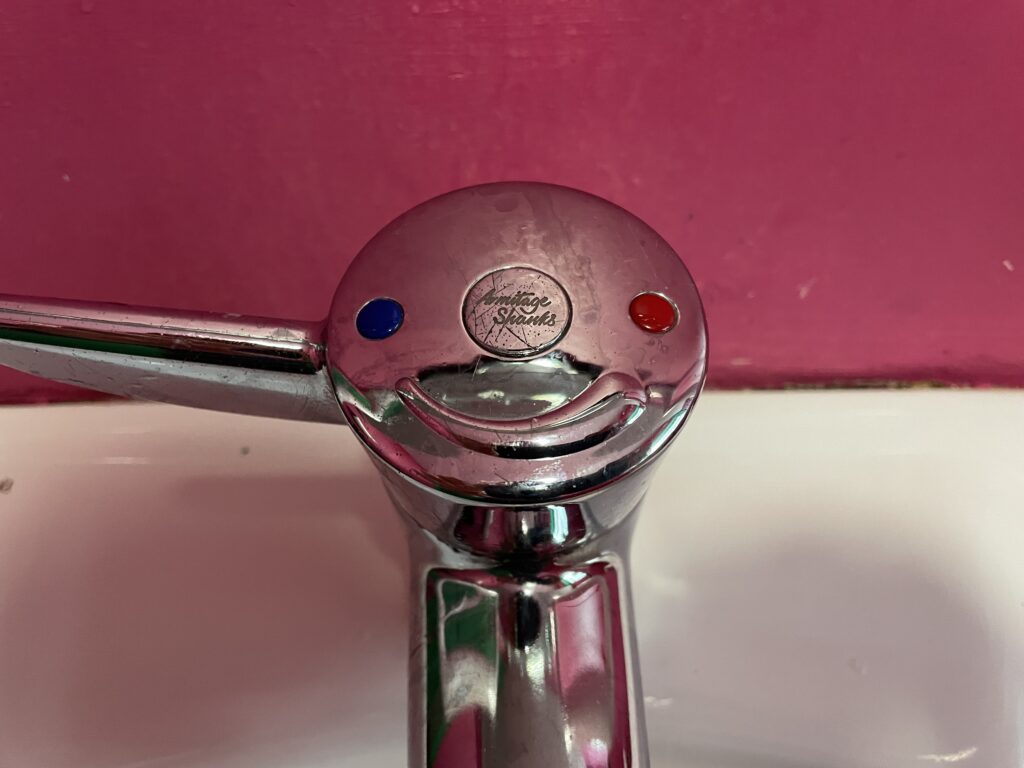
Stay alert to happy and healthy faces all around you…

We want to see your pics of hidden smiley faces in your surroundings: a walk in woods or a play on the beach might include creating a smiley face, for example! Here’s our suggestion (look for the smiling face!)…

…but we’re sure you can do better!

Look out for things around you that show a hidden smiley face – a happy and healthy face – or encourage your child to create their own from things around them (pebbles, leaves, Lego…). (Just avoid obvious and intended smiling faces like the ones featured in the Breeze list of summer dates from last week’s message – they’re too easy to spot!)

To enter, email your pics to [email protected] by Friday 09 September. Enter ‘Summer competition’ as the subject.

All entries will be displayed in a happy and healthy display in school, and there are prizes for our favourites.