
Not all heroes wear capes day Thursday 1 April
As part of our current History topic, ‘Heroes’, Key Stage 1 are having a ‘Not All Heroes Wear Capes’ themed day on Thursday 1 April.
Throughout this topic, we are learning about real life heroes, past and present. The topic is not about fictional superheroes. Instead, we have been exploring real heroes in everyday life (emergency service workers and influential heroes such as Sir Tom Moore, Nelson Mandela and Leonora Cohen).
As the children missed World Book Day, and the chance to dress up as their favourite book character, we thought this would be a great opportunity for children to come to school dressed up as a hero. It could even be someone that you know personally and consider a hero.
Please consider the following:
- instead of having the expense of buying anything new, have fun creating your hero outfit
- no face paint
- make sure their costume does not need support from an adult during the day eg when they go to the toilet
- look at the ideas below to support you in thinking of a hero or a costume think about heroes in our history and everyday heroes and not fictional superheroes
If you would like any more ideas, please feel free to talk to contact us.

A Taste of Trinidad & Tobago

Today, Y3 and 4’s current topic about ‘Carnival’ and its links to the West Indies came to life in the form of steel drums!
We have been learning all about the West Indies and the countries (lots of islands) that make it up. One of those countries, Trinidad & Tobago, is where the steel drum originates.
Y3 and 4 were lucky enough to have a go themselves at playing the steel drum!
Further your child’s learning by seeing if they can remember where the steel drum comes from and as an extra challenge, if they can remember the three parts of a steel drum! They are: the notes, the skirt and the belly!

Imagine you were evacuated in WWII…
… Y6 did just that, today!
We’ve been practising fundamental writing skills, this week: our must dos. These are things you must include in your writing or it’ll be wrong. For example, capital letters for proper nouns, commas to separate clauses and phrases and avoiding squashed sentences.
We’ve also learnt about moving subordinate clauses to different parts of a sentence. I’ll use Eeshan’s example of when he imagined himself as an evacuee, getting on the train to the countryside and meeting new people.
- Awkwardly, I told them my name.
- I, awkwardly, told them my name.
- I told them my name, awkwardly.
Let’s have a look at some pieces of writing. Look out for commas separating main from subordinate clauses!

I love Priya’s use of punctuation in this first one. The dash really emphasises how much she wants her new family to accept her.

Phoebe has nailed the openers, here. I also like her vocab choice of ‘herded’ which makes me think that the children were rounded up like cattle.

Joude’s used a variety of lengths for her fronted adverbials and even included a nod to our history lesson where we learnt that some children didn’t know they were being evacuated – they thought they were off on holiday.

The suspense is really built up by Alishbah in our next example! She uses onomatopoeia, ellipses and rhetorical questions to achieve her desired effect.

I like how Jess edited her writing to move her subordinate clause which became her opener.
Thanks to all Y6s who have been brilliant in our live lessons.
A week of heroes and plants
This week, our learning has been full of heroes and plants! In Writing, we’ve continued working our superheroes, writing a super story about a meeting between them and their arch nemesis. We’ve been focussing on making sure we check for our must dos:
- Capital letters to start sentences
- Capital letters for proper nouns (names)
- Full stops to end sentences
- Finger spaces
Here’s a story for you to enjoy:

We recapped our understanding of chronology at the beginning of the week, making a timeline of a school day. Can your child tell you what’s on the rest of the timeline?

Then, we moved on to learn about two heroes from History: Leonora Cohen and Nelson Mandela. It’s been really interesting hearing the children’s views on the battles these people fought. Discuss what the children know and think over the weekend.
Our plant learning has become real this week as we got to plant sunflowers! Each of us has our own flower to grow, making sure we provide it with the light, water and warmth that it needs.


I’ve really enjoyed my second week in Year Two. It’ll be time to welcome Mr Parker back on Monday. We’re all looking forward to it.
DT: designing carnival costumes
In this DT lesson, we’ve gone through some of the stages of the design process.
The class took on the role of carnival costumes designers and split into troupes to design their costumes. First, they had to decide their theme and then do some internet investigation for inspiration.


Next, they made some initial sketches for their carnival king and queen costumes. They had to think about what the costume would look like but also think how the costume would be supported so that it could be moved without collapsing.
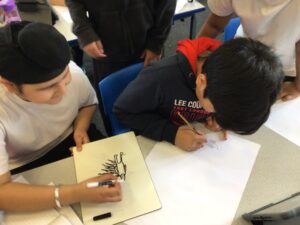


After that, they reflected on their sketches with their troupe and made some tweaks before colouring and annotating the designs.

Finally, the troupes looked at each other’s designs and fed back what they liked about them. They also evaluated their own and fed back on improvements or changes they would make.


Homework Heroes
In science, we’ve been learning about the human body!
This week’s homework task was to show our understanding of how either the digestive or circulatory system works.
Take a look at these crackers of submissions!
Joude made great use of colour to demonstrate oxygenated vs deoxygenated blood.

Priya’s explanation was clear and concise alongside her brilliant scientific diagram.

Leo responded in a brilliantly creative way – using superclay to produce this 3D model!


Ethan clearly showed how the digestive system fits into the body itself. (Nice, neat spellings, too!)

Pollyanna had the fab idea of creating a quiz!
Click here to take it for yourself!
And, finally, have a look at Phoebe’s fantastic explanation of the digestive system – I love the pictures she chose!
History: Inspirational people
This term, our history topic is all about two inspiring, significant individuals. The children are learning who these people were, what they believed in and what changed because of them. Throughout the topic, the children will use words and phrases relating to time and chronology (eg old, new, past, a very long time ago, present, ancient, modern).
With each topic, we have vocabulary for the children to learn and use. Here are the words and their definitions for this history based topic. Ask your child about these words at home – can they remember what they mean?
- equality – being treated fairly and having the same chances in life
- rights – the basic things people need to live (eg food, housing) and reach their potential ( eg education, safety)
- apartheid – a system that keeps people apart, usually because of different skin colour
- racism – treating people differently because of the colour of their skin, their religious beliefs or their culture
- suffragette – a woman who campaigned for the right for women to vote
- protest – people coming together to show others that they are against an idea or an event
- impact – a strong and powerful effect on something or someone
- belief – a strongly held opinion that something is right
Throughout history, lots of people around the world have faced discrimination – where they are treated differently because of their race, skin colour, gender, age and lots of other things, too. Sadly, it still happens to this day! But there are some amazing people who have worked hard to make a change for better, and help us move towards a world where everyone is treated fairly and equally. One such person is Nelson Mandela.
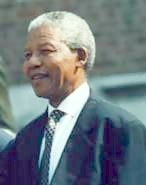 The children were totally immersed in the learning and there were lots of questions about the apartheid laws. Ask your child about this.
Why were black people treated differently?
How long did Nelson Mandela go to prison for?
Suffragettes
What happens when people feel they are being unfairly treated? Leonora Cohen was a suffragette, she was actively involved in the fight for women to have the right to vote in elections. This week, we have a live Zoom call from Abbey House Museum in Leeds. The children learnt lots of interesting facts about Leonora’s life, beginning with her birth in Hunslet, Leeds.
How many times did Leonora go to prison?
Why did Leonora travel to London and how did she feel?
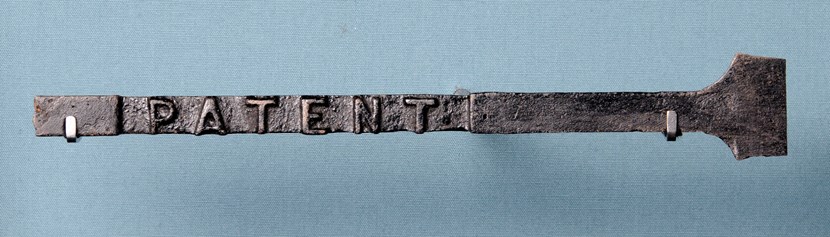
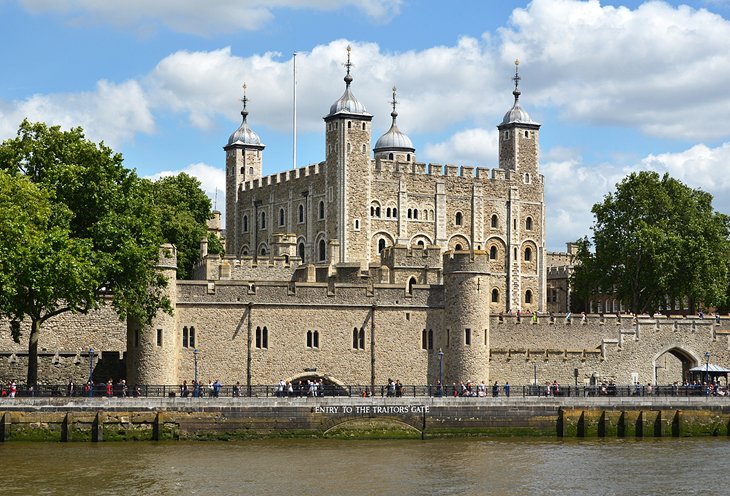
Ask your child about the pictures below. What can they remember?

Distance won’t stop us!
What a fantastic start to our distanced (but brief) home learning!
Thank you to everyone who got stuck in, contributed lots and made me smile with your enthusiasm.
Check out some of our highlights below…

I loved Yusayrah’s creative poem where she’d highlighted her spellings!

Have a look at Pollyanna’s dramatic writing about losing a pet just as she was about to take cover in an air raid shelter!


I’m loving the presentation here! You can clearly see how the number lines show what’s going on in her head for those mental subtractions.

Alishbah sent in her learning and said she had fun today which is always fantastic to hear.
Keep up the hard work, team!
Plants
Our new science topic this half term is…

With each topic, we have vocabulary for the children to learn and use. Here are the words and their definitions for this topic. We often make up actions to match the words to help us remember them. Ask your child about these words at home – can they remember what they mean?
Our first lesson back in school was to learn about the parts of a plant. This video helps to understand the different parts and what their jobs are.
Can your child name the parts of the plant shown below?

The class worked in groups to compose their own plant made up of all the different parts.

We’re also taking part in the Grow your own potatoes project.
The first job was to plant the potatoes.


We’ll be observing the potatoes as the plants start to grow.
Finally, if there are any budding gardeners in the class, this article gives some ideas for children to do at home.
Let’s rock for Red Nose Day!
Hello to all of you Times Tables Rock Stars,
This Friday is Red Nose Day and the people at TTRS have come up with a great challenge to raise some extra money.

Prices for a new nose start at 50,000 coins so we’d best get saving.

We’ve got until Friday – Red Nose Day. Let’s do our bit to help the nation reach that £5,000 target.