
Being Reflective
On Friday afternoon, we spent ten minutes reflecting on our week. We reflected on what went well, what was tricky and what we enjoyed.
Olivia said:
When I saw our maths learning objective: ‘counting in 50s’, I was worried that it was going to be really tricky. When you taught us that it was really similar to counting in 5s, I found it a lot easier than I thought I would and now I get it!
This week, we also begun creating our own maze games based on ‘Theseus and the Minotaur’ – a Greek myth.
The children in Year 3 were so excited about this project. When we were reflecting on Friday, many of them put their hands up straight away to show it was their favourite part of the week.
One of your five a day
In Reception, Year 1 and 2, the children benefit from the School Fruit and Vegetable Scheme, a government programme that entitles every child to a piece of fruit or vegetable each school day.
Fruit and vegetables are key to a healthier lifestyle for all of us and experts recommend that everyone eats at least five portions of a variety of fruit and vegetables in a day.
Eating fruit and vegetables every day helps children and teenagers grow and develop, boosts their vitality and can reduce the risk of many chronic diseases – such as heart disease, high blood pressure, some forms of cancer and being overweight or obese.
The children enjoy a variety of different fruit and vegetables and these all contribute to their 5 a day. We even tried radishes last week!

To ensure no food waste, sometimes the children may bring home a piece of fruit or vegetables. Change 4 life provides more ideas for achieving 5 a day.

If you would prefer, you are welcome to send a snack with your child for playtimes but this should only be fruit or vegetables.
Science: environmental dangers
In our science lesson this week, we’ve been learning about how humans can cause environments to change and how this can have a negative effect on the plants an animals that live there.
We learnt about how deforestation is leading to habitat destruction for lots of plants and animals. We also learnt about how plastic pollution in the environment affects sea creatures.
Children were then tasked with creating a short video to inform others about these dangers and what we can do to help.


Living and Learning – mental health
What might affect our mental health?
Anything! It could be a friendship issue, not taking care of yourself or even a life event such as moving house or school (like us next year!).
What might the person be feeling?
“They might feel anxious,” said Safiya-Mishal.
Isabella said they might look happy on the outside but be really sad inside.
“They might be paranoid about little things,” said Noah.
How can that person help themselves?
- go for a walk – Priya
- talk to someone – Ethan L
- avoid what’s making you sad for a bit – Phoebe
- make sure you’re sleeping and eating enough – Talha
- write your feelings down – Miss Wilson
- do some mindfulness – Albie
How can others help the person?
Leo said, “They could ask them if they want to talk but they might not.”
Sami advised, “You could remind them that everything will be ok.”
“They could comfort them or just be with them,” suggested Jasraj.


Painting with syringes
Year One have been using the book Here We Are, written by Oliver Jeffers, as their focus for the current mini topic.
We have looked closely at our planet and the children thought of questions they would like to ask about life on earth.
How many humans live on Earth?
Which is the biggest animal?
Is everybody different?
Why is there so much water?
Using Google Earth, we looked down on our planet from space. Then we zoomed in gradually and found our school. The children were fascinated by the colours of our planet from far away.

Using some water colour paints, we created our very own versions of Earth. The children mixed their own paints and then used a syringe to drop the colours onto some filter paper.
It’s magic! The paint is spreading out!
The colours are joining.
It is light and dark.
The finished planets looked very realistic indeed.


Sorting
In maths this week, the children have taken part in different sorting activities.


Sorting is an important early maths skill.
By sorting, children understand that things are alike and different as well as that they can belong and be organized into certain groups. Lots of practice with sorting is important for developing numerical concepts.
Try some sorting activities at home. Children love sorting objects like buttons, small toys and coins. They could even help sort the laundry!
Please send some photos.
DT: maze making
In DT lessons over the next two weeks, we’re designing and making marble mazes.
In this lesson, children had to design their maze on squared paper. The colouring serves an important purpose as each colour represents a different length of maze wall that they will have to saw. This will help them know how many pieces of each length they will need.


Oracy: performing a poem
In our reading lesson yesterday, we had an oracy (speaking and listening) focus. We have been retelling The Ugly Five by Julia Donaldson with some changes. We then practised performing them in a pair with focus on appropriate volume and intonation. They were great!


Finger Spaces
What are Finger Spaces?
Finger spaces refer to the amount of space that needs to be left between words so that they can be read as individual units of meaning. Young children learning to write are first taught to put their finger on the page in between each word, to create the necessary spacing. This is an important skill and a Year 1 objective. By the end of Year 1, it is expected that all children will use finger spaces in their writing.
How Can You Encourage Children To Use Finger Spaces?
In class, we have various strategies to encourage finger spacing. These include:
Modelling the Use of Finger Spaces
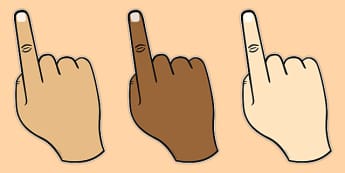
Demonstrate using finger spaces when writing on the board by placing your index finger between words. It is important to exaggerate these spaces when demonstrating to help children to understand why there is a space in between each word.
Finger Space Tools
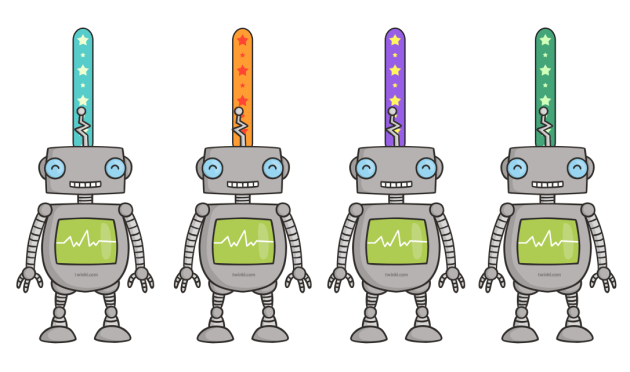
Providing children with a finger space tool for them to use instead of their finger. Have children place the tool in between each word to help them learn to place the correct amount of space between words.
 Use Reminders and Prompts
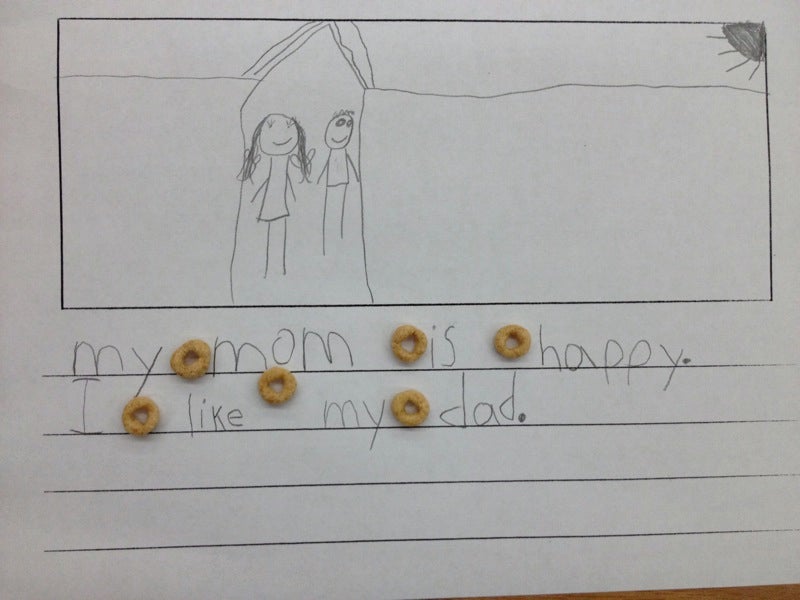
Place writing prompts and fun reminders on children’s desks if they are forgetting to use finger spaces in their writing. Visual supports not only help children use finger spaces when writing but also act as visual reminders.
Today, the children were asked to try to read some sentences that did not have spaces between the words. This was tricky!


This activity helped to increase awareness of why spaces are necessary.
Ask the children to look for items at home that could be used as finger spacing tools.
This week’s learning
We are really impressed with how well the children have settled. They have quickly learnt the routines and are ready and eager to learn.


Reading
Your child will bring a book home this week. These books don’t contain any words at this stage. Please share the book with your child. Encourage them to talk about the characters and events and predict the ending.
Use the reading record book to write a short comment.
We will change books weekly, so please keep both the book and the record book in their bookbag.
Phonics
We will begin phase 2 of our phonics programme, ‘Letters and Sounds’ this week. In this phase children will be taught the phonemes (sounds) for a number of letters (graphemes), which phoneme is represented by which grapheme and that a phoneme can be represented by more than one letter, for example, /ll/ as in b-e-ll. We use Jolly Phonics actions to help children remember these phonemes.
We will be continuing with activities to help children identify the initial sounds in words. Games such as, ‘I spy’ are easy to play at home and when out and about.
Phase 2 phonemes:
Set 1: s a t p
Set 2: i n m d
Set 3: g o c k
Set 4: ck (as in duck) e u r
Set 5: h b l f
We will send one set of phonemes home each week to practise at home.
Next week I will post a presentation explaining how we teach early reading and writing and how to help at home.
If you have any questions please email me.