Year 3 had a brilliant afternoon playing in the back playground last Friday. It was a snow day to remember and here are a few pictures to prove it!
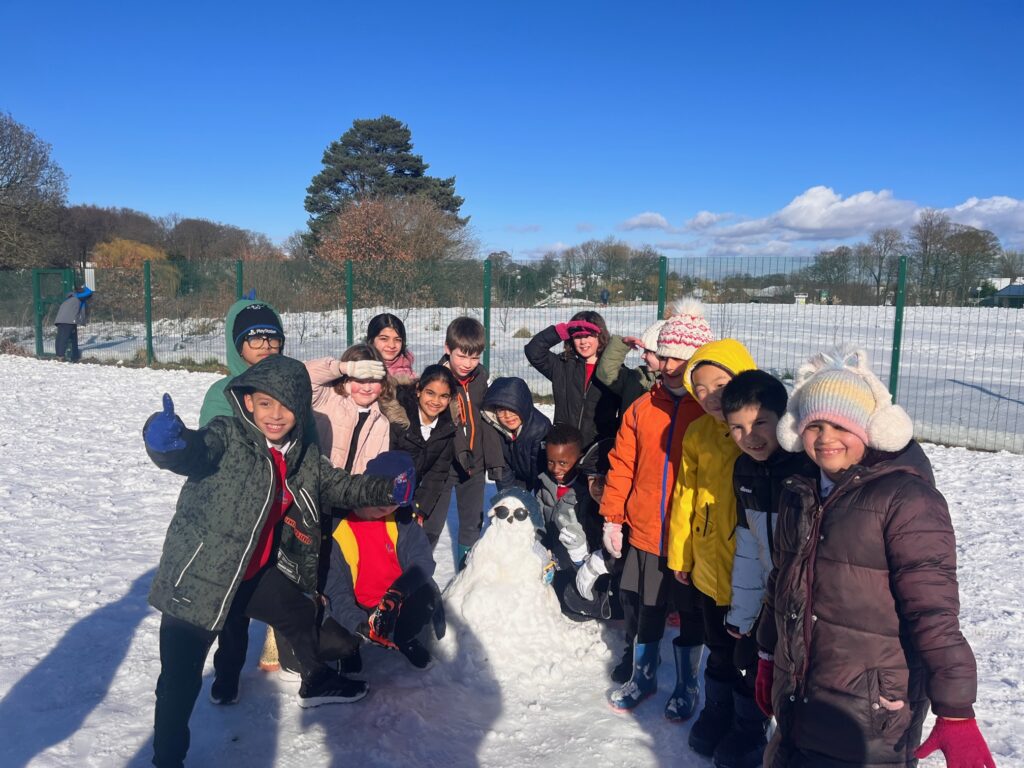
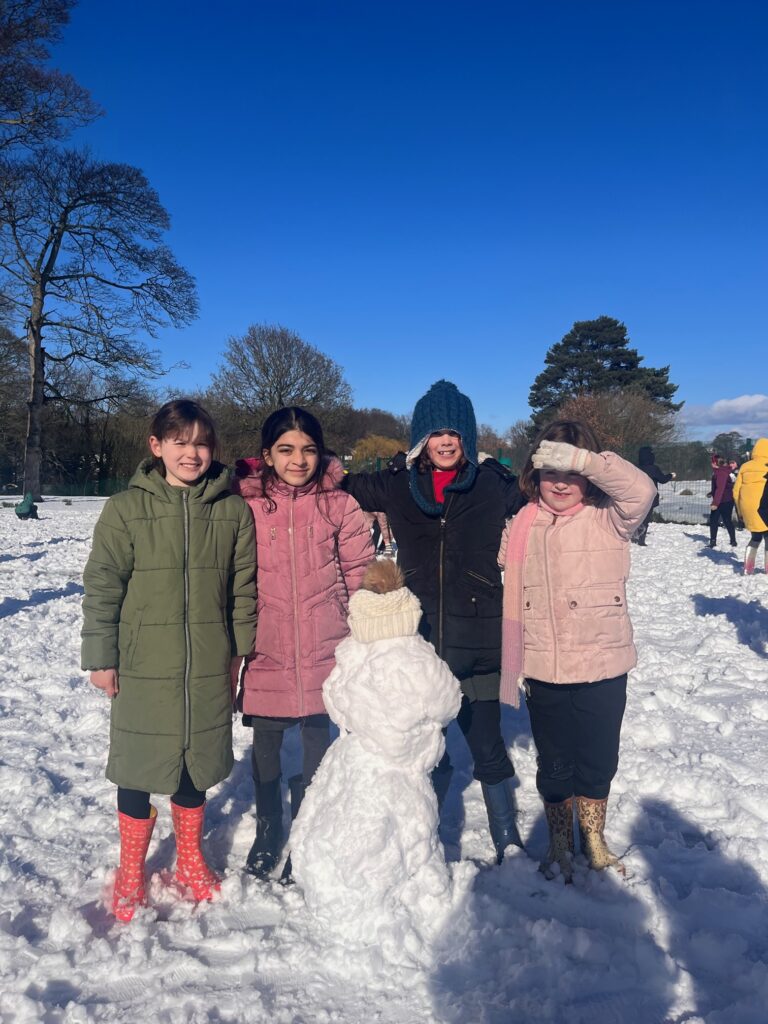


Year 3 had a brilliant afternoon playing in the back playground last Friday. It was a snow day to remember and here are a few pictures to prove it!
Moortown Primary is a happy and healthy place to learn. We want to keep getting better and better and a key part of this is to hear your views…
I can’t fault this school. My kids love it and the teachers are amazing. Always willing to help and keep us up to date with progress and anything we can help the kids with at home.
That’s one of the comments from a recent survey of Reception parents – thank you to the 17 parents who took the time to let us know their views. We’ll spend some time now reviewing what was said and seeing if we can act on some of the points raised.
We need your help again – this time for all parents and carers to let us know about class trips.
We’re currently reviewing our curriculum plans. We’re keen to put a long-term plan in place for class trips. Class trips are a highlight for children:
The downside of trips is the expense – we’re very aware that trips aren’t cheap (often due to transport costs). We ask you to make a voluntary contribution to cover the cost, but even then, trips can be expensive for those who contribute and for school. Whilst the contributions are voluntary, we can’t go ahead with a planned trip if we don’t receive enough contributions.
We want to plan a schedule of trips from Reception to Year 6. This is to make sure we plan trips better, so we can closely match the trips with the learning that’s happening in school and to make sure that teachers are clear on our expectations (so that trips are spread out across the years).
To help us, we’d be very grateful if you spend just five minutes completing this short survey.
In the Summer term, look out for the annual survey for all parents and carers, too.
And now a change of subject…
Get set… we’re taking part in Sustrans Big Walk and Wheel 2023.
We want your child to walk, scooter or cycle to school, even more so during the Big Walk and Wheel challenge which runs from 20-31 March.
The challenge is a great way to build physical activity in your child’s daily routine – so important for physical health and mental wellbeing. Active school runs also help to reduce congestion and air pollution outside the school gate. A 2021 YouGov study showed nearly half of UK children worry about air pollution near their school and that children thought active travel was the best away to bring down these pollution levels.
There are some great prizes to be won every day if enough children taking part!
Download your free family guide.
We’ll end this week’s message with another great comment from a Reception parent…
Reception at Moortown is an incredible start for a child’s learning journey. They learn to read in an amazingly short space of time, and the classroom is very impressive and changes regularly to ensure children are engaged and challenged, all whilst making good friendships and having fun.
This week’s Talk Time poses a moral dilemma and links to internet safety.
Is using the internet is bad for your health?
You could start by listing reasons why you would use the internet (playing games, social media, watching videos). Are your reasons the same as other members of your family?
We suggest approaching this Talk Time with an open mind. You may already have strong views on this but it’s important to consider both sides of an argument before reaching your conclusions.
Check out these R2s to help you with your discussions at home:
After the discussion with friends and family, what conclusion do you reach? Do others around you agree?
We aim to open at 10.30am this morning.
This is due to the heavy snow. Staff can’t safely arrive at work on time at the moment. The forecast shows an improving picture, so we aim to open at 10.30am.
Breakfast club isn’t open but wraparound care this afternoon will be if safe to do so.
Apologies for the inconvenience.
This week’s message is all about our current topic…
Topics are the way we teach much of the learning in the foundation subjects (eg history, art, geography, DT). Each half-term topic has a driving subject – the main focus for teaching pupils the knowledge and skills they need. The driver changes with each topic to ensure a broad and balanced curriculum.
Although the learning in each topic comes from the driving subject, there are opportunities for enrichment through other subjects.
Read more about the intent, implementation and impact of our topics.
This half-term, it’s Computing. We’ll be developing our knowledge of computers and computer programming.
Computer programming is super. Creating games, animations and solving real world problems is fun, encourages creativity and is challenging! Importantly, the skills the children will use and develop are easily transferable to other subjects and areas of life. For example, the concept of decomposition in programming is concerned with breaking down a large task into smaller chunks. This concept could be used when writing a story, solving a maths problem or tidying a particularly messy bedroom! Debugging is the skill of identifying and fixing an error in a program. It requires systematic, objective thinking and plenty of resilience.
Each phase has age-related specific knowledge, skills and vocabulary that they’ll learn, use and apply across the topic. See page 13 and 14 of the curriculum statement document.
Children will learn about how technology is used beyond school in our homes and all around us. They’ll begin to consider what a computer is and isn’t.
In programming lessons they’ll create animations in Scratch Jr by creating and debugging algorithms. They’ll then continue to use Scratch Jr to create an interactive quizzes.
Children will reason about what exactly makes a computer a computer. Is a games console a computer? Is a TV a computer? Is a bedside lamp a computer? Next, they’ll learn about inputs and outputs and identify different examples of them in everyday technology.
They’ll then be introduced to Scratch and will learn how they can add or change sprites and backdrops and then begin to experiment with making their sprites move. They’ll look at programs created on Scratch and use logical reasoning to explain what will happen when these programs are run. They’ll learn about the importance of sequencing in programming when they recreate a well-known melody. Finally, they’ll create their own ‘band’ on Scratch by programming different instrument sprites to play sounds.
Children will learn about what a computer network is and that the Internet is an enormous computer network. They’ll learn about the difference between the Internet and the World Wide Web. In programming lessons, they’ll be introduced to BBC Microbits – pocket sized computers which they’ll program to do lots of different things. This will allow children to gain a deeper understanding of concepts like sequence, selection and variables. Some of this vocabulary may sound alien to you. However, before the end of the topic your child will be able to tell you what they mean and give examples of how they’ve used them in their projects. Some of the projects your children will be making are:
Talk to your child about what they’ve been learning in class. The Class News page is a good place to find out more about what your child is doing.
The school library and local libraries have lots of books about coding and computer games which your child will be able to borrow and develop both their reading skills and computing knowledge.
Finally, try programming with your child. There are loads of programming apps and software available to download, often for free…
Key Stage 1
Key Stage 2
Finally, and importantly, talk to your child about our Being Online: Acceptable Use Agreement. (Page 8 is the one for early Years and Key Stage 1 children and page 9 is for older children). Discuss whether the points that are listed apply to being online at home as well as at school.
This week’s Talk Time is linked to our current topic Computing and has a social theme. There are lots of different types of technology that we can see in the world around us. Take a look at the photos below. What can you see? Have you used any of these things before? Have you seen other people using these things? What other types of technology do you use at school or at home?

This week we’d like you to set yourself a challenge and see how long you can go without using technology.
Can you think of some different ways to approach tasks that would usually involve using technology? For example, using the stairs instead of an escalator or lift. Or playing a board game or reading a book instead of playing on your games console, mobile phone or watching television.
Happy World Book Day!
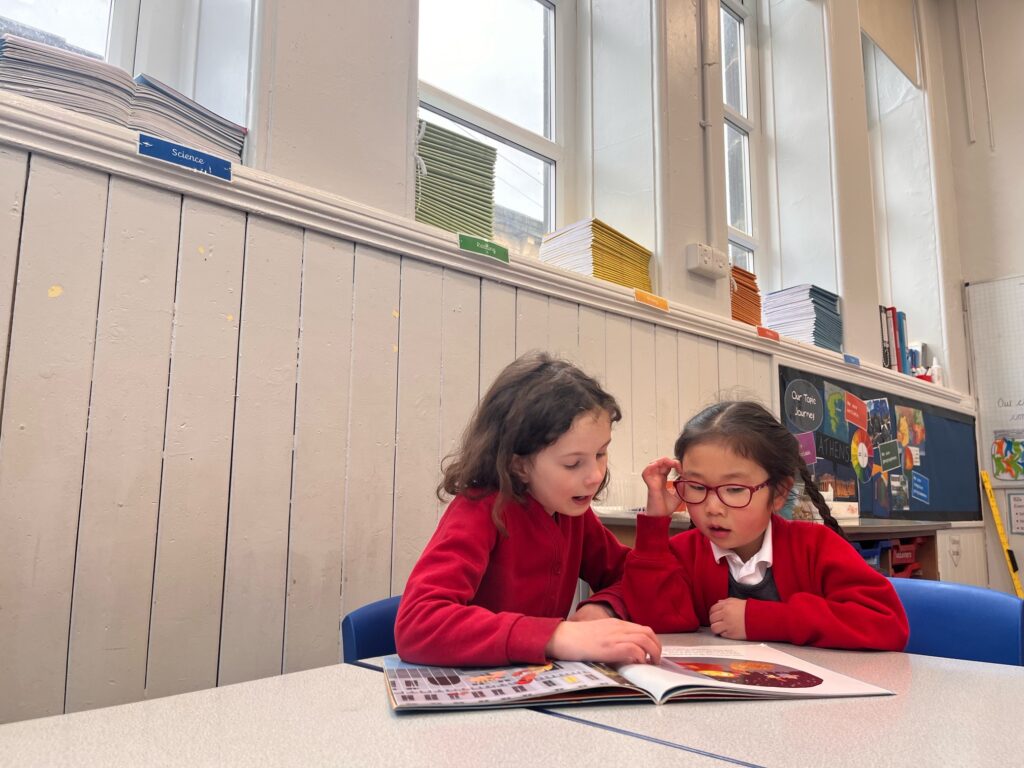
Year 3 have had a fabulous day hearing teachers read extracts from their favourite books, designing their own book covers and creating crosswords based on their favourite stories.
The highlight of today was definitely reading with our Reception class. I was so impressed with Year 3’s eagerness to show their love of reading to the children in Reception. They read with prosody, expression and fluency and were fantastic role models to the younger children.

This week in Year 3, we have had a big push on practising our handwriting!
We discussed how our handwriting improves when we turn our page to an angle (parallel to our arm) and use our other hand to hold the page steady.
Ensuring that we do these two things whenever we are writing means that our handwriting will be the best it can be!
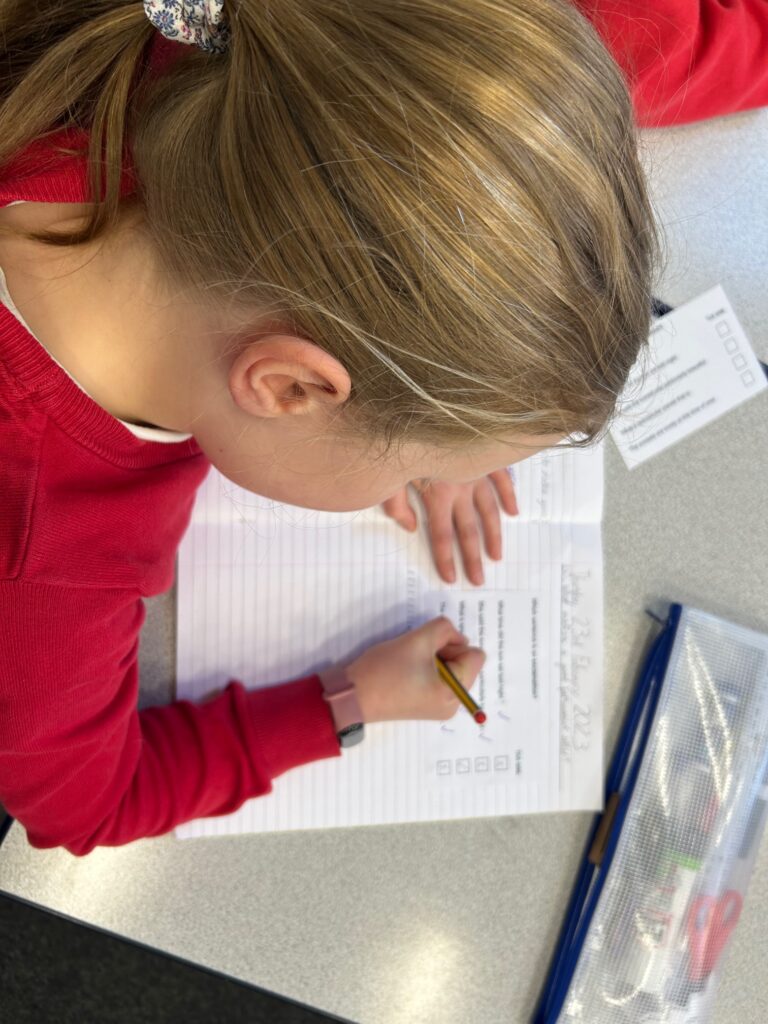
Help at home by ensuring that when they writing, your child has positioned their page correctly and is using their other hand to keep the page still and watch their handwriting improve!
As a teacher, the year is punctuated with school-related milestones, most obviously the different terms. After just one week away, it’s remarkable how different Spring 2 feels – we’re arriving and leaving work in the daylight, spotting signs of Spring on our way. As you travel to and from school with your child, talk about the changes in the seasons: daffodils, daylight, leaves on trees… Being mindful like this can have a really good impact on our emotions.
Earlier in the week, we emailed you about the forthcoming industrial strikes planned across a series of dates:
As it stands right now, it looks that our school will be able to remain open.
However, please remember that all workers, including teachers, have the right to take industrial action without prior notice. This means we might have to close some classes at the last minute. As such, it would be advisable to prepare for some disruption on the days listed here just in case.
For the school year up to Friday 10 February, our attendance figure was 96.0%. This is continues to be higher than national figures – great news!
Good attendance is important:
Thank you for helping us increase our attendance rate. Please continue to make sure your child is getting to school on time every day.
Have a good weekend, whatever you get up to.
This week’s Talk Time has a reading and oracy theme. This is because on Thursday 02 March 2023 it is World Book Day. To celebrate reading, we’d like you to have some conversations about your favourite books and or/authors.
I can talk about my favourite book and/or author.
You can come up with your own ideas for how to show this. Ideas might include:
When you’re happy with what you want to say, turn your attention to speaking aloud with confidence and clarity. This week’s Remember 2s (R2s) will help with that:
This homework will be celebrated on World Book Day itself, Thursday 02 March 2023.