Week beginning 21 September 2020

Maths

This week’s maths learning is linked to place value.

Year 3 children: These five video lessons will roughly match the teaching and learning happening in class. The worksheets and answers for each lesson are here.

Year 4 children: These five video lessons will roughly match the teaching and learning happening in class. The worksheets and answers for each lesson are here.

You don’t have to print the worksheet. Your child can write or draw their answers on paper. Your child’s learning will be most effective if you sit with them to pause the clip and check / praise / support your child as the clip moves on.

Practise times tables on Times Table Rockstars, too. We’re concentrating on the 10 times table. Email the class teacher if you need your child’s login and password details.

(Suggested time: 30 minutes of Maths and 15 minutes of Rockstars daily)

Spelling

Look on the homework page to find this week’s spellings. Your child should complete one task each day.

  • Day 1: Read the words aloud and think of which words are trickiest. Find out what a word means if you are unsure.
  • Day 2: Practise the spellings using two of the ideas in our Super Spelling Strategies guide. (Set yourself and others at home a challenge of using some of the words when you’re speaking, too!)
  • Day 3: Write separate sentences, each containing one of the spellings. (Don’t forget to show off really neat handwriting and make sure you sentence starts with a capital letter and ends with a full stop, exclamation mark (!) or question mark (?).
  • Day 4: Repeat Task 2 or 3.
  • Day 5: Get an adult at home to test you on your spellings. Practise any you spell incorrectly – you could write them out carefully until you’re sure.

(Suggested time: 15-20 minutes daily)

Reading fluency

Use this text at home to build up fluency skills.

In school, we generally follow this sequence:

  • Day 1: Read the text aloud with your child listening. Read it clearly and slowly, pointing to each word as you read. Have a chat about any unfamiliar words.
  • Day 2: Read aloud each sentence (a full short sentence or part of a longer sentence), and have your child read it back to you. Do this ‘echo reading’ for the whole text.
  • Day 3: Read the text and talk about the effect of the punctuation on how you read it – pauses for full stops and expression for exclamations (!) or questions (?). Your child reads the text aloud.
  • Day 4: Read together with expression (just like you practised on Day 3).
  • Day 5: Your child reads independently and fluently.

(Suggested time: 15 minutes daily)

Reading comprehension

Day 1: At home, try using this ‘RIC’ text to practise comprehension skills. RIC stands for:

  • Retrieve: finding information in a text
  • Interpret: using clues in the text to unlock information
  • Choice: thinking about the author’s choice of words, techniques or organisation that make the text interesting and enjoyable to read

Day 2: Agree with your child three words from any text they’ve read which they’re less familiar with. Your child should find out what they mean (eg by checking an online dictionary or simply discuss with you) and how to use them in sentences (both when speaking and when writing). Challenge your child to write a sentence with each word in, or to drop the words into conversations at home.

Day 3: Read this article from First News, a newspaper for children, and complete the activity.

Day 4: Read your fluency or RIC text again. Next, do one of the following:

  • Your child could list at least ten facts they’ve read in the text. (If it’s a fiction text (a story), then the facts would be based on the story, like ‘Harry Potter picked up his broomstick’, rather than actual facts from the real world.)
  • Your child could create questions and answers for what they’ve read. (For example, it could be a TV or radio interview based on what they’ve read.)
  • Your child could create their own ‘RIC’ questions.
  • Your child could draw and label a character or setting that they’ve read about.

Day 5: Book Club. Once a week, we have a relaxing lesson where we sit and read quietly, often with an adult. At home, we’d like you to read your favourite book or text, too. If possible, discuss the book with an adult, talking about some or all of the sections of this sheet.

(Suggested time: 30 minutes daily)

Writing

Activity 1: Your child should practise skills they’ve learnt recently by using the following sequence:

Task 1:

  • define what a verb is
  • list different examples of verbs
  • find and highlight verbs in this text which we’ve read in class (or in a book you’re reading at home)

Task 2:

  • write sentences, each with a different verb.

Task 3:

  • write a short piece of writing about where you would go if you could fly, using lots of verbs.

Activity 2:

Children should write six sentences about a picture or photograph you choose. Your child should remember capital letters, finger spaces, joined up letters (use our handwriting guide to help, paying particular attention to tall letters and letters that go beneath the line), and a full stop, exclamation mark (!) or question mark (?) to end the sentence. Encourage interesting words to make their writing more interesting.

(Suggested time: 30 minutes daily)

Science   

We’re learning about living things and their habitats. This Oak Academy video lesson will really help to support learning at home.

(Suggested time: 30-45 minutes)

Tennis

Take a look at a few photos from our latest Tennis session.

As you can see, the children are trying really hard to watch the ball onto their racket. The children have been working independently to improve their hand eye coordination. They are trying to position their body and read where the ball is bouncing before striking it again into the air. Soon, the children will move onto playing in pairs to test out these skills with a partner.

Covid-19: What to do if…

There’s such a lot of information about Covid-19 that it’s sometimes easy to get confused.

To help, we’ve produced this guide which sets out nine different scenarios if your child, or someone in the household, had symptoms of Covid-19. The guide tells you what you need to do and when your child should come back to school.

(We’ve also included the guide in our Autumn for All booklet – it’s on page 15.)

18 September 2020

The homework this week is Practice Makes Perfect and should be completed by Thursday 17 September.

Your child has been sent home with a maths sheet that will reinforce this week’s learning on numbers to 100.

Here’s a link to the sheet.

Please sent photos of your child’s completed homework to [email protected]. We will go through the answers in next week’s homework review.

Our weekly message (18 September 2020)

Well, we’ve made it to the end of Week 2 without having to temporarily close down a class or even the whole school. Sadly, quite a few local schools haven’t been so fortunate. Whilst the government is determined that primary schools remain open in any form of lockdown (and we absolutely share this determination), please do continue to be really careful:

  • hands – wash your hands regularly and for 20 seconds
  • face – wear a face covering in indoor settings where social distancing may be difficult, and where you will come into contact with people you do not normally meet.
  • space – stay 2 metres apart from people you do not live with where possible, or 1 metre with extra precautions in place (such as wearing face coverings or increasing ventilation indoors), and stick to the rule of six, too

Letter from Leeds City Council

This letter from Councillor Saleem Tariq, OBE (Director, Children and Families) and Jonathan Pryor (Executive Member for Learning and Skills) is for you. Please read it. It includes three important ways to support you, your child and us to stay safe.

Home learning

Your child might have to self-isolate. This might be because someone in the family is displaying symptoms or if they’ve had a test and it’s positive (which means the person has Covid-19). It might be because someone in their bubble at school has a confirmed case.

We’ve been working hard to set up a way to support your child at home. If your child has to self-isolate, our teachers are starting to provide an overview of the teaching and learning for the week ahead. It’s still early days, but check out the new Home Learning page in our Learn More section.

Covid-19 tests and symptoms

Getting a Covid-19 test has proved a challenge for many this week. We’ve heard that a batch of available slots become available at different points during the day, so keep trying throughout the day (we’re told trying for slots after 8pm might be more successful, so don’t give up towards the end of the day).

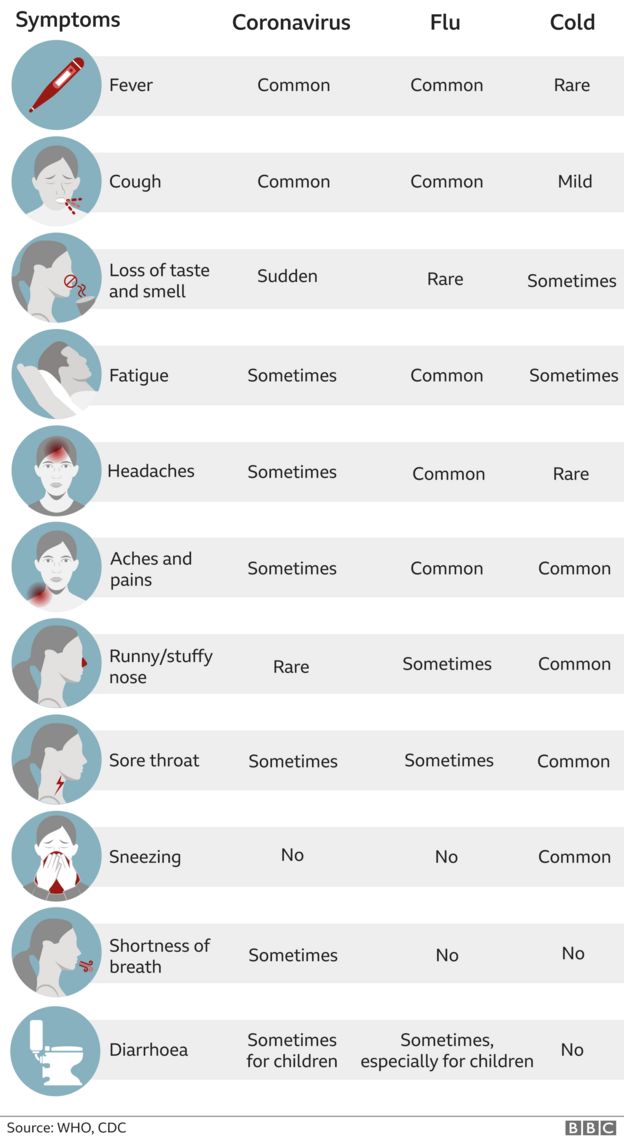
Earlier in the week (14.09.20), we reminded you of the Covid-19 symptoms and made the distinction between a common cold and Covid-19. This BBC article really helps to explain the difference well. We especially like this table…

Symptoms chart

Newsletters

Very many of you have told us how much you appreciate the communication from school in the last few months – thank you.

In these busy times, we’re going to trial not sending home half-termly newsletters. There are quite a few drawbacks with paper copies of the newsletters, including:

  • it uses a lot of paper – not good for the environment
  • it costs a lot – the costs for printing are high and continue to increase
  • it takes up a lot of time – especially for people in the school office (who are currently busier than ever with tasks related to Covid-19) and for teachers who are working on home learning for children self-isolating

Instead, teachers will continue to post lots of class news and school leaders will continue to send messages such as this one.

This is a trial for the next few half-terms. During the trial, please do send us your comments and concerns – speak to the Head of School or drop us an email: [email protected]

And finally…

…this week, here’s the latest edition of the Leeds and West Yorkshire Families magazine. This was a popular addition to our daily messages before summer. In this edition, we especially like the 18 recommended new books and the face-to-face/virtual classes and clubs…

Keep talking to us if you’ve any questions, comments or concerns. Have a really good weekend, staying as happy and healthy and safe as you all can be.

Welcome back!

Hello everyone!

What a first two weeks it has been!  All the children have settled back into school life brilliantly. I have been really impressed to see how the children have adapted to the ‘new normal’ in school.

Here’s a little bit about our plans for the next few weeks…

In maths, we’re beginning with place value and looking at numbers to 100. We are recapping some of the learning from Year One, to make sure that everyone is confident before moving on to the trickier Year Two skills.

Starting at any given number, support your child at home by counting forwards and backwards within 100. Also, give them a number and ask them to tell you how many tens and ones the number is made up of.

In writing, we’re looking at sentence structure.  Again, we’re recapping on Year One learning to begin with. This will help the children become confident writers, for when we begin to write our own short narratives, recounts and diary extracts.

Support your child at home by asking them to write sentences using varied punctuation, including full stops, question marks and exclamation marks.

In reading, we’re using our whole school novel ‘After the Fall’.  In Year Two, we practice reading in a variety of ways. We have daily phonics and fluency (ask your child what this is) sessions, one-to-one reading and lessons that teach skills such as RIC (retrieval, interpret and choice).

Please read at home as much as you can. Look out in the coming days for your child’s home reading book. Reading this as much as possible at home, will help build up your child’s fluency.

In topic, we will use the book ‘After the Fall’ as a stimulus which will inspire lots of artwork. The children will take part in sketching, painting and collaging.

What are the Covid-19 symptoms?

In the Autumn term, it’s quite common for children to pick up a bug along the way – colds, for example. After a long period of isolation away from others, maybe this is even more likely if our immunity thresholds are lower. We’ve got quite a few children absent from school today, but not necessarily with Covid-19 symptoms.

The NHS list these as the three symptoms:

  • a high temperature – this means you feel hot to touch on your chest or back (you do not need to measure your temperature)
  • a new, continuous cough – this means coughing a lot for more than an hour, or 3 or more coughing episodes in 24 hours (if you usually have a cough, it may be worse than usual)
  • a loss or change to your sense of smell or taste – this means you’ve noticed you cannot smell or taste anything, or things smell or taste different to normal

It’s the cough symptom that might be trickiest. To help, do read the description: ‘this means coughing a lot for more than an hour, or 3 or more coughing episodes in 24 hours’.

A blocked or runny nose isn’t a symptom listed on the NHS website so we’d still expect this person to be in school.

There are two really important ways to protect your primary-aged child from Covid-19 (and other illnesses):

  • wash your hands more often, and for longer – is your child doing this as a matter of routine at home?
  • social distance – are you and everyone in your family aware of the rule of six?