Maths in the Sun!
What’s better than learning about equivalent fractions, decimals and percentages? Learning about equivalent fractions, decimals and percentages outside in the sunshine!
Y5 played a FDP loop game, where each card had an answer at the top above a question underneath. For example: “What is 3/4 as a percentage?” Whoever had ‘75%’ at the top of their card had to stand up and say the answer, followed by asking their question and so on until the loop was completed.

We played several times in order to beat our record time and to become even more familiar with equivalent FDPs! Challenge your child to tell you what 1/8 is as a percentage!


The next level up was trying to arrange ourselves into a correct loop and into a complete circle. We had to do this by talking to each other, discussing the right answers and deciding which order to stand in! It was tricky!
“It helped me because you had to find which version matched your own. You had to think about what question might get your answer as its answer,” said Will.
SolART System
In Art, we learnt how to change the shade of a colour. Challenge your child to explain how. We had a go at mixing colours ahead of painting our planets.


Next, we began painting our planets. We had to be careful and precise with our paintbrushes and Eve noted that we had to be resilient, too. “If you were mixing a colour and it wasn’t quite right, you had to keep going until you were happy with it,” she said.


Poppy said, “I used a dabbing movement to make it look like Mercury has a rocky surface.” Challenge your child to name the three other rocky planets in our solar system.
Later in the week, we will recreate each planet’s rotations and orbits around the sun.
Walk to school week
To celebrate Walk to School week, next week, we’re working with Moortown Living Streets to run a fun daily quiz to help get more feet on the street! It is also our Money Matters themed week so what a better way to travel to school for free!

We all know that reducing school gate traffic improves air quality and safety and by walking some or all of the way families benefit from a healthier and more pleasant start to the day.
During Walk to School Week, Living Streets Moortown will be hiding ten words along the routes to school. See your child’s entry form for more details.
Find them each day to fill in the blanks and complete the story – remember to take a pen or pencil! There are also some daily ACTIONS for you to try – see if you can do them all!
At the end of Walk to School Week, your child should hand their completed story in to their class teacher for a chance to WIN one of four £10 Love to Shop vouchers!

Living and Learning
This week’s Living and Learning statement is: I recognise the importance of money. We had a session where we talked about shopping and spending money. We discussed free range and value chickens.
We experienced what it was like to be a value chicken by bunching together and not having much space to live in.

Value chickens live in the dark and are often crowded by many other birds.
We then experienced what it was like to be a free range chicken who would have more space to roam around in and lay their eggs in.

The chickens live outside and has more space.
Even though we want to save money and would be tempted to buy cheaper value eggs we now know slightly more expensive eggs come from farms that have given chickens a nicer life.
We then discussed different supermarkets who sell the same products for a different price and talked about the importance of shopping with different supermarkets to make our money go further, while being aware of the ethical implications with products such as eggs.
ISS Expert Interviews
In reading this week, Y5 became experts on the International Space Station using a webpage that told us 23 facts!

Next, we wrote a script where one person was the interviewer and the other was the expert.

We used our retrieval skills by reading the text and writing and answering questions to create an expert interview and showcase the facts we’d learnt.


Finally, we performed our interviews to the class.


What are the parts of a plant?
Each week, in our Green Fingers topic, we have been observing changes over time by looking to see how our pea, tomato and cress plants have changed and grown.
This time, we used some scientific equipment to observe even more closely. The magnifying glass made the parts of the plants bigger so we could see them more clearly.

Some of the children, who are growing pea plants, made a surprising discovery when they were observing their plants.
Can you spot what it was?

To find out what are the main parts of a plant, the children were asked to research this using an appropriate search question or phrase on the internet. They were able to tailor the search to material relevant to them.
We checked our findings as we watched this BBC video. We decided this information is from a trusted source.
Living and Learning: Mental health
Mental health has the been the whole school focus in Living and Learning. In Year 2, this learning has been based around the importance of special people in their lives and friendships.
We considered what makes a good friend is and the children compiled a great list of qualities they would want in a friend.
- kind
- helpful
- honest
- friendly
- not distracting at learning time
- generous
- loving
- playful
- caring
- polite
- sharing
- fun
In the subsequent lesson, we discussed the sorts of things that can cause friendships to break and what can help make friendships stronger? We thought about some ways to sort out friendship problems and discussed that difficulties within friendships can usually be resolved.
If children do encounter friendship problems which they can’t sort out themselves, they are encouraged to Start Telling Other People. One way to do this could be writing a worry slip in the class Living and Learning box for an adult to read and discuss with the child.
To follow this up at home, here are some friendship related texts.
- Hello by Jack Foreman
- Friends by Kim Lewis
- Halibut Jackson by David Lucas
- Friends by Kathryn Cave and Nick Mayland
- Rosie and the yellow ribbon by Paula Depaolo
- Two friends by Clara Vullamy
Great news for Leeds
This article is great news for the city enabling children to develop healthy lifestyle choices.
Leeds has become the first city in the UK to report a drop in childhood obesity bucking the national trend. The national child measurement programme (NCMP), which requires all children to be weighed at the start and end of primary school saw a decrease in obesity levels in both reception children and children in year 6.

Doubling, halving and sharing
Doubling-adding a number to itself or multiplying it by two-is something that children find really interesting. Using the same number of fingers on each hand, children quickly learn that 1 add 1 is 2 or double 5 is 10.
Double facts are very useful for children to learn as later they can use them to derive other number facts such as near doubles. For example, if they know 6+6 =12 then they can work out that 6+7=13.
In Reception children learn doubling, halving and sharing through hands-on practical activities.


Help your child develop their knowledge of these concepts by using real life experiences at home, such as sharing out food or cutting pizza slices.
Residential
Well, what a great few days we’ve had! 
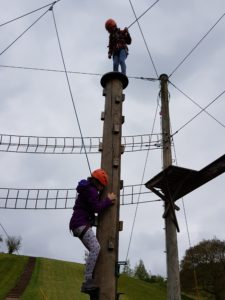
 Taking Year 4 on their residential was an absolute pleasure. All the children made the most of this opportunity and it was great to see them pushing themselves beyond their own ‘comfort zones.’


The main objectives of this visit were to develop teamwork and independence. The children most certainly achieved these! It was lovely to witness the support they offered to each other and their teamwork skills were outstanding. The class followed instructions, used super manners and were very respectful to their environment and all the adults alike. Herd Farm staff commented on the positive attitudes and determination shown by the children throughout their stay.
On behalf of all the Moortown staff that attended our visit, thank you Year 4 for making this a trip to remember. We had lots of laughs and you were all a credit to yourselves, your families and, of course, our school!
Well done Year 4!

Many thanks to all the staff that made our visit possible and more importantly ‘entertaining!’
Mrs Freeman, Mrs Weekes, Mrs Charlesworth, Mrs Pearson, Mr Wilks and Mr Owen.
Below, are some photos for your to enjoy with your children. Next week, we will be doing some feedback, about Herd Farm, and this will be added to our class news page.