
Let’s let the dice decide
Year 6 turned their day into a Fighting Fantasy quest on Friday. They let the dice decide.

The dice decided which line came into the classroom first.
The dice decided when we did what lessons.

The dice decided what we ate for lunch.
The dice decided who we played with at breaktime.
It was an interesting day and, although they could choose not to, most children allowed the dice to make all of their decisions.
Quick Sticks hockey
Last week, some of our Year 5 and 6 children took part in the Leeds North East Quick Sticks hockey qualifying festival at Allerton High. Well done to all the children involved and thank you to staff and parents who supported the event.


Maths: Katie and…
In a topic lesson, we looked at a variety of the Katie and… books. Children looked at the cover and blurb and then voted for which of the books they wanted to read next. We then put this data into a tally chart before making a class block chart. 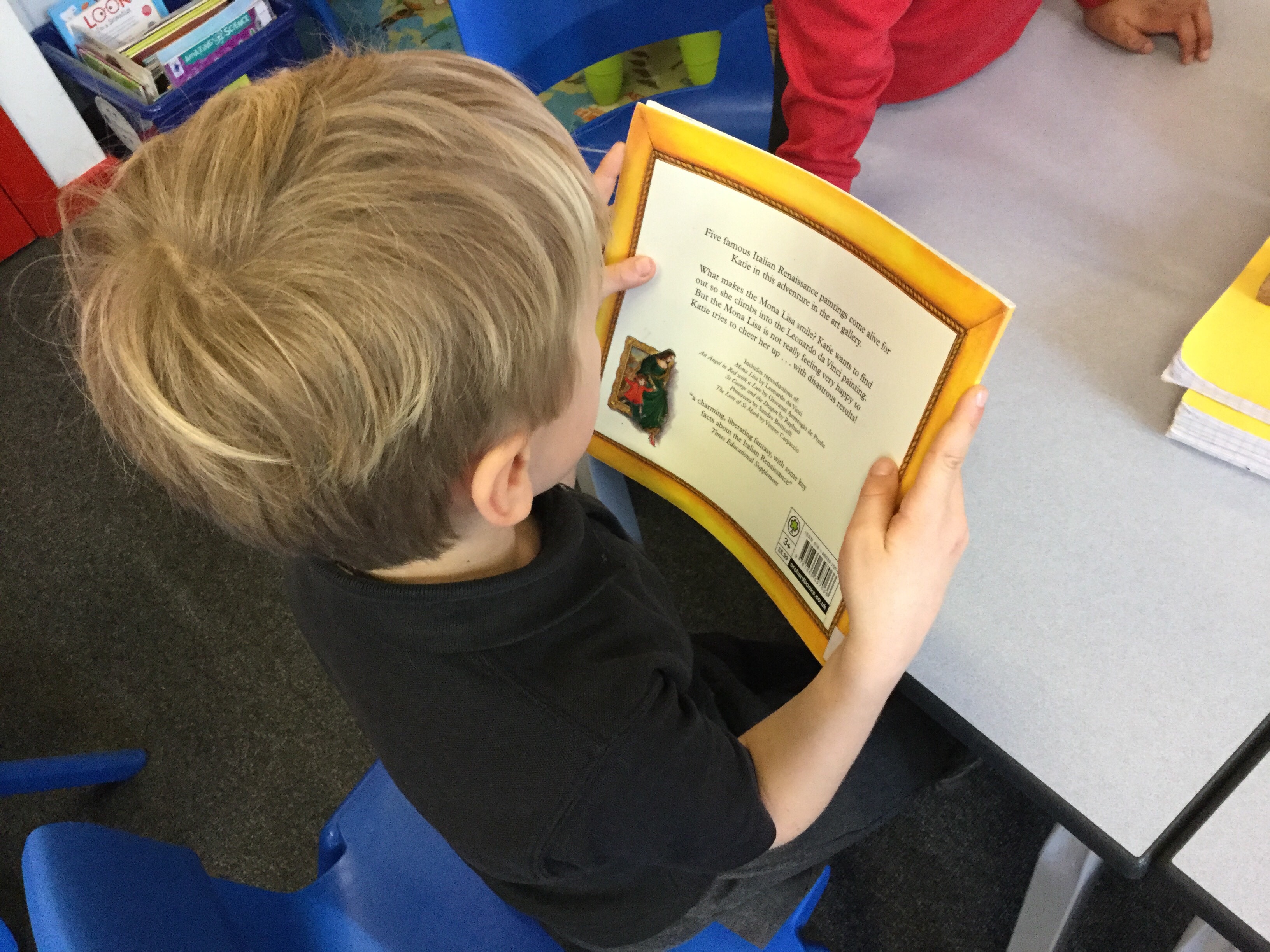


Stay and play
Thank you for attending our ‘stay and play’ session this morning.
We hope you enjoyed looking at your child’s learning journeys. The children really enjoyed sharing them with you.


Fantastic Fireworks
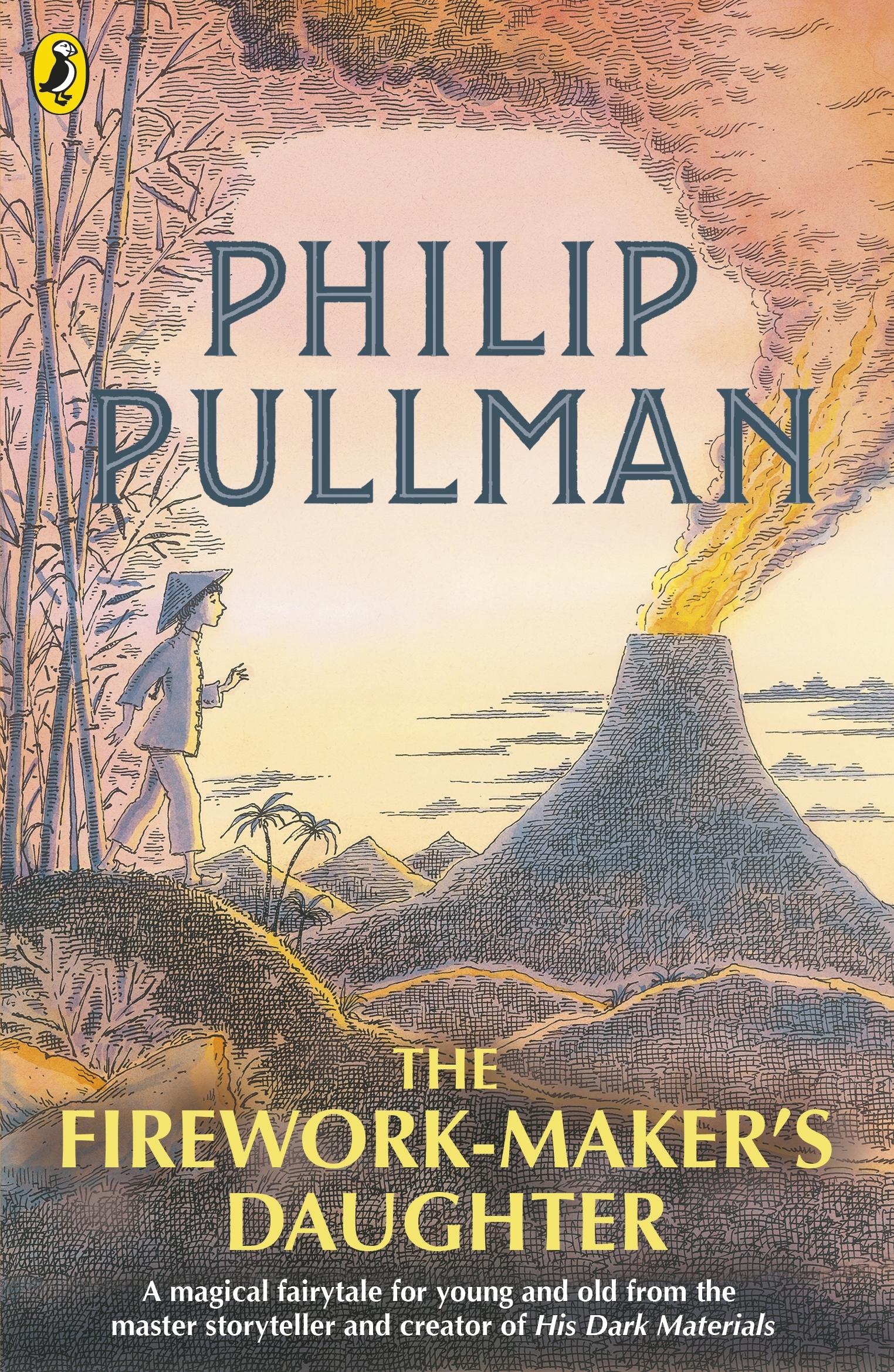
Year 4 have been introduced to their new class novel.
Plot summary
A young girl called Lila wants to become a firework-maker, like her father Lalchand. Despite her talents, Lalchand believes this is an unsuitable job for girls. Lila disagrees, and journeys to get Royal Sulphur from Razvani the Fire-Fiend at Mount Merapi, as all aspirant firework-makers must do.
We discussed who’s read the book already, who’s read any other Philip Pullman stories and if anyone has seen The Golden Compass (a film based on one of Philip Pullman books).
Having read the beginning of the story, we examined how Philip Pullman chose to open the adventure. The children went on to think whether they could name any other stories that have similar openings.
Year 4 discussed the writer’s choice of vocabulary for the fireworks and the effective this has on the reader. In English, we looked at some of the names that Philip Pullman gave to the fireworks. Names like `Leaping Monkeys’, `Crackle-Dragons’ and `Tumbling Demons’.
Then, using a verb and a noun, we invented our own firework names and created an ingredients list. This was really exciting -we loved it! Take a look at some of our fireworks.
To add to this learning, the children used coloured chalks to sketch their explosive inventions.


EasyPeasy
‘EasyPeasy’ is going live this Saturday 26th January. If you have not opted out you will receive a text message inviting you to access the many educational game ideas that you can do at home.
Each week, you will receive a text message with a new game that you can play in any location with everyday items that you’ll already have at home. EasyPeasy is designed to support learning through play!
This week the activity will be ‘stepping stones’. Let us know how you get on by commenting on the game. Look out for our comment with suggestions of how to adapt the game!
Living and Learning: What is a drug?
Today, Year 4 learnt that there are drugs (other than medicines) that are common in everyday life. We discussed possible reasons as to why people choose to use them. We shared our thoughts with each other and completed an activity focused around different types of drugs. These included caffeine, alcohol, tobacco and nicotine.


We all added our thoughts to the outline of a person.


.
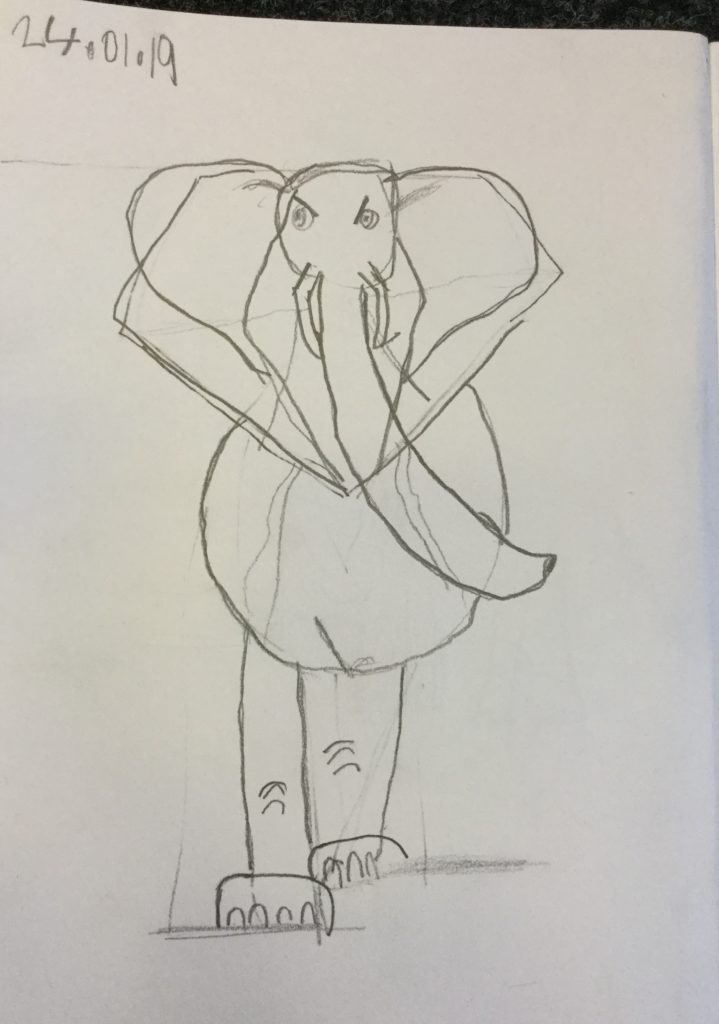
Can you draw an elephant?
In Year Three, have some super-talented artists!
We started our art session today with an appreciation of other people’s art. We discussed the visual and tactile elements within art; specifically commenting on line, form, colour and pattern.
We then progressed to discussing the types of lines we use. We focused on how we could create a thick or thin line by using varying pressure with our pencil. We discussed the need to be able to correct our sketches and agreed to use light, faint lines when sketching elephants. Have a look at the results, below:



Maths
In Maths, we have moved on to division of a 2 digit number by a 1 digit number.
So far, we had been using our times tables and partitioning knowledge to solve questions such as: 66 ÷ 3 = ? Or 44 ÷ 4 = ?
We have been using Base 10 and counters to support this learning; see pictures how we do this, below:
1. 46 ÷ 2 = 23:

2. 99 ÷ 3 = 33:

Today, we took a leap forward and looked at division where we need to reorganise our number (shown in 10s and 1s counters) in order to be able to divide and share into equal groups. For example: 48 ÷ 3 = ?.
First, we made 48:

Then, we exchanged one 10 for ten 1s. We discussed that these have the same value so we are still showing 48 in total:

We were then able to share 48 into three equal groups:
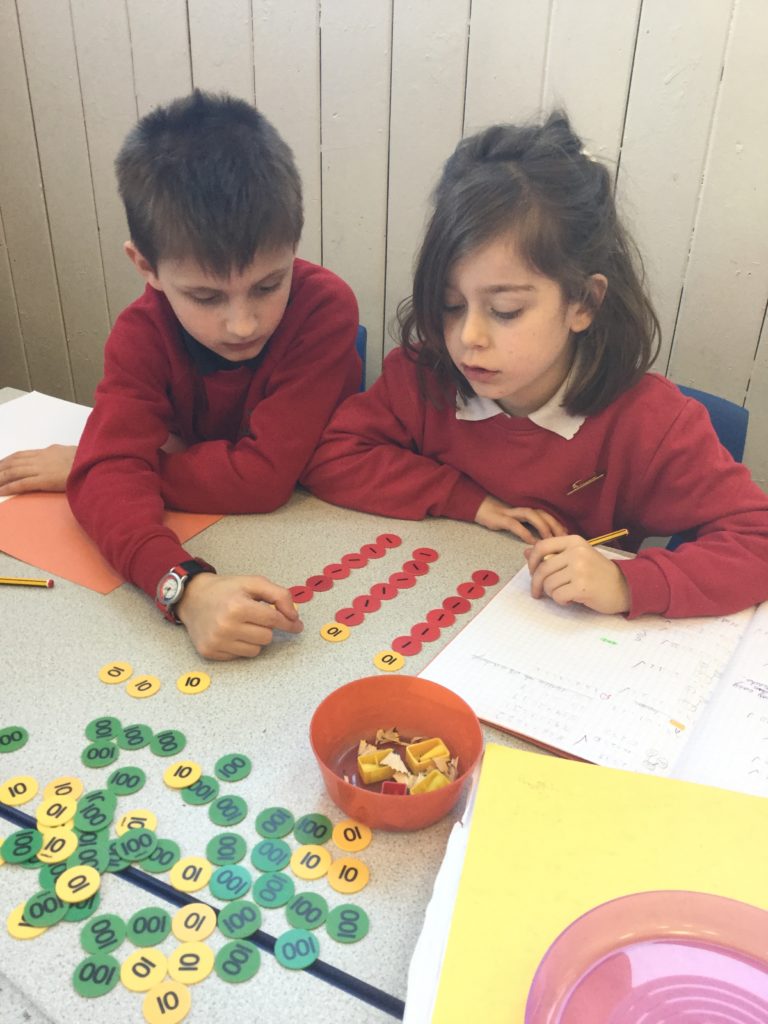

We counted up how many counters were in one group, and had our answer.
For a quick video on the formal, written calculation that we are working towards, please check out this link for more information. Any extra times tables practise (2s/5s/10s/23/4s/8s) you can do at home will support your child’s learning in class – especially division!
Great Maths, Year Three!
Show and Tell us about your secret talents!
On Wednesday, we had a fantastic Show and Tell session where members of the class shared their secret talent: a form of sign language. We discussed who and why people need to understand and communicate in sign language. Some members of our class made links and gave examples that linked to their own lives. Have a look at the code, below:

Some of the pupils even had a message for you, reading this class news post! See if you can interpret the message, below:
The first letter of the word:

The second letter of the word:

The third and fourth letter of the word:

And the fifth letter of the word:

Ask your child if you’ve cracked our message!