
We are artists!
This half-term, Year 5 are becoming artists! We will be looking at two famous artists: William Morris and Orla Kiely.
Art learning is usually categorised into two strands of learning:
– learning about art (history of art)
– learning practical skills to help us become better artists.
Each week, we will have a lesson about the history of art and then a practical skills lesson. In our first practical skills lesson, the children drew an observational drawing of a leaf. In our second lesson, Year 5 created a monoprint. Take a look at their brilliant prints:


Help at home: Use the key vocabulary in a sentence. Can you define them all?

Living & Learning: Money and Online Safety
Yesterday, Year 4 learnt all about online adverts and pop-ups as part of our L&L theme: money and online safety.
We discussed what an advert is and where we can find them. Your children came up with lots of brilliant suggestions:
- before YouTube videos
- on Roblox
- while watching TV
- when you google something
- at the cinema
Importantly, the children learnt that if an advert sounds too good to be true, it probably is and we shouldn’t click on it.

Some top tips for prevent online adverts and pop-ups:
- You can also download add-ons or adblockers to stop pop-up adverts on the sites you visit.
- Before downloading a new app, always check out the reviews in the app store. They’ll often tell you if an app has too much advertising or displays adverts that are inappropriate.
- Don’t click on the adverts or purchase anything on apps/games without talking to a trusted adult first.
- Always speak to a trusted adult about any adverts or pop-ups that you see or are unsure about.
The children then created some posters all about spotting and preventing online adverts and pop-ups – they were brilliant!


Help at home: watch this video https://www.youtube.com/watch?v=iRDy-2JkBtc and discuss, with your children, how they can spot and avoid online adverts and pop-ups.
Food Technology: egg pot!
Today, Year 3 made an egg pot! The children prepared all the ingredients, cooked it in the microwave and ate almost all of it.
We used the bridge cutting skills to cut up all the tomatoes. The bridge was best for these because they are small and were a bit slippery after washing them!

We used the microwave to heat up the tomatoes and beans. We cooked them in 1 minute bursts. Then, after we cracked the egg into the jug, we microwaved it for a further 2 minutes to make sure the egg had cooked through. We could tell when it was done by seeing if the white of the egg was opaque (not see through).


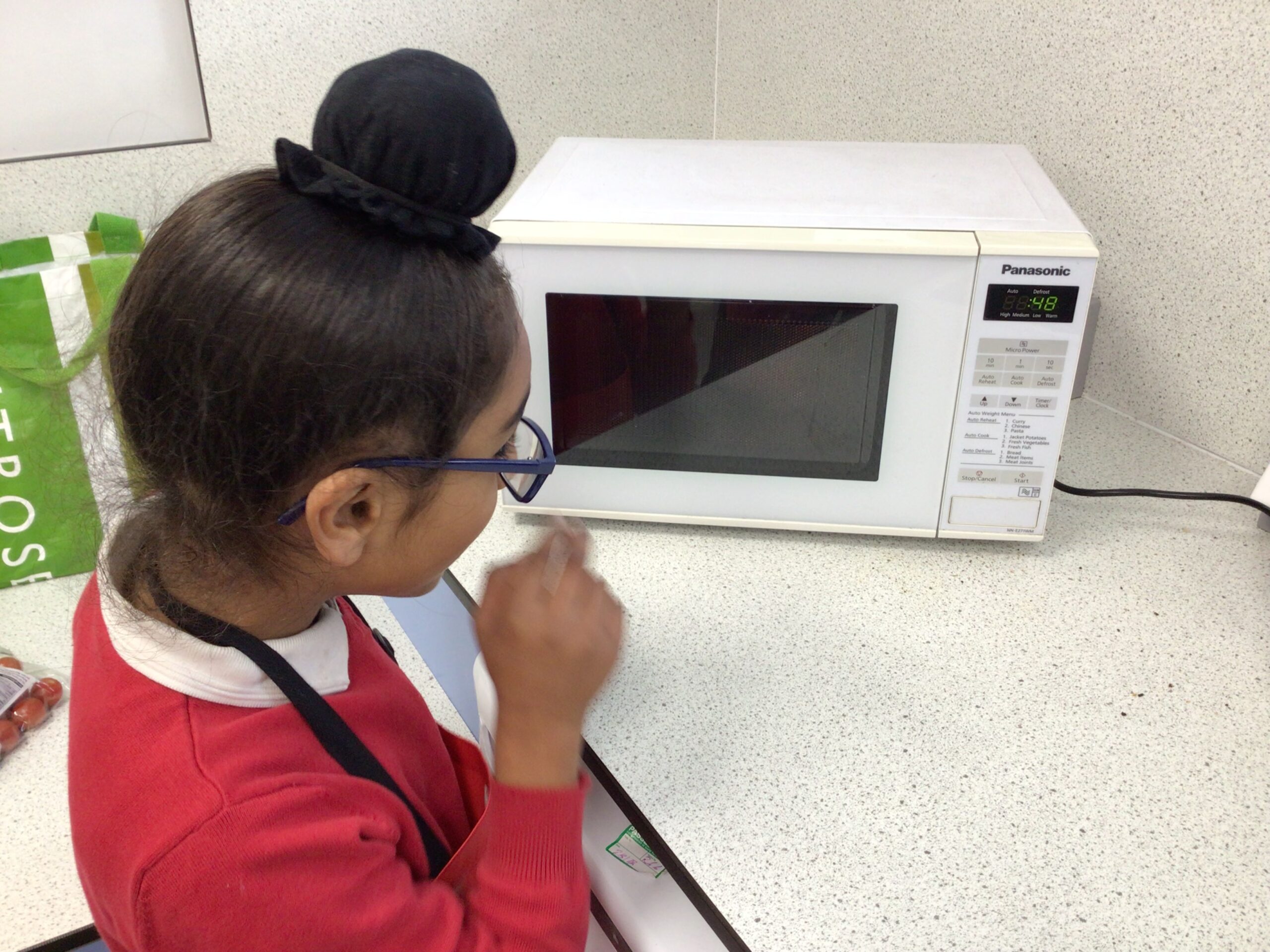
We stayed safe by concentrating and taking our time.
Everyone tried it and the majority of us loved it! The beans were our favourite part.


Help by making it again at home! The recipe has been sent home with the children. Can you add something new? Could you try putting it on toast?

Nursery Rhyme Week

During nursery rhyme week, the children enjoyed reciting and acting out different nursery rhymes.


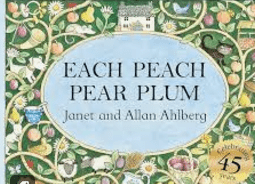
Linked to World Nursery Rhyme Week, we’ve been reading this classic book by Jane and Allan Ahlberg. The children loved listening carefully for the rhyming words and spotting familiar characters on each page.
Class Assembly
With our class assembly quickly approaching (Wednesday 20th November), please remember to practise your speaking parts and refresh your memory by watching the YouTube video of the song we will be singing.
https://www.youtube.com/embed/CMs_IGKxMu0
Reminders
This Tuesday 19 November at 2:40pm is our rearranged class assembly. We hope you can join us.
On Wednesday 20 November, as the whole class are taking part in the infant agility event, the children will need to come to school in PE kit. This will replace our Tuesday PE lesson for next week.
This means, the children should come to school in normal uniform on Tuesday 19 November.
RE Drop Down Morning
This morning, Year 5 had their very first ‘RE drop down morning’. We started off the morning by recapping key vocabulary: theist (a person who believes in God/Gods), atheist (a person who does not believe in the existence of God/Gods) and agnostic (a person who believes that nothing is known or can be known about the existence of God).
Did you know there are nearly 4,000 recognised faiths around the globe? Thankfully, I only asked the children to name the six major religions!

In this RE drop down morning, we focused on the religion of Hinduism. Hinduism is the oldest of the six major religions. It has no single founder. It’s a mix of various beliefs. The children were asked to create a fact file about this religion.

Then, we went on to learn about what Hindus believe. Hindu worship is called puja. Hindus can worship at their holy building, called a mandir, or in their home. The religious leader in a mandir is called a pujari.
Hindus believe in one supreme God, Brahman. Brahman is expressed through different deities. The most important of the deities are called the Trimurti. The Trimurti are the three aspects of the universal supreme God.

Hindus believe in karma and reincarnation; we watched a video which explained what this meant.
In our third and final session, we learnt what festivals do Hindus celebrate. Year 5 found out that Diwali is the five-day Festival of Lights, celebrated by millions of Hindus across the world. Diwali is a festival of new beginnings and the triumph of good over evil and light over darkness, and for some also coincides with harvest and new year celebrations. The festival falls between mid-October and mid-November but changes each year because it is set by the lunar calendar.
The children watched a video explaining the story of Rama and Sita. They then had to order the pictures in chronological order and re-tell the story to the class. The children used their oracy skills of voice projection, eye contact and prosody.


Help at home: Watch the story of Rama and Sita. Discuss the moral message of the story.
Living and Learning: odd socks day
On Tuesday this week it was Odd Socks Day! This was all in order to celebrate our differences and uniqueness. It was also part of Anti-Bullying Week. We spoke about how we use the acronym STOP at Moortown Primary School to help understand what bullying is as well as how to stop it.

We talked who we could tell if we saw or experienced bullying in order to make it stop. We knew lots of people we could tell and I was very impressed by the children’s knowledge, kindness and maturity.

Living and Learning: Me and My Community Week
This week has been Me and My Community Week at Moortown. We have had lots of visitors from our local community come to school to talk about themselves and how they make up part of the community. We have also spoken about what communities we are part of, culminating in a fabulous identity day on Friday.
We talked to Grandad Wheels about life in a wheelchair and we heard him read one of his fabulous stories. We even got to design a futuristic wheelchair for him!


We visited Moortown Park with Pat who runs Friends of Moortown Park. We learnt about how they look after the park and we thought carefully about how we could look after the park too.
We also had a visit from the RNIB. We listened very carefully and learnt lots about things that help people who are blind. We even got to meet a guide dog.


We also had a visit from Mrs Gledhill who is a teacher of the deaf. She taught us some things we can do to help people who are deaf to hear us. She then taught us some sign language, we loved it!


All week we were also thinking about what makes us unique and celebrating the differences we all have, whether that is the way we look, what we like to do or our families. We read the book Odd Dog Out to help us understand this further. We even made our very own sausage dogs that reflected our personality!


What a week it has been! Well done everyone!
Guided Reading Week 2
Here are the target pages for this week’s guided reading. These need to be read by Friday 22nd November.
Extra Time: up to chapter half-time/page 45.
Divine Freaks: up to chapter 5/pg 55.
Mr Gum: up to chapter 6/pg 86.
How To Train Your Dragon: up to chapter 4/pg 60.
Kensuke’s Kingdom: up to chapter 5/page 69.