16 June 2023

Key Stage 1 homework

This week’s Talk Time has a Reading theme.

I can talk about my favourite class novel so far.

Over the year, we’ve had the opportunity to read and enjoy lots of different types of books. This week, we’d like you to think back and talk about the book/novel you enjoyed reading the most and why.

Below are some of the class novels we have enjoyed so far in Key Stage 1.

Key Stage 2 homework

This week’s Talk Time has a Reading theme.

I can talk about my favourite class novel so far.

Over the year, we’ve had the opportunity to read and enjoy lots of different types of books. This week, we’d like you to think back and talk about the book/novel you enjoyed reading the most and why.

Below are some of the class novels we have enjoyed so far.

Y3/4
Greek Myths by Marcia Williams
The Firework Maker’s Daughter by Phillip Pullman
Leodis Ledes Leeds by Tom Palmer
The Fastest Boy in the World by Elizabeth Laird

Y5/6
Secrets of a Sun King – Emma Carroll
Floodland – Marcus Sedgwick
Letters from the Lighthouse – Emma Caroll

Spellings 3.2

This half term, we are continuing to practise the 40 spellings from half term 3.1. There were a few tricky words in the list that the class will benefit from some extra practise with.

Instead of learning eight different words each week, we’d like your child to learn these 40 words over the whole half-term. Lots of research suggests that learning more spellings over a longer time leads to better remembering how to spell them in the long term.

adventure 

anticlockwise

ball

bawl

capture

caught

delicious

feature

forward

history

immaterial 

impatient

impolite

important

impossible

independent

inexperienced

infamous

international

machine

mail 

male

measure

mention

naughty

ordinary

pleasure

position

possession

pressure

quarter 

scene

seen

should

special

sugar

supernatural

therefore

thought

treasure

Any questions please ask!

Circle time

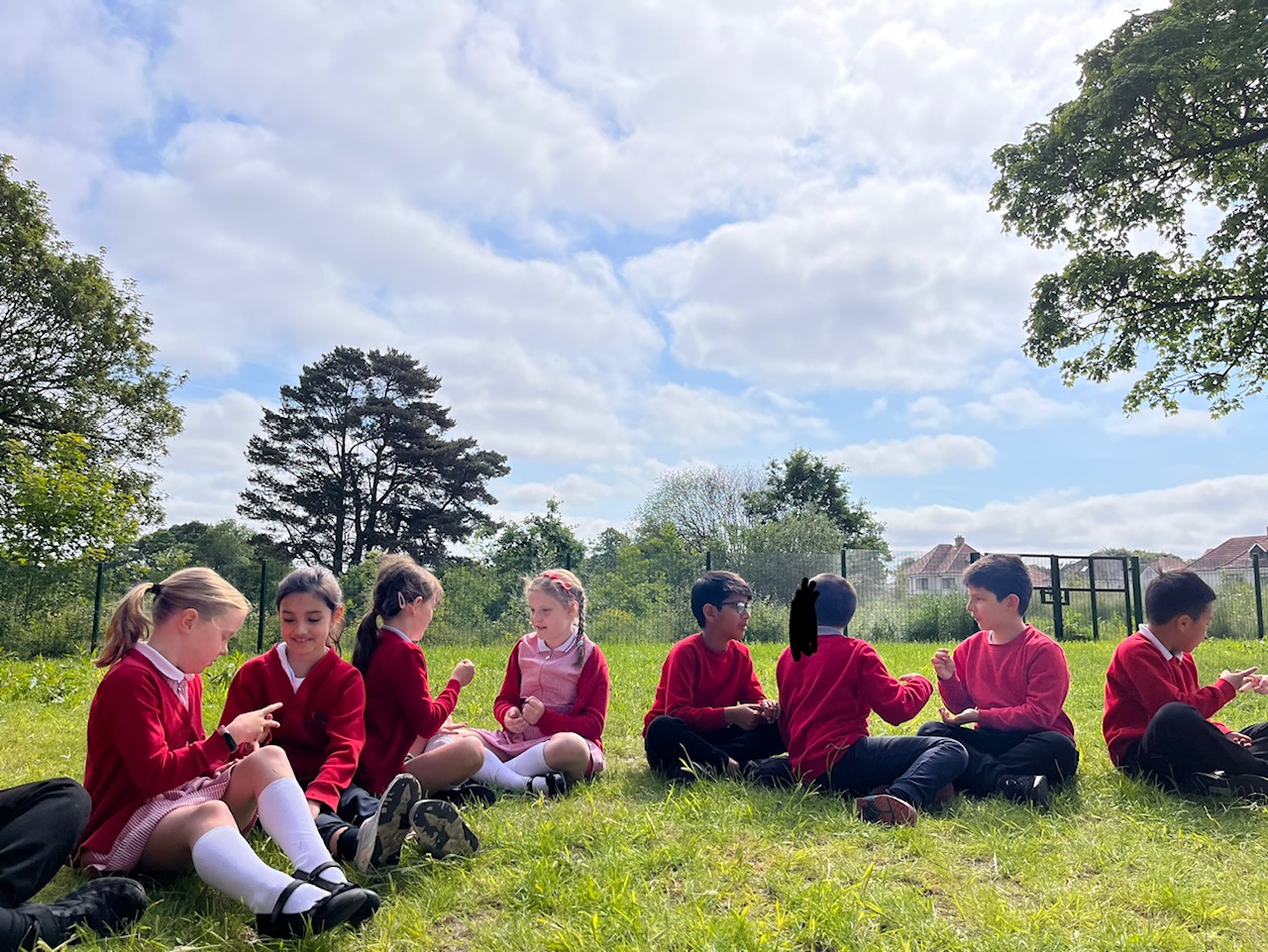
This week, Year 3 took advantage of the sunshine and had our circle time outside on the new grass.

Our circle time this week revolved around speaking about people we trust. The class offered examples of people in their lives that they trust and explained why.

We then talked about keeping secrets and how we should always tell a trusted adult if we are worried about someone, even if they have asked us to keep it a secret.

Spellings 3.2

Welcome back!

I can’t believe it is already the last half term of Year 3 – the year has flown!

This half term, we are continuing to practise the 40 spellings from half term 2.2. There were a few tricky words in the list that I feel the class will benefit from some extra practise with.

Instead of learning eight different words each week, we’d like your child to learn these 40 words over the whole half-term. Lots of research suggests that learning more spellings over a longer time leads to better remembering how to spell them in the long term.

adventure

anticlockwise

ball

bawl

capture

caught

delicious

feature

forward

history

immaterial

impatient

impolite

important

impossible

independent

inexperienced

infamous

international

machine

mail

male

measure

mention

naughty

ordinary

pleasure

position

possession

pressure

quarter

scene

seen

should

special

sugar

supernatural

therefore

thought

treasure

Any questions please ask!

This week’s message (Friday 09 June 2023)

How was your half-term holiday? Hopefully a good one, helped by the nice weather. Now that we’re properly into Summer, remember to make sure your child is protected from the sun (sun cream, hat, plenty of water).

We need to start this week’s message with a correction and end with a reminder.

Sorry!

In the last Friday message just before the holiday, we stated the wrong month for one of a training day. It should read that there’s a training day on Friday 24 May (not June):

We’ve had an increase in requests for some term-time absences. Many of these are linked to the Summer half-term. We don’t authorise term-time absences (see our Attendance Policy). To help next year, we’ve changed the training day to Friday 24 May – this means that you’ve an extra day to use to plan for any holidays.

Thanks to the super-organised parent who spotted the error.

Talking of attendance…

Up to the end of Summer 1 half-term, our whole-school attendance figure is 95.9% – this is a great figure, so thank you very much for making sure your child is at school as much as they possibly can. (The national data for the period from 12 September 2022 to 19 May 2023 is 94.1% for primary schools.)

Here’s how each year group shape up:

  • Reception: 94.9%
  • Year 1: 96.1%
  • Year 2: 96.3%
  • Year 3: 96.0%
  • Year 4: 96.5% – the highest in school, so well done!
  • Year 5: 96.1%
  • Year 6: 95.3%

Please help us

This summer, National Book Tokens is offering schools the chance to receive £1,000 in National Book Tokens. Please nominate our school.

If we’re one of the five winning entries, you’ll also win a £100 National Book Token to spend in your favourite bookshop!

The more entries received for Moortown Primary, the higher the chance we’ll win – so spread the word.

Thanks to the parent who alerted us to this.

Have you completed our annual survey yet?

If not, there’s still time: you’ve got until Friday 16 June to let us know your views. Thanks to those people who’ve already completed it (we’ve had 50 responses so far). It really helps to shape what we do.

Have a happy and healthy weekend!

09 June 2023

Vocabulary is the focus of this week’s homework. This is because we’ve just begun a new Design and Technology topic and with it comes new Design and Technology vocabulary.

Here’s a list of key words that are being learnt and applied as part of our learning. Over the half-term, practise using these words with your child.

Years 1 and 2 Design & Technology vocabulary:

  • design process: the steps that need to happen for something to go from an idea to a finished product
  • to plan: to think about and decide how you’re going to do something
  • to evaluate: to decide, after careful consideration, how good or bad something is
  • base: the bottom part of an object; the part on which something rests
  • structure: a combination of materials and/or parts to create a 3d shape
  • stable: something that is unlikely to fall down or collapse
  • freestanding: something that stands up by itself

Years 3 and 4 Design & Technology vocabulary:

  • product: something that is designed and made fu
  • function: the purpose of something
  • design brief: a description of what a new product should do
  • design criteria: the precise features a product must have to be successful
  • annotated sketch: a detailed sketch labelled with notes (eg dimensions, materials) prototype: an early sample or model of a product used to evaluate a design
  • component: a part that combines with other parts to make something (eg a machine or a piece of equipment)
  • exploded diagram: a drawing that shows the individual components or parts of a product and how they fit together
  • mechanism: a number of parts or comp

Years 5 and 6 Design & Technology vocabulary:

  • design criteria: the precise features a product must have in order to be successful
  • innovative: an adjective to describe new or original ideas
  • sustainable material: a material is sustainable if it comes from renewable sources and it does not damage the environment
  • dimension: a measurement of something in a particular direction (eg height, length, width)
  • aesthetic: something about the appearance (eg something can be aesthetically pleasing) computer-aided design (CAD): a way of drawing on a computer to visualise designs and simulating them to see how they work
  • computer-aided design (CAD): a way of drawing on a computer to visualise designs and simulating them to see how they work
  • to reinforce: to strengthen or support

Some of these words have been introduced already but there may be others that are going to be covered in the coming weeks.

Living and Learning: physical health

During the last two weeks of half term, Year 3 focussed on the importance of physical health in our Living and Learning lessons.

We learnt about the benefits of being active for 60 minutes every day. Some examples are:

  • exercise warms you up
  • your heart gets stronger
  • improves your attention span
  • helps you learn
  • improves your memory
  • helps you sleep better
  • makes you feel happier

Help at home by asking your child how much physical activity they have done that day!

This week’s message (Friday 26 May 2023)

We’ve reached the end of the Summer 1 term…

It’s felt a strange one because of all the short weeks in May. The first three Mondays in May have seen school closed – two for bank holidays and one for a training day. Thank you to everyone for working with us – we know disrupted school weeks like this can be tricky for you.

We’ve had an increase in requests for some term-time absences. Many of these are linked to the Summer half-term. We don’t authorise term-time absences (see our Attendance Policy). To help next year, we’ve changed the training day to Friday 24 June – this means that you’ve an extra day to use to plan for any holidays.

We’ve all appreciated the warmer, sunnier weather this week. Please remember to make sure your child is summer-ready next half-term. Make sure they’re wearing suncream, have a sun hat, and a water bottle to stay hydrated.

A big well done to all our Year 6 pupils for coping so well with the end of Key Stage 2 SATs tests – they all did so admirably, despite how difficult they might have been this year. Our Year 6 pupils have got a residential to look forward to, as well as lots of end-of-primary activities as they prepare to move on. This year, the residential (07 – 09 June) will be with all three Sphere Federation schools. (This will help us to make sure we can release enough staff to supervise on the trip.)

Next half term is a busy one, not just for our Year 6 pupils. Teachers are starting to write their end-of-year reports. Amongst other things, pupils have transition morning (05 July) and Sports Day (13 July) to look forward to.

Finally, a quick reminder to complete our annual survey. You’ve got until Friday 16 June to let us know your views. Thanks to those people who’ve already completed it.

Have a great half-term!

We are physicists!

Today, Year 3 continued their learning about magnets.

We learnt that magnets are a non-contact force. We also learnt that magnets having a north pole and a south pole .

We then conducted an experiment to see which poles attract (pull together) and which repel (push apart).

Help at home by asking your child if they can remember which poles attract and which repel!

This week’s message (Friday 19 May 2023)

This week’s message is a repeat of an email that we sent earlier in the week…

Coming up in the weeks commencing 05 June, 12 June and 19 June, children from Year 1 to Year 6 will take part in Relationships and Sex Education (RSE) lessons, part of our Personal, Social and Health Education curriculum (PSHE, or ‘Living and Learning’, as we call it).

We want you to feel assured that RSE is delivered at a level appropriate to both the age and development of pupils, and to feel safe to voice opinions and concerns relating to the provision.

The lessons are led by children’s class teacher. They take place in a safe learning environment and are underpinned by our school ethos and values.

Nationally, all primary schools are required by law to teach Relationships Education and Health Education. In Sphere Federation schools, we’ve provided RSE lessons successfully as part of Living and Learning for many years.

Check out our RSE Policy.

  • Section 9 provides a list of the vocabulary that will be used (pages 7 and 8)
  • Section 11 includes an overview of the topics that will be covered (page 11 includes a table to show the learning across each year group)

We know that you may have some issues / concerns. If you’d like to find out more, discuss any concerns, or speak to someone in more detail about the teaching and learning planned for this important aspect of your child’s education, please contact Mrs Weekes.

Similarly, you’ve the right to request that your child be withdrawn from some or all of the lessons that can be regarded as ‘sex education’. For our school, this comprises lessons in Year 6 on what human reproduction is and how babies grow. Please see the government’s factual guide to RSE for parents: Understanding Relationships and Health Education in your child’s primary school: a guide for parents. If you’d like to withdraw your Year 6 child from RSE, please contact Mrs Weekes to discuss the matter. See page 6 of the RSE policy for more information about your right to withdraw your child.

We’re committed to working in partnership with parents. Recent parental feedback has indicated that the overwhelming majority of parents are highly supportive of our Relationships and Sex Education programme.