Our weekly message (09 October 2020)

Some statistics to start this week’s message…

It sadly seems that the country is facing more restrictions due to coronavirus. Despite the challenges facing Leeds, it was encouraging to note earlier in the week that:

  • no school in Leeds is completely closed
  • in fact, 191 schools are fully open
  • a further 84 schools are operating despite a bubble closure
  • so, all 275 schools in Leeds are open to 114,814 pupils and 13,539 staff

Whilst the rate per 100,000 in Leeds has risen significantly (it’s around the 300 mark), there’s not been a significant increase in the number of pupils and staff testing positive. The numbers are currently relatively stable.

In our three Sphere Federation schools, although individual children have stayed away from school to self-isolate or to wait for a test result, we’ve not yet had to close a bubble. Thank you for your support with this. You’ve been sticking to the drop-off and collection times and it’s great that so many of you continue to wear face masks – we appreciate how responsive you’ve been.

Think carefully before seeking a Covid-19 test because colds are common at this time of year. When we showed this chart a couple of weeks ago, it proved popular. Read the full article.
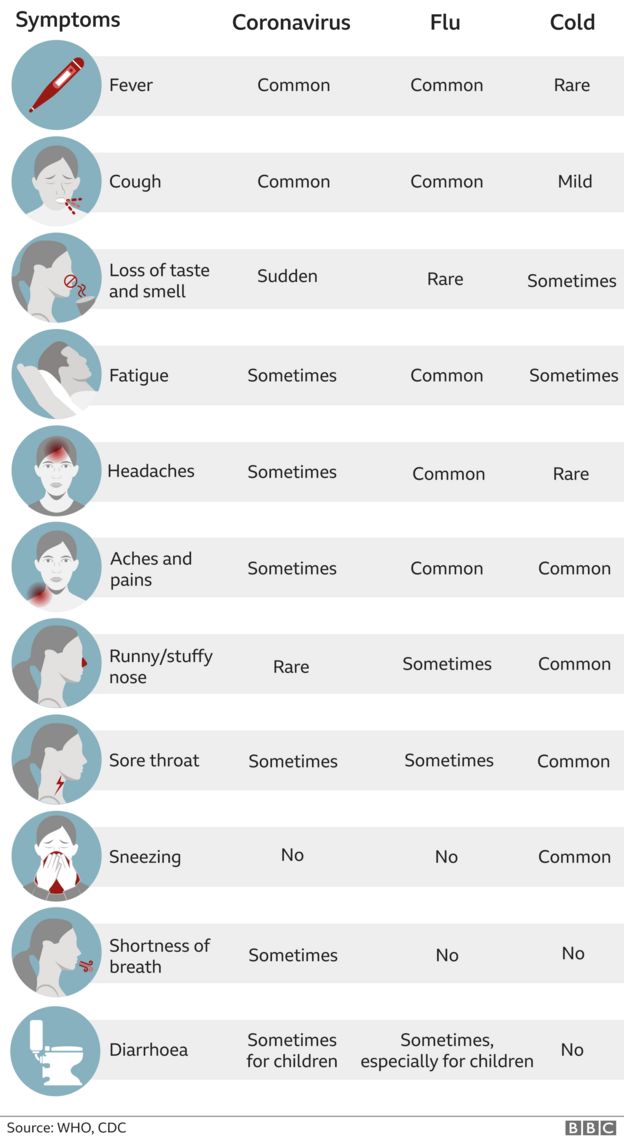
Symptoms chart

Home learning

If your child is absent from school due to coronavirus, make sure you check out our home learning page. Every Monday morning, you’ll find some learning for the week:

  • five Maths lessons (usually from White Rose Maths, which is what’s used in school) (suggested time: about 30 minutes each day)
  • Times Tables practice using Time Tables Rock Stars (suggested time: about 15 minutes each day)
  • Spellings practice using the spellings list that’s published each week (suggested time: about 15 minutes each day)
  • some Reading fluency using the same text that’s used in school (suggested time: about 15 minutes each day)
  • five Reading sessions, including using the ‘RIC’ text used in school (suggested time: about 30 minutes each day)
  • two Writing sessions (suggested time: about 30 minutes each)
  • a Topic lesson which will link closely with the learning happening in school (suggested time: about 30 minutes)
  • a Science lesson which will link closely with the learning happening in school (suggested time: about 30 minutes)

Lunches

If you’re entitled to free school meals, you’re also able to arrange for a light lunch for your child each day, too – contact the school office.

Parent-teacher meetings

Thanks to everyone who has signed up so far for a parent-teacher meeting coming up in the last week of the half-term.

This is the first time we’ve run a parents’ evening online so please be patient with us. We’ll work hard to stick to timings and keep our fingers crossed for good WiFi!

And something completely unrelated to coronavirus…

We’ve added an extra feature to our website. If you go to the Safeguarding page, you’ll see on the right hand side some new content from Parent Info. Parent Info is a collaboration between  and . It provides support and guidance for parents from The content is updated regularly, and it covers six broad areas, such as technology, relationships and parenting, all linked to keeping your child happy, healthy and safe.

DT: maze making

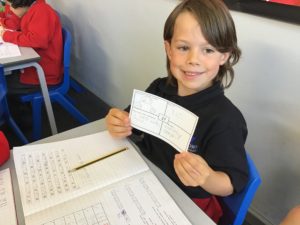
In DT lessons over the next two weeks, we’re designing and making marble mazes.

In this lesson, children had to design their maze on squared paper. The colouring serves an important purpose as each colour represents a different length of maze wall that they will have to saw. This will help them know how many pieces of each length they will need.

Week beginning 05 October 2020

We’re really missing you in school and we can’t wait to have you back. We hope you’re managing to stay happy, healthy and safe while you’re not with us here in school. You are still very much a part of our school community so please get in touch with us. You can email me at [email protected].

Here’s a short video message from me introducing the week.

Maths

This week’s maths learning is linked to number and place value.

These five video lessons will roughly match the teaching and learning happening in class:

Lesson 1: video, worksheet, answers

Lesson 2: video, worksheet, answers

Lesson 3: video, worksheets, answers

Lesson 4: video, worksheets, answers

Lesson 5: video, worksheets, answers 

You don’t have to print the worksheet. Your child can write or draw their answers on paper. Your child’s learning will be most effective if you sit with them to pause the clip and check / praise / support your child as the clip moves on.

Spelling

Look on the homework page to find this week’s spellings. Your child should complete one task each day.

  • Day 1: Write the words and draw shapes round them to show the ascenders and descenders. (Set yourself and others at home a challenge of using some of the words when you’re speaking, too!)
  • Day 2: Write the words using rainbow writing. (Try some of the other activities in our Super Spelling Strategies guide.)
  • Day 3: Write separate sentences, each containing one of the spellings. (Don’t forget to show off really neat handwriting and make sure you sentence starts with a capital letter and ends with a full stop, exclamation mark (!) or question mark (?).
  • Day 4: Repeat Task 2 or 3.
  • Day 5: Get an adult at home to test you on your spellings. Practise any you spell incorrectly – you could write them out carefully until you’re sure.

(Suggested time: 15-20 minutes daily)

Reading fluency

This is the text we’ll read in class to to build up fluency skills this week.

In school, we generally follow this sequence:

  • Day 1: Read the text aloud with your child listening. Read it clearly and slowly, pointing to each word as you read. Have a chat about any unfamiliar words.
  • Day 2: Read aloud each sentence (a full short sentence or part of a longer sentence), and have your child read it back to you. Do this ‘echo reading’ for the whole text.
  • Day 3: Read the text and talk about the effect of the punctuation on how you read it – pauses for full stops and expression for exclamations (!) or questions (?). Your child reads the text aloud.
  • Day 4: Read together with expression (just like you practised on Day 3).
  • Day 5: Your child reads independently and fluently.

(Suggested time: 15 minutes daily)

Reading comprehension

Day 1: We will be using this RIC lesson in class. RIC stands for:

  • Retrieve: finding information in a text
  • Interpret: using clues in the text to unlock information
  • Choice: thinking about the author’s choice of words, techniques or organisation that make the text interesting and enjoyable to read

Day 2:  Watch this video and learn about the ‘igh’ trigraph.

Day 3: Watch this video and learn about the ‘oa’ digraph.

Day 4: Watch this video and learn about the ‘oo’ diagraph

The three videos above were made by one of our teacher friends from another school in the federation.

Day 5: Book Club. Once a week, we have a relaxing lesson where we sit and read quietly, often with an adult. At home, we’d like you to read your favourite book or text, too. If possible, discuss the book with an adult, talking about some or all of the sections of this grid.

(Suggested time: 30 minutes daily)

Writing

Activity  1

This video about commas in a list links to some of the learning that we’ve been doing in class recently. Watch the video and then complete this sheet.

Activity 2

Talk to your child about a picture or photograph you choose. Write three words or phrases to label different things in the picture (eg ‘a car’ or ‘a red car’). Your child should aim to spell in a sensible way and use finger spaces between the words, joining up letters if they can (use our handwriting guide to help).

Topic

Get arty with topic learning at home.  Learn about primary and secondary colours using this BBC Biteszie lesson.

(Suggested time: 30-45 minutes)

Science   

We’re continuing our  learning about habitats and living things. This Oak National Academy lesson will really help to support learning at home. Once your child has watched the video, try the quiz that follows.

(Suggested time: 30-45 minutes)

Week beginning 05 October 2020

Hi everyone

We’re really missing you in school and we can’t wait to have you back. We hope you’re managing to stay happy, healthy and safe while you’re not with us here in school. You are still very much a part of our school community so please get in touch with us. You can email me at [email protected].

Here’s a short video message from me introducing the week.

Maths

This week’s maths learning is linked to number and place value.

These five video lessons will roughly match the teaching and learning happening in class:

Lesson 1: video, worksheet, answers

Lesson 2: video, worksheet, answers

Lesson 3: video

Lesson 4: video, worksheets, answers

Lesson 5: video, worksheets, answers 

You don’t have to print the worksheet. Your child can write or draw their answers on paper. Your child’s learning will be most effective if you sit with them to pause the clip and check / praise / support your child as the clip moves on.

Spelling

Look on the homework page to find this week’s spellings. Your child should complete one task each day.

  • Day 1: Write the words and draw shapes round them to show the ascenders and descenders. (Set yourself and others at home a challenge of using some of the words when you’re speaking, too!)
  • Day 2: Write the words using rainbow writing. (Try some of the other activities in our Super Spelling Strategies guide.)
  • Day 3: Write separate sentences, each containing one of the spellings. (Don’t forget to show off really neat handwriting and make sure you sentence starts with a capital letter and ends with a full stop, exclamation mark (!) or question mark (?).
  • Day 4: Repeat Task 2 or 3.
  • Day 5: Get an adult at home to test you on your spellings. Practise any you spell incorrectly – you could write them out carefully until you’re sure.

(Suggested time: 15-20 minutes daily)

Reading fluency

This is the text we’ll read in class to to build up fluency skills this week.

In school, we generally follow this sequence:

  • Day 1: Read the text aloud with your child listening. Read it clearly and slowly, pointing to each word as you read. Have a chat about any unfamiliar words.
  • Day 2: Read aloud each sentence (a full short sentence or part of a longer sentence), and have your child read it back to you. Do this ‘echo reading’ for the whole text.
  • Day 3: Read the text and talk about the effect of the punctuation on how you read it – pauses for full stops and expression for exclamations (!) or questions (?). Your child reads the text aloud.
  • Day 4: Read together with expression (just like you practised on Day 3).
  • Day 5: Your child reads independently and fluently.

(Suggested time: 15 minutes daily)

Reading comprehension

Day 1: We will be using this RIC lesson in class. RIC stands for:

  • Retrieve: finding information in a text
  • Interpret: using clues in the text to unlock information
  • Choice: thinking about the author’s choice of words, techniques or organisation that make the text interesting and enjoyable to read

Day 2:  Watch this video and learn about the ‘igh’ trigraph.

Day 3: Watch this video and learn about the ‘oa’ digraph.

Day 4: Watch this video and learn about the ‘oo’ diagraph

The three videos above were made by one of our teacher friends from another school in the federation.

Day 5: Book Club. Once a week, we have a relaxing lesson where we sit and read quietly, often with an adult. At home, we’d like you to read your favourite book or text, too. If possible, discuss the book with an adult, talking about some or all of the sections of this grid.

(Suggested time: 30 minutes daily)

Writing

Activity  1

Watch this video and complete the lesson about capital letters and full stops. It links to some of the learning that we’ve been doing in class recently.

Activity 2

Talk to your child about a picture or photograph you choose. Write three words or phrases to label different things in the picture (eg ‘a car’ or ‘a red car’). Your child should aim to spell in a sensible way and use finger spaces between the words, joining up letters if they can (use our handwriting guide to help).

Topic

This week’s topic learning is linked to geography. Click on this link and have a go at the different activities.

(Suggested time: 30-45 minutes)

Science   

We’re continuing our  learning about habitats and living things. This Oak National Academy lesson will really help to support learning at home. Once your child has watched the video, try the quiz that follows.

(Suggested time: 30-45 minutes)

02 October 2020

This week’s spellings are words with a silent k.

In words starting with kn the letter k is silent. Silent letters are the letters in words that are not pronounced but make a huge difference to the meaning and sometimes the pronunciation of the whole word.

knock
know
knew
knee
knight
knot
knife
knit

The children will be tested on these words on Friday 09 October 2020

02 October 2020

This week, the homework is Talk Time and should be completed by Thursday 08 October.

Are animals happy in zoos?

This is a moral question, based around our science learning about living things. which we’d like you to discuss at home with your child. During the discussion with your child, it’s important to appreciate that there may be two opposing views and that although it’s okay to disagree we should respect the opposing view.

Top Tips:

  • Turn the telly off!
  • Sit around the dining table!
  • Have a chat and share opinions and ideas!
  • Children should talk with family, friends and each other –maybe even using FaceTime or Skype.

There is no need to record anything in your child’s homework book from your discussions at home. The children will be able to share their views when we review the homework at the end of the week.