
Computing Unplugged
Did you know that Ada Lovelace, who was a British inventor, was the first person to invent the computer program? In her honour, Year 5 have enjoyed some offline computing today. We will learn more about Ada tomorrow.

They had six different stations, each with its unique brief. For example:


Children had to design algorithms to achieve a goal…

…such as collecting coins in – aptly named – ‘Coin Collect’ whilst avoiding traps…

…or they had to debug an existing algorithm in ‘Spot the Mistake’. (Challenge your child to define debugging.)
It was frustrating and challenging at times.

But when we succeeded, it felt great.

In ‘Treasure Hunt’, we wrote an algorithm to guide our Bee-Bot from the pirate ship to an area on the map to hide the loot. Our team mates had to predict which co-ordinates the algorithm would take the Bee-Bot to…

… and at station ‘ABCs’, we predicted spelling which word (using the Bee-Bot) would give the shortest and longest algorithm, explaining our reasoning for why we thought so. Of course, then we had to prove it.


We also used logical reasoning to find the best route back for Stanley (from our class novel, Holes) to his tent for his shower – every piece of code used was in exchange for one minute of precious showering. Was it worth it to cut through Tent F and trade 5 minutes of tub time? It was important to avoid the lethal lizards!


At the ‘Pocket Money’ station, we had to find the best routes for collecting different totals. A challenge was to show finding £2.54 in three different ways.

Well done to Year 5 for working brilliantly in their teams.
DT Catapults!
We’ve been designing and making catapults in topic lessons this week. Children used elastic bands, lolly pop sticks and a spoon to create their catapults. It was tricky to get the elastic bands attached but it was good fine motor skill practice! We then tested our catapults by trying to fire a fuzzy missile over the wall of a castle. Finally, we evaluated the effectiveness of our catapults and suggested improvements. 


Spelling strategies
We’ve been using different strategies to help us to learn spellings.
Word shape Children draw around the shape of the word to remember the shape the letters make. 


Word pyramids Children begin with the first letter of the word and then add an extra letter on a new line until they have the word written in full. 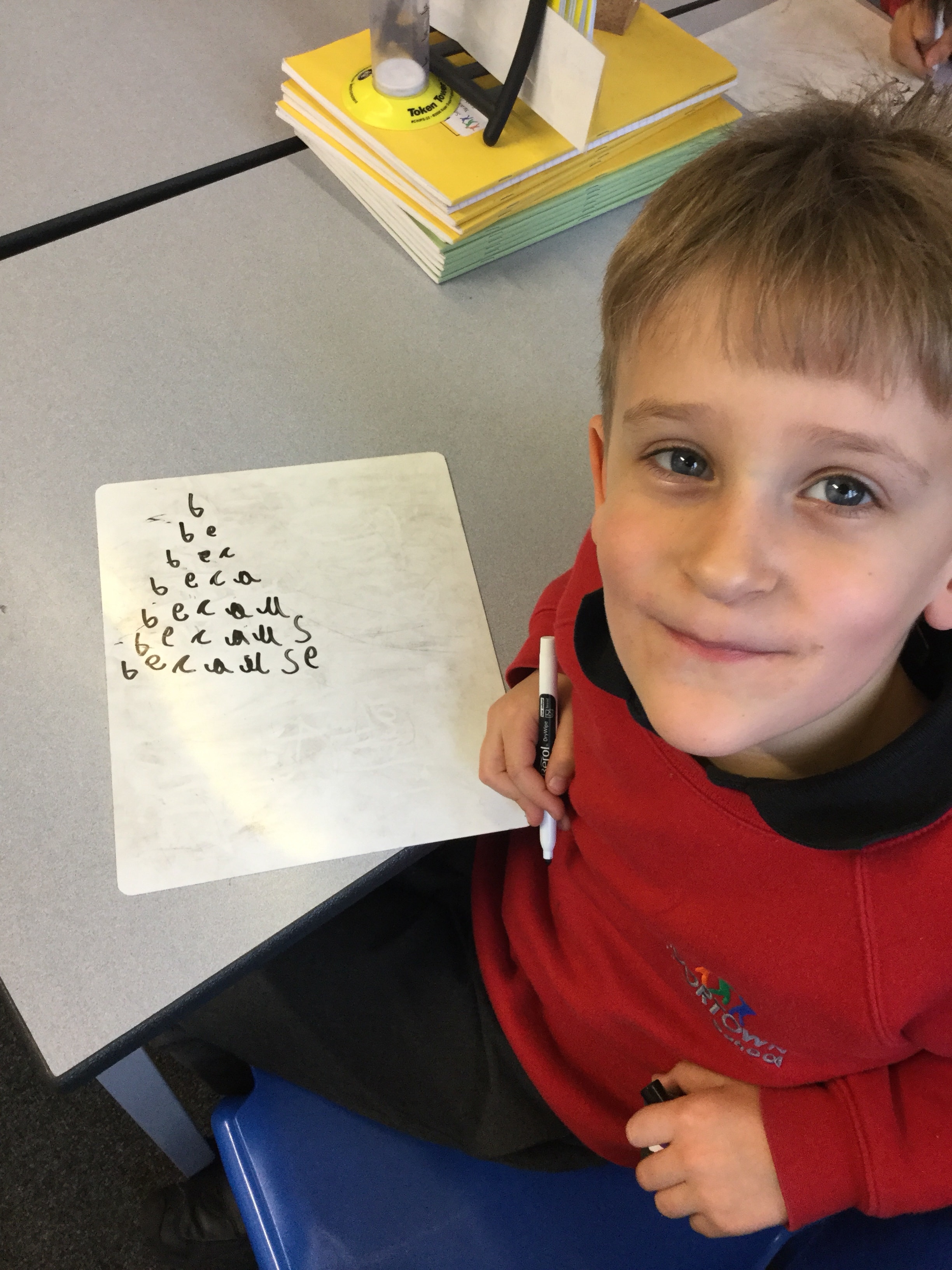
Class Novel Readers
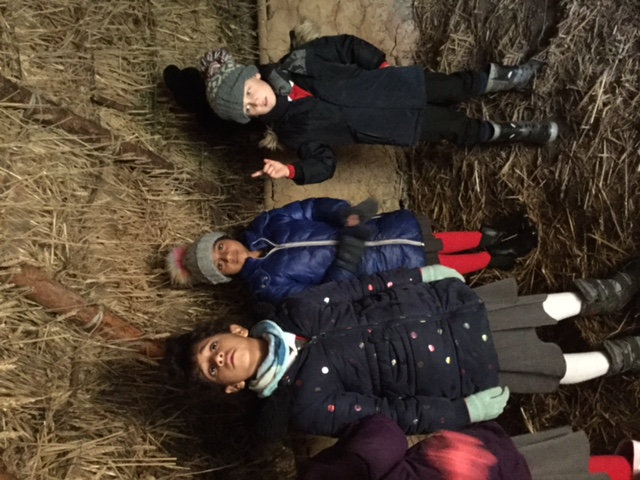
Each day, we read our class novel. At the moment, our class novel is Around the World in Eighty Days. It’s originally by Jules Verne.
This week, the children have taken over the role of reading the novel out to the rest of the class. See some pictures below:


We discussed the meaning of some words we didn’t understand from the class novel. By doing this, we learnt lots of new and interesting vocabulary that we may be able to use in our own writing.
Can your child remember what the words underlined, mean?
- Dawn brought with it a dark and gloomy sky.
- By noon on the second day, the storm finally slowed.
- How the skilled hands of Bunsby and his crew kept the boat moving was a complete mystery to Phileas Fogg.
- The seas were rough and the wind was strong.
- Passeportout was pacing along the upper deck of the boat.
School Council 2018-2019
Meet our newly elected school councillors, chosen democratically by their class.
Their first meeting will be held next week. On the agenda is to discuss bullying (as part of anti-bullying week), Takeover Day and to consider what they might want to spend their library and class reward budgets on.
All children are encouraged to make suggestions to their school councillors (by posting their suggestion slip in each class’ Living and Learning box) for ideas/concerns to be discussed.

Creative Character Descriptions
Year 4 have been writing some character descriptions. After reading some examples, the class thought about the type of vocabulary that creates a good descriptions.
Here are a few ideas we experimented with:
Use adjectives to describe the physical details of a character.
His scaly, wrinkled nose sniffed the air.
Nouns to fit the personality of the character.
Clothes, particularly need to match the personality of the character.
scruffy, torn trousers
The way a character moves gives much away about their personality or feelings.
Shoulders hunched, feet dragging he shuffled towards the darkened windows of home.
Then, the children thought about including prepositions. These can be used for the following:
To show the position of something.
Her bag was under the chair.
The dog crawled between us and lay down at our feet.
His flat was over the shop.
To note the time when something happens.
They arrived on Sunday.
The class starts at 9 a.m.
To the way in which something is done.
We went by train.
They stared at each other without speaking.
Some prepositions are made up of more than one word, for example:
They moved here because of the baby.
We sat next to each other.
The hotel is perched on top of a cliff.
With all this in mine, the children wrote some impressive sentences. We based our descriptions on a legendary hero, Beowulf. Using this famous warrior as our focus, proved to be a great link to our current topic.

Lots of the children searched for ambitious and appropriate words to use in their writing. There are some superb examples below.
A brown, leather belt was draped around his strong waist. Phoebe
The fierce, Anglo Saxon warrior came upon the hideous creature.
The gem encrusted, silver sword lay in his hand.
Noah
A mighty, fearless warrior sailed across the choppy seas. Liam
The revolting, three headed beast flew over the seven seas.
He held his powerful, dangerous dagger in the palm of his hand.
The fearsome warrior hides his silver sword behind his back.
Sakina
The brave hearted warrior trawled through the seas as if he was immortal.
Felix
The ugly, hunched backed monster lurked in the shadows.
Daisy
His bright, yellow, blood shot eyes gleam wickedly in the light of the moon.
Jemima
Topic Algorithms
In Year 3 we have been learning about compasses: what they are and what they were used for before we had satellite navigation. We then practised turning and facing the directions on a compass, in the hall. We then went on to write algorithms using north/south/east/west and stop, to accomplish a goal. We needed to collect passengers of the Titanic from the water whilst avoiding the iceberg. 
 Y3 then went on to write their own game with a specific aim. They had to choose their own mode of transport and decide what they needed to collect or avoid on the way from start to finish. Check out the work, below: Sam: ‘Drive the jet pack from start to finish, avoiding trees.’
 Ashton: ‘Swim from start to finish, collecting the goggles.’
 Leah: ‘Fly the hot air balloon from start to finish, avoiding the houses.’
 Hashim: ‘Drive the jet pack and collect all of the legendary dragons.’
 The class then played each other’s games and came up with algorithms to achieve the specific aim. We discussed that a successful algorithm is the most straightforward and direct series of instructions that accomplishes the task. Well done, Year 3!
Living and Learning – Apologising
This week’s Living and Learning statement is:
I apologise when I need to.
We discussed what good manners mean to us – showing respect for everyone. We said that being respectful is not only one of our school rules but so important to life outside school, too. Here are some of our examples of when we’ve apologised and how it made the people involved feel.


Sometimes, mistakes and accidents happen. You can’t change the past to alter what happened but you can make the right choices after the event. Apologising to the person or people involved could be the first step to making things better.
We moved our focus to our class novel. Holes is about kids sent to a juvenile detention and correctional facility. Do they need to apologise for anything in their past? The characters often treat each other pretty badly. Should they say sorry for their actions? Would it make a difference?
Here are our thoughts on who should apologise to who:


Our thoughtful and very varied suggestions showed our understanding of when someone should apologise and how much detail we had remembered from the class novel.
Inventions Taboo
As part of our topic learning, we played a great game of Taboo today. In Taboo, you have to try to get your team to guess what’s on your card without saying a selection of related words.
For example, can you get someone to guess ‘playground’ without saying the words play, ground, children, swings or slides?
In pairs, the children had a card with Leeds inventions on that they had to try and describe to the rest of their table without saying a selection of related words. Some were easier than others but we learnt lots about Leeds inventions while playing.


At home, ask us about what was invented in Leeds and see whether you can create your own game of Taboo.
Anti-bullying week – odd socks day
Next week is Anti-bullying Week. This year’s theme is ‘Choose Respect’ and we will be joining in with Odd Socks Day on Monday 12 November.
This day is to raise awareness of our differences, individuality and personal choice. There is no need for any payment – your child should simply wear odd socks and join in the fun!
Thank you for your support.
