
Living and Learning: Relationships
To start, we defined a relationship as “the way in which two or more people or things are connected, or the state of being connected” and then talked about the different relationships we have in our lives. Then, we discussed healthy and unhealthy relationships and thought about how we could support and improve them. Here are a few ideas:
- being kind, considerate and respectful
- being honest
- listening to each other
- respecting personal space, boundaries and privacy
- accepting others’ differences
We then talked about similarities and differences between our families and focused in our why our families are important to us. Here are a few responses. Families provide:
- love
- care
- support
- food
- shelter
- safety
Help at home: Talk with your child about the different relationships they have.
Summer 2: Week 3
We would like to say a well done to all of our Reception children for their fantastic class assembly on Wednesday. They spoke clearly, projected their voices beautifully and showed so much confidence in front of a big audience. We are incredibly proud of every child. We hope you enjoyed it as much as we enjoyed practising and presenting it.
 On Tuesday, we welcomed a visitor from D-Side. He spoke to use about the importance of staying healthy and safe. The children learned about healthy eating, looking after their teeth, getting enough sleep and the safe use of medicines. They listened carefully and shared some excellent ideas.

Today, we enjoyed a wonderful trip to Nell Bank. We explored the importance of recycling, went on a bug hunt and helped create homes for baby badgers. The children were enthusiastic, curious, and eager to share their knowledge throughout the day.


Topic: Design and Technology
We’re two weeks into our final topic of year 3 – Design and Technology.
This week, we’ve learnt about design criterium.
Design criterium are the features a product must have in order to be successful.
We looked at different products and came up with the top 3 most important design criterium they should have.
For example: an umbrella must be…
- waterproof
- lightweight
- sizeable
Here’s the task that we completed independently. Help at home by checking your child’s understanding of the vocabulary and match them up together.


Design and technology – Sewing
This week our Year 1s have been learning to sew using a needle and thread for their hand puppets. They have learnt how to do an over stitch and they really impressed us with how well they picked this up and managed to stay safe while doing so.
It’s a big day for the children today as they will be starting their design process – designing their hand puppets, as well as choosing their coloured felt.


Road Safety Transition to High School
Yesterday, we had a day to learn about how to stay safe when travelling to high school.
Each group discussed the positives and negatives of travelling:
Car

Train

Bike

Bus


Walk

Help at home: Take a look at the method your child will getting to high school using, are there anymore positives or negatives that you can think of?
The children then looked on Google maps to plan out a possible route to their high school from their homes. In the afternoon, they walked to Allerton Grange stopping lots of times to learn about bus timetables; T junctions and cross roads; and different types of crossings.


Help at home: What is the green cross code?
City of Leeds basketball girls opportunity
Living and Learning – d-side visit
Today, we enjoyed a visit from d-side Dave. During the session, we thought about what makes us special by looking at what’s the same and different about each of us. We then talked about what our bodies need to survive (food, water and air) and why it’s important to exercise.
Next, we looked at different parts of the body, including the lungs, heart, liver and stomach. We explored what each part does and used a prop to help us find where they are in our bodies.
To finish, we created a human car wash, where we each said something kind to a friend as they walked down the line. It was so lovely to hear such thoughtful words being shared with each other.


Help at home: Share something nice about each of your family members.
Living and Learning: RSE
Over the last 3 weeks in Year 3, we have explored the differences between male and females and different stages of life.
Sometimes we might need a change and change can seem scary when it’s new. We looked at the different stages of human life and the class discussed how our lives change over time.
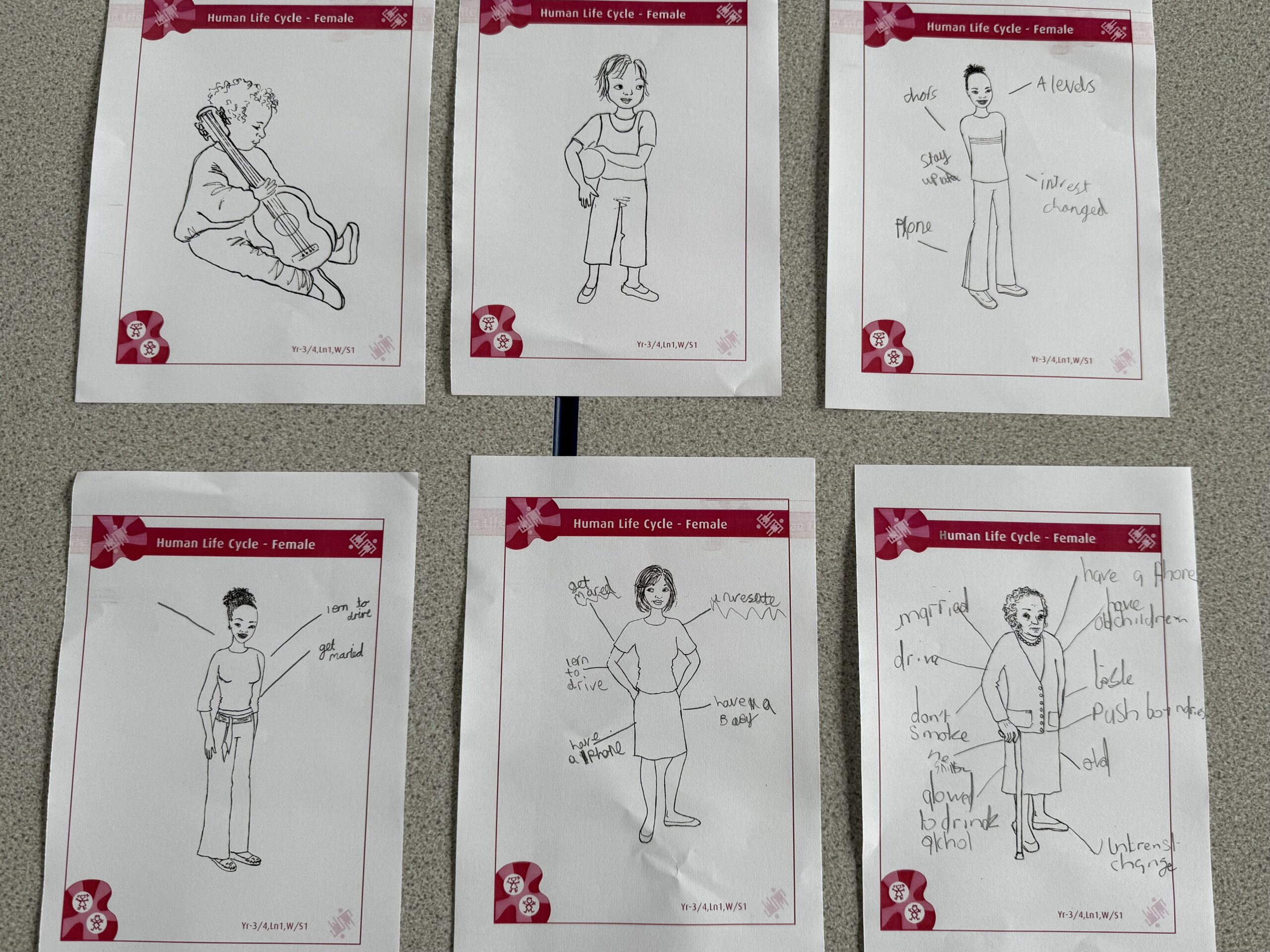 For example, when we are born, we have no responsibilities and our grown ups look after us constantly. As we grow older, we have more freedom and we realised that with freedom comes more responsibilities like cooking for yourself, having a job and learning to drive.
Growing and changing is good because there is lots to look forward.
Growing and changing is good because we can try new things.
Help at home by discussing a change that is coming up soon. How do you feeling about moving up to Year 4?
Living & Learning: RSE
Over the last few weeks in Year 4, we’ve been exploring relationships and change.
We’ve discussed that our relationships should always be happy and healthy. We gave ideas for how we can make sure this is the case:
- We always respect each other.
- We are kind to each other.
- We try to help each other.
- We listen to each other.
If we don’t feel like our relationships are happy and healthy we should always speak to a trusted adult.
We then looked at the human life cycle and spoke about some of the changes that happen as we get older. For example, when we are born, we have no responsibilities and our grown ups look after us constantly. As we grow older, our bodies will change and we have more responsibilities like cooking for yourself, having a job and learning to drive.


Help at home: by discussing a change that is coming up soon. How do you feeling about moving up to Year 5? What things might change?
Forest School
Year 6 have started Forest School again. Whilst today was once again raining, hopefully the next few weeks will be better weather. However, please remember to send your child in with waterproof clothing and a change of shoes.
Today, the children played tug of war, made toast on an open fire and practised their fire making skills.


