Maths: calculating with 1,000
In Year 4, we’ve been looking at the structure of 1,000 in maths.
There are 10 hundreds in 1 thousand.
There are 100 tens in 1 thousand.
There are 1,000 ones in 1 thousand.
Understanding the structure of 1,000 then helps us with our calculations.
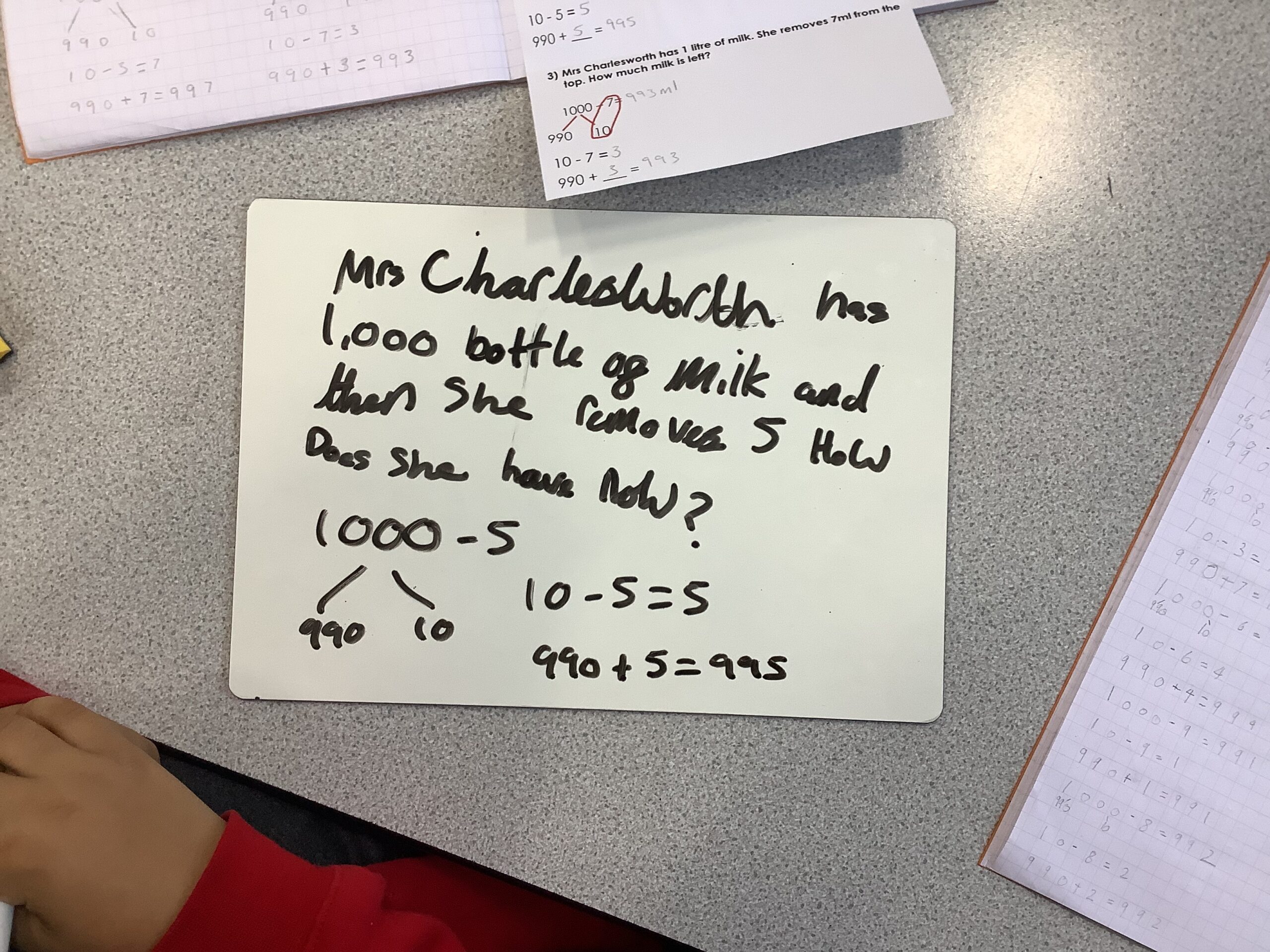
When subtracting ones from 1,000, we can partition into 990 and 10 to help us.
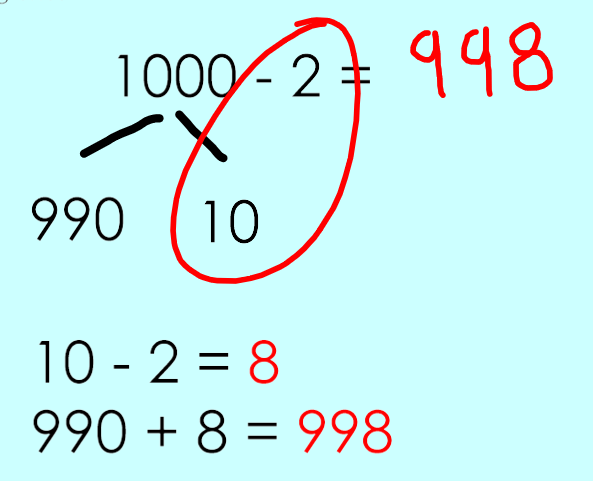
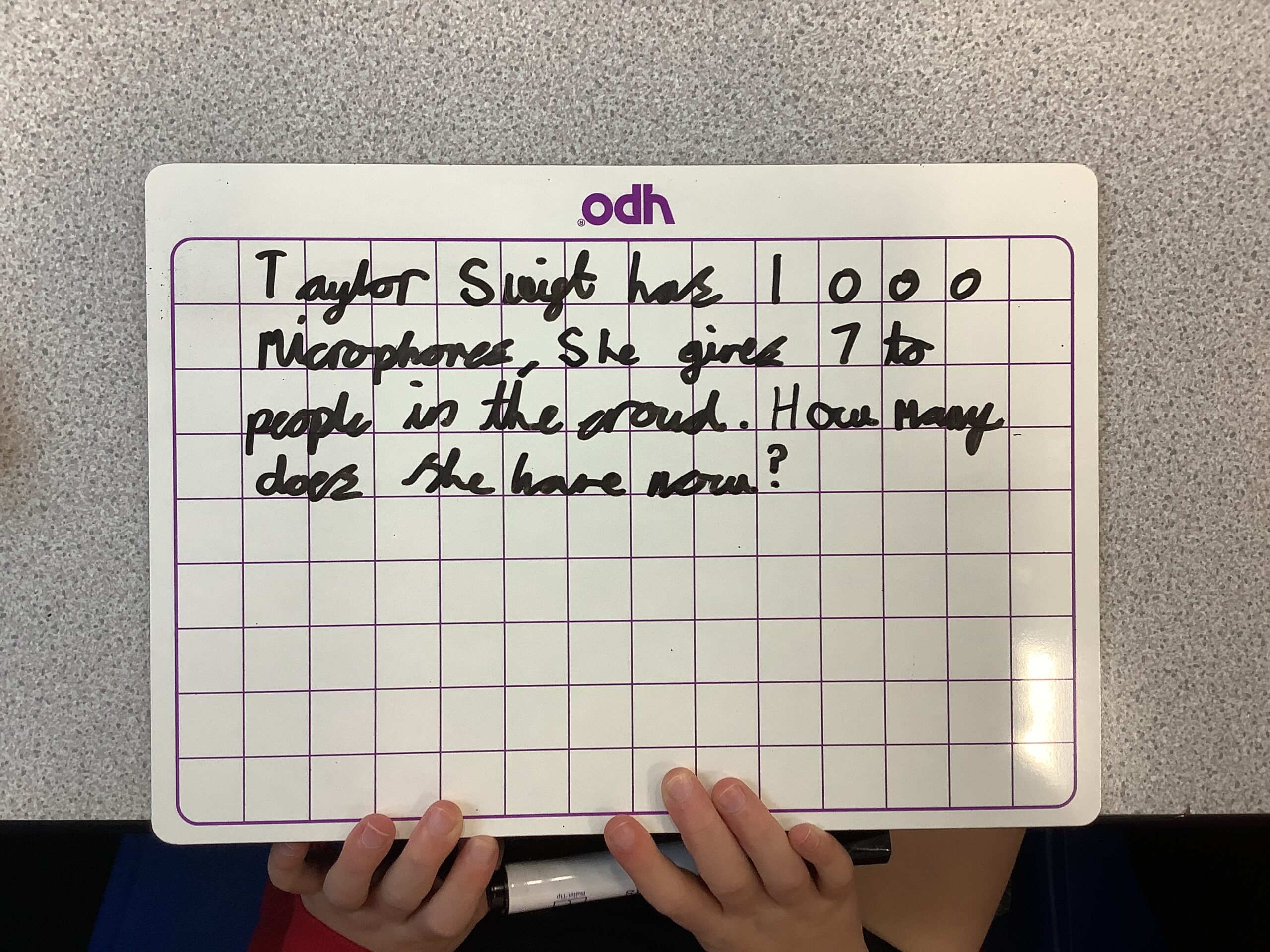
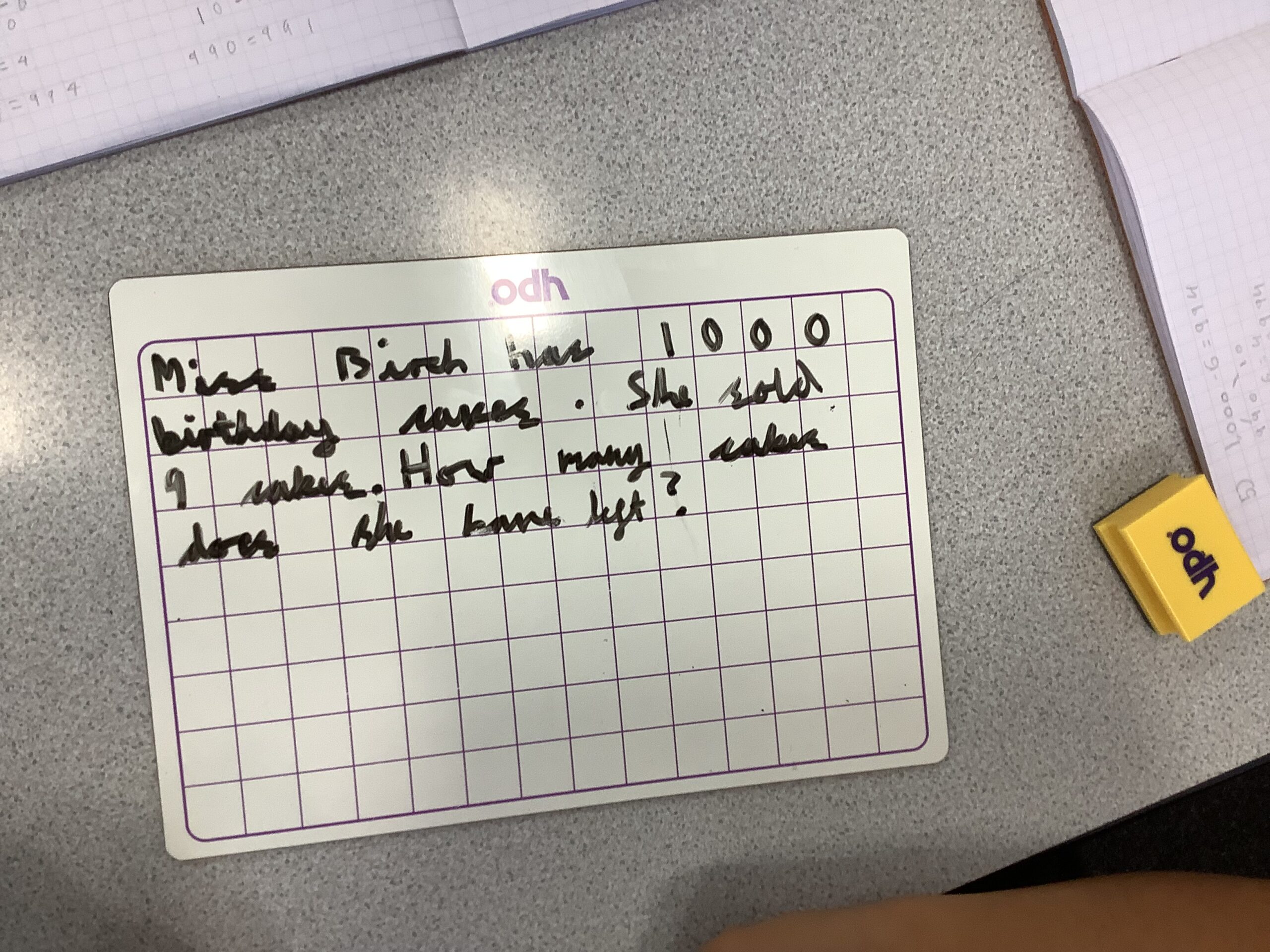
Once we were confident, we had a go at writing some of our own worded problems for subtracting from 1,000.
Help at home: have a go at these questions (remember to partition if you need some help):
1,000 – 5 =
1,000 – 8 =
1,000 – 3 =
1,000 – 6 =
Junior Leadership Team
Tomorrow, Year 3 will spend time discussing and planning their JLT speeches. Then on Thursday, if they would like the opportunity to become a leader, they will deliver their speeches to the class.
What makes a great leader?
What can you do to help your class?
What strengths do you have?
Make your ideas realisitic!
Help at home by practising how your child can deliver their speech.
Top tips:
- face the audience
- project your voice
- talk with prosody
2-page spreads!
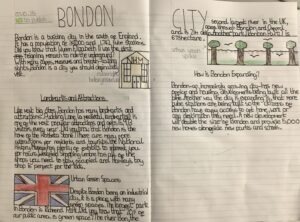
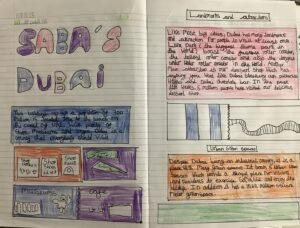
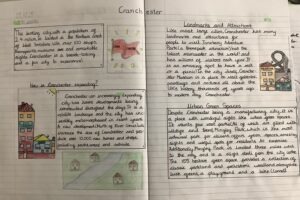
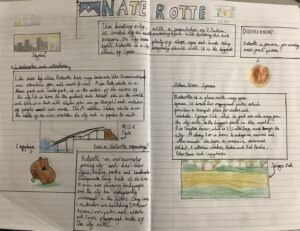
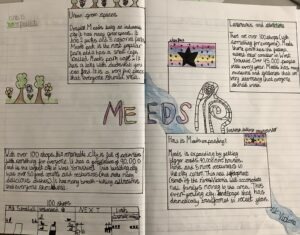
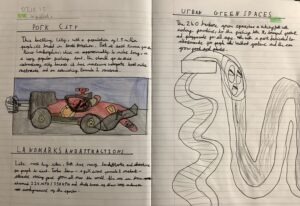
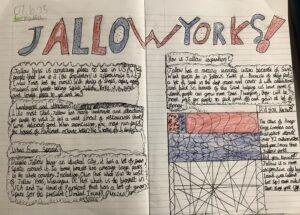
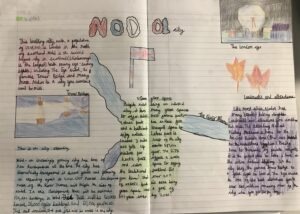
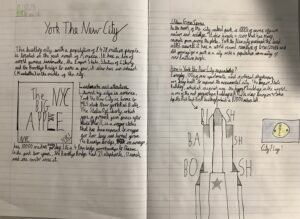
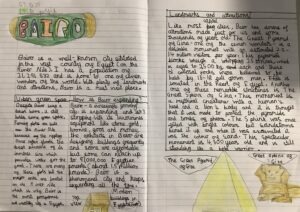
Year 6 have been writing about a fictional city. They were able to create a city of their choice using a city in real life as inspiration. They needed to include different sentence starters, geographical vocabulary and relative clauses.
They published their brilliant work in their topic books to show off their knowledge about urban green spaces.
Reading: Book Club
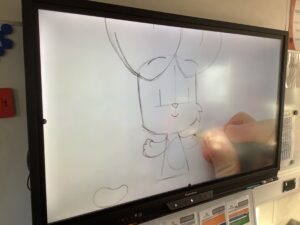
In Book Club, Year 6 explored the website ‘Authorfy’. We focused on a comic book masterclass where authors Jamie Smart and Laura Ellen explained how they created their own comic books. Jamie Smart’s ‘Bunny vs. Monkey’ books are very popular in our class.
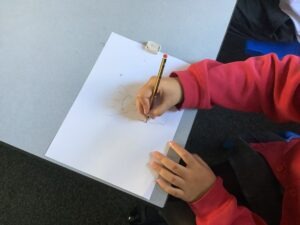
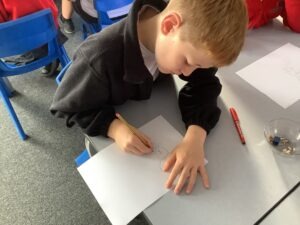
We watched a tutorial and then had a go at drawing our very own Bunny. For the rest of the lesson, the children created their own comic books.
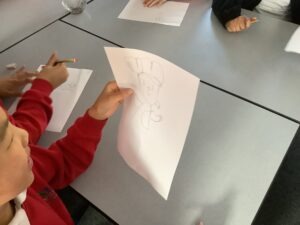
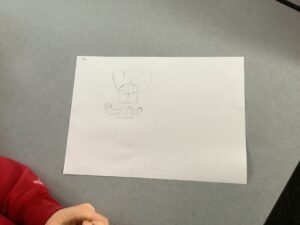
Help at home: Which is your favourite Bunny vs. Monkey book and why? What other author’s comic books have you read?
Poetry Picnic
The poem we’ve been learning this week is called Leaves Are Falling. They’ve really enjoyed this one and performed it with breezy gusto! The children loved joining in with the actions and exploring all the swirling, twirling movements of the autumn leaves.
Autumn 1: week 6
Look at us – we’re artists!
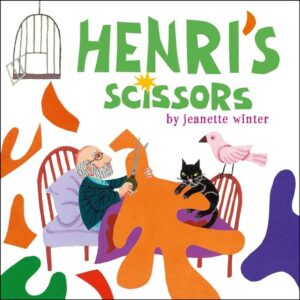
We’ve been learning all about what an artist is. After reading Henri’s Scissors, we talked about the key events in Henri Matisse’s life. He loved to paint, but later in life he started making beautiful pictures using only scissors and paper!
We looked at Matisse’s bright and colourful artwork and shared what we liked (and didn’t like!) about it. Using our cutting skills, we made our own collages by cutting out different shapes and arranging them into creative designs. We had so much fun exploring colour, shape, and imagination—just like Matisse did!
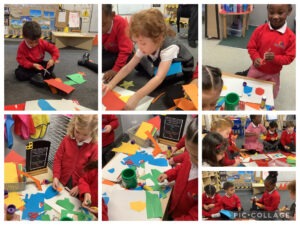
Help at home: Practise your cutting skills.
Phonics Superstars!
The children are becoming real phonics superstars! Every morning, they eagerly help each other get their phonics packs out and ready to learn. We’re proud to share that we have now learned all of the Phase 2 phonemes for this half-term.
Over the next two weeks, we’ll be focusing on practising our blending skills and recapping all of the phonemes to strengthen our reading confidence. Well done, everyone!
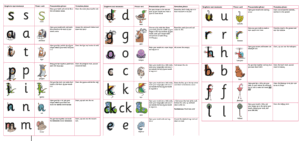
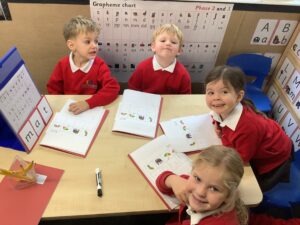 Help at home: Use your phonics home learning book on a daily basis. Practise saying the pure sounds and writing the graphemes.
Look how we’re growing!
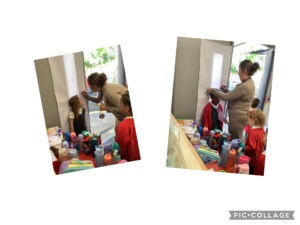
This week, we measured how tall we are. Throughout the year in Reception, we’ll keep checking to see how much we’ve grown.
 Home learning challenge
Reminders
- Water bottles: Please ensure your child brings a filled water bottle to school each day.
- Lost uniform: We’re seeing a lot of jumpers and cardigans go missing. Please label all clothing clearly with your child’s name to help us return lost items.
-
Parent-Teacher Zoom Meetings: These are coming up soon. Don’t forget to sign up if you haven’t already!
Reading: It’s so important!
We hope that you’re enjoying reading your child’s library book with them. We call this a ‘love of reading’ book – to do just that, encourage a love of reading for your child! Reading to and with your child can have a huge positive impact on your child’s education.
This research is a powerful message of the impact you can have when reading to/with your child:
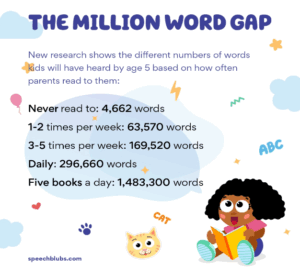
At school, your child reads a physical book four times a week – with a focus on teaching phonics skills. This is then sent home as an eBook. The purpose of the eBook at home is to celebrate your child’s success (in phonics skills). Your child should be able to read most of this book confidently and really feel like a reader.
We’ve chosen to use eBooks at home for many benefits. Allocating eBooks frees up about two hours of teacher or TA time changing books – now spent teaching reading!
Here’s some information on how to access eBooks but if you’re having any problems please speak to your child’s class teacher.
Happy reading!
Science: Jane Goodall
Yesterday, Year 3 watched this Newsround clip about Jane Goodall.
Jane Goodall is our featured scientist for our current biology topic: skeletons, movement and nutrition.
Sadly, Jane Goodall recently passed away. Year 3 had a discussion about her life and her achievements as a female scientist. She made amazing discoveries while she studies chimpanzees in the wild.
She links to our learning because we are studying animals including humans. We’ve classified and compared skeletons and we’ll be doing the same with animals diets too.
Help at home by researching more about Jane Goodall with your child. Here’s a useful link to get you started: https://www.natgeokids.com/uk/discover/animals/general-animals/jane-goodall-interview/
Science – Touch
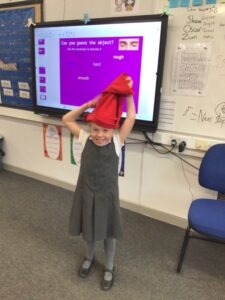
This week in science we carried on learning about our senses. This time we focused on touch. We worked really hard on identifying the sense and the receptor. We then took part in an experiment where we were blindfolded and touched a number of different objects. In which we then described what we felt, using words such as soft, hard, rough, smooth and rigid. We did really well with this and worked very hard on identifying what we had touched. 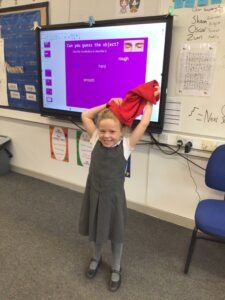
Topic – Fieldwork and our geographers.
This week in our Topic lessons we have been learning about fieldwork and then taking part in our very own fieldwork. We learnt that it means going outside the classroom to explore, investigate, and discover things. Our fieldwork investigation was to go around the green outside and count all of the trees in the space. We split into two groups, then went out one group at a time taking part in our investigation. Once both groups had gone we then compared our results to see if we had all counted the same amount.