
Topic: History.
Currently in History, we are looking at the historical concept of innovation. The children have learnt about the inventions and innovations of the two time periods we are focussing on this unit: Vikings and the Islamic Golden Age. In this lesson, the children created a one-page spread about the IGA’s innovations.


This learning will link to our Writing as we will be discussing which civilisation was more advanced.
Help at home: Which innovation was the most important and why? Discuss how their innovations are still relevant to life today.
PE: Dance
We are dancers!
In PE this half term, we’ve been doing dance. We’ve been exploring different elements of dance and how we can use them when creating a final group routine.
- Space – pathways
- Tempo – time
- Dynamics
We started the half term by exploring different pathways – curved, angular and freeform. We imagined we were in snow and had to picture the trail we’d be leaving as we moved through the space.
Next we looked at tempo. This is the speed at which a dancer moves: fast, slow, acceleration, deceleration or free flowing. We spoke about the rhythmic use of the body to music, sound, no sound or voice.
Finally, today we thought about different dynamics in dance. These are the movements we make and the quality of these movements. The three we looked at were:
- swinging
- suspending
- vibrating


I’ve been amazed by Year 4’s dances every week – they’re fantastic! All of your children are confident dancers and demonstrate all three elements brilliantly.
Help at home: put on your favourite song and ask your child to dance to it while thinking about the three elements of dance.
Leeds Cross Country final
We were very proud of our five Key Stage 2 children who took part in the Leeds Cross Country Final at Temple Newsam today.
In muddy, slippy conditions they all put in 100% effort in their races and were a great support for each other. The children should feel proud of competing against the best runners from across Leeds.
We’ll wait to hear if we have any qualifiers for the next round, the West Yorkshire Final.
Thank you to parents who helped with transport and supported at the event.


Topic – Grandparent visit


Help at home:
Have a chat with your child about the toys you played with as a child. Are there any similarities or differences?
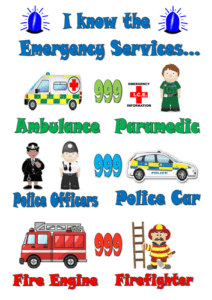
Living and Learning: I know the importance of the emergency services.
As we move onto another week of our half term let’s have a look at our previous Living and Learning statement from last week; I know the importance of the emergency services. Our wonderful Year 1s worked really hard on their understanding of the importance of the emergency services. They shared some great ideas and questions around our statement. One question that stood out was “Can we call them at any time (of the day)?”. This was one of many great questions our Year 1s had during last week’s L&L session.
Well done Year 1!
Living and learning: internet safety – consent
Today, we learnt about how we can stay safe on the internet by giving (or not) our consent.
Consent means the permission for something to happen or agreement to do something.
Which of these scenarios do we need to ask for consent to do?

Help at home by reading through these and deciding which you’d need to find consent to do.
We must always speak to a trusted adult if we are unsure of what to do or if something happens online that we need help with.
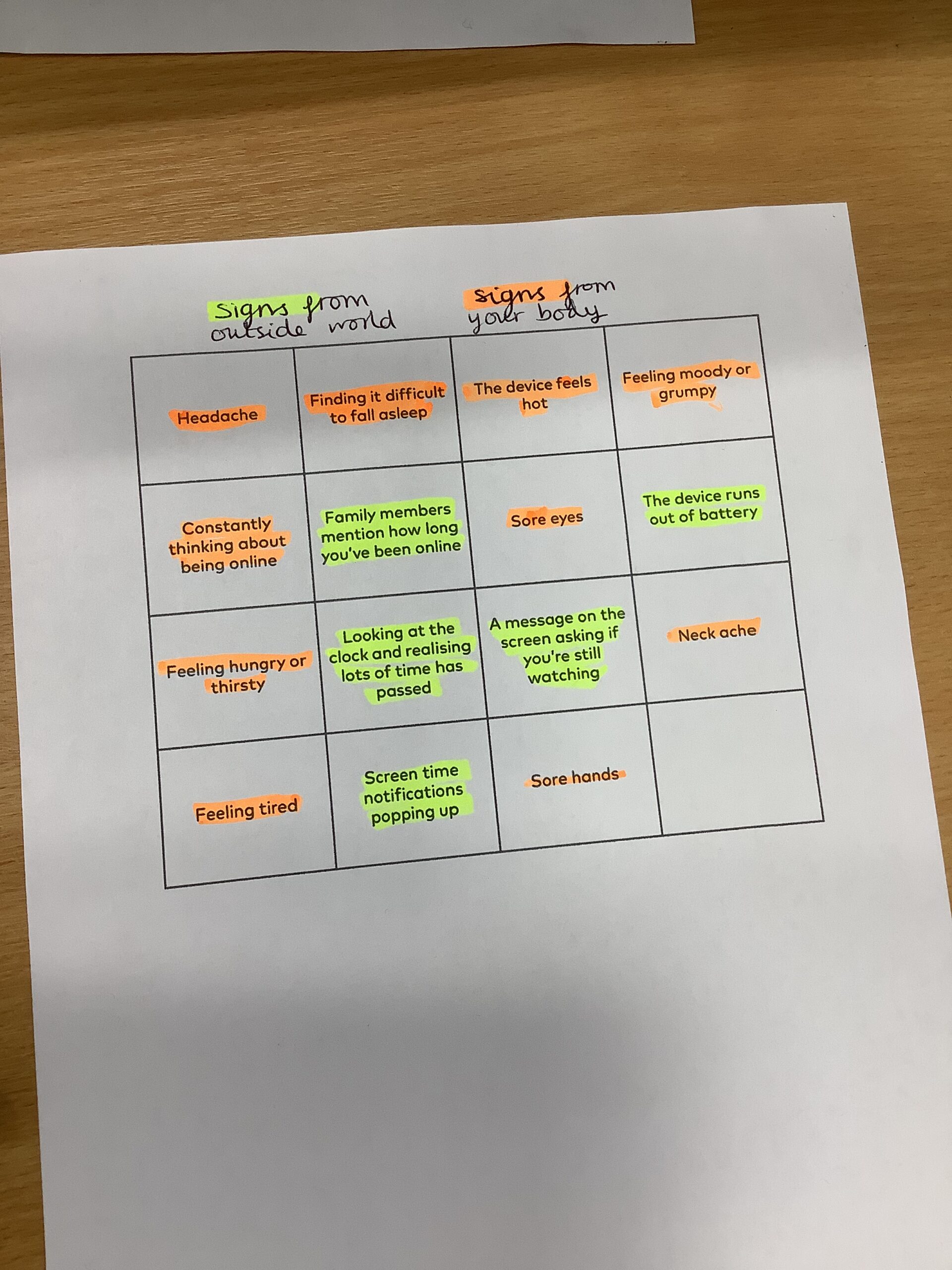
We also discussed the importance of having a healthy balance of online and offline behaviours. We looked at different signs we might come across that tell us that we need a break from our screens!
Drop Down Morning
Every half term we have a drop down morning. This is a morning where we dedicate our learning time to recapping and revising topics we have already covered in different year groups. Today, we went over previous History, Geography and Design Technology topics. We do this in order to keep this knowledge fresh in the children’s minds so that they can easily recall it and use it in future learning.
We looked back over what makes a good design criteria and came up with our own design criteria for an umbrella.

We looked at Ancient Greece and considered why it was such a golden age for innovation (something that links really clearly to our topic on the Early Islamic civilisation).

Finally, we recapped what we had learnt about York and Venice and how the two cities are both dealing with similar problems.

The children really impressed with their knowledge retention and engagement.
Help at home by asking what the children remember about these subjects.
Poetry Basket: A little house
This week’s poem is called A Little House. Hope you enjoy the performance!
We’ve been thinking about and using the words curling and drifting.
Spring 1: Week 4
This week, we’ve been super busy being superheroes.
On Tuesday, the children arrived in the classroom to discover that the Evil Pea had been up to his mischievous tricks. He had trapped the super veggies in a bowl! We used our fantastic detective skills to search the classroom and spot clues he had left behind. We made wanted posters and displayed them around the school to help find him.
 On Wednesday, the Evil Pea was up to his mischievous tricks once again! He had taped the super veggies to the window and left us a message saying, “Mwah ha ha! You can’t catch me!”
 On Thursday, we couldn’t believe our eyes… the Evil Pea had trapped the super veggies up high in a basket. We really had to use our detective skills to help capture the Evil Pea.
 What a busy week we’ve had! They’ve wowed us with their amazing creativity and imaginative play. From finding and writing signs for clues to designing and building traps, we’ve seen some fantastic teamwork.

 Maths
In Maths, we continued to develop our understanding of composition. We used the Hungarian number pattern (die pattern) to explore ways of making 5. We sang 5 Little Aliens in a Flying Saucer to help remember the pairs of numbers that make 5.
 On Wednesday, we noticed there wasn’t enough space on the die frame for 6 aliens. To extend our learning, we used a double dice frame to explore numbers 6 and 7, understanding them as 5 and a bit.
Help at home: Number bonds to 5 game
- Put 5 small things into a bag.
- Ask your adult to take some things out of the bag.
- Then, you take the rest of the things out of the bag.
- How many things does your adult have? How many do you have?
- How many altogether?
Phonics
This week, we learnt our final phase 3 graphemes (air, er) and tricky words (are, pure, sure)
Next half-term, we’ll revisit all of the phase 3 digraphs and trigraphs. We’ll also be reading words with:
- double letters (h-a-mm-er)
- two or more digraphs (ch-a-tt–er)
- ending in –ing (l-oo-k/i-ng)
- s /z/ in the middle (visit sounds like v-i-z-i-t)
- s /s/ /z/ at the end (c-oo-k-s)
- es at the end (t-or-ch-es)
Reminders
- Phonics Phase 3 Stay & Learn – Wednesday 4th February
9:00–9:20am – Phase 3 phonics presentation
9:25–10:00am – Watch a Phase 3 phonics lesson
Due to limited space, one adult per child may attend. - Parent-teacher meetings – Tuesday 10th & Thursday 12th February
I look forward to chatting to you all about your child’s learning. - School trip – Wednesday 25th February
Latin: Translating sentences
Recently, Year 6 have been translating Latin sentences into English. When doing this, you need to follow a method:
- Look for the verb and the ending and translate it.
- Look for the subject of the sentence and translate it.
- Look for the object of the sentence and translate it.
- Look for adverbs or any other words.
Sometimes there is no subject…

… or object in the sentence.

Help at home: Have a go at translating this sentence.
