
Year 4 class assembly!
Year 4 have been given their scripts to prepare for their class assembly next week! It would be brilliant if over the weekend your child can try to learn their lines off by heart for Wednesday.
We can use our oracy skills (speaking and listening) to make sure our performance is as strong as possible:
- project our voices loudly and clearly
- keep eyes on the audience
- read with expression
- good posture and open body language
We’re looking forward to seeing you there, if you can make it!
Help at home: practise your child’s lines with them.
Living & Learning: emergency services
Today in L&L, Year 4 were learning all about the emergency services. We began by defining what an emergency is and how would we know if we’re in one.
An emergency is a serious, unexpected, and often dangerous situation requiring immediate action.
In the UK, we have four emergency services who are highly trained people whose job it is to keep us safe from danger:
- Fire Service
- Police Service
- Ambulance Service
- Coastguards
We spoke about what we should do if we’re ever in an emergency…
CALL 999
In the UK, we call 999 in an emergency. However, if you call the American number (911) you’ll still get put through to 999.
After discussing how a 999 call goes and how to make a good one, we used this to practise making the calls. One of us was the caller and the other was the handler.


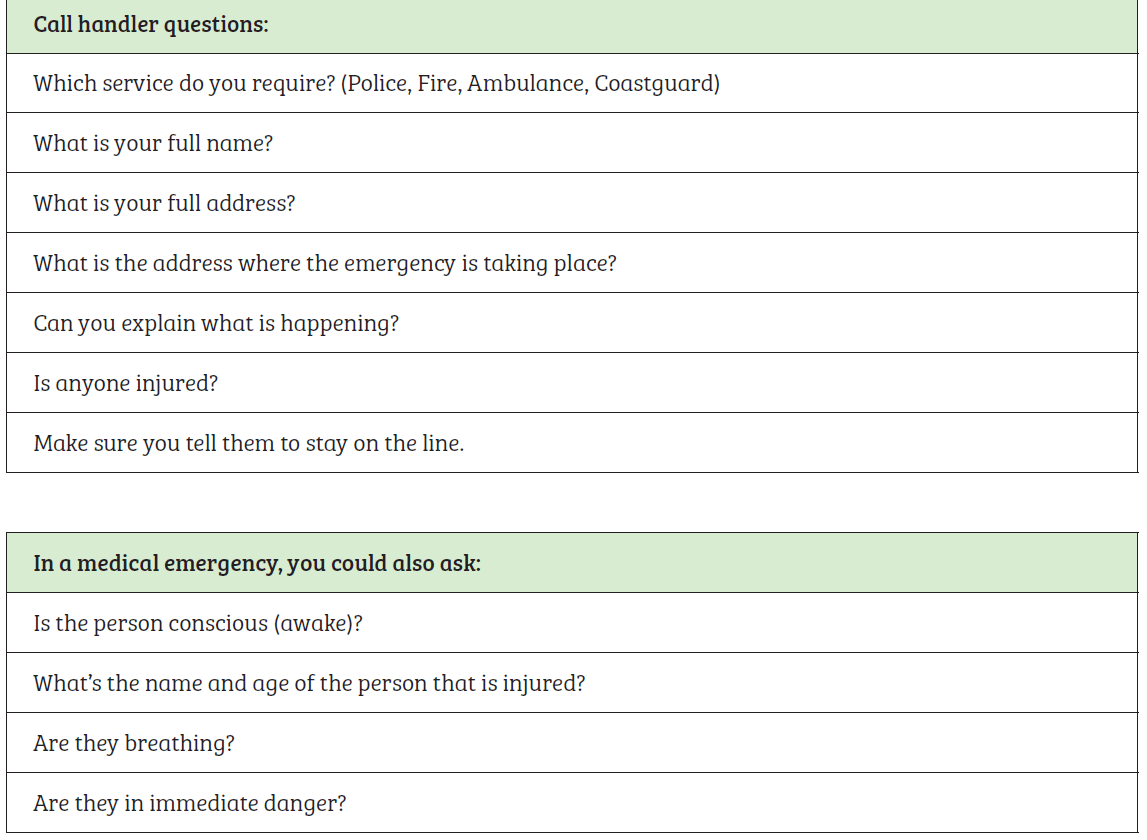
Help at home: practise a pretend 999 call with your child.
History: debates
Today, Year 4 held a debate over whether the Iron Age Britons should’ve made peace with the Romans or resisted their invasion. If the Celts made peace, the Romans would’ve allowed them to continue living and farming as they were. However, they would have to pay the Romans tax.
We discussed some arguments both for and against making peace…
For:
- The Romans had a stronger, more powerful army so if the Celts resisted they would be likely to die.
- The Celts could still live on their land and continue farming like before.
- The powerful Roman armies would protect the Celts from other tribes invading.
- The Celts could live fear free lives knowing they were protected by the Romans.
Against:
- How could the Celts know whether they could trust the Romans would stick to their word and protect them?
- They would have less food for their families as they had to pay tax on their crops.
- They had less crops to trade because of the tax so they would lose money.
- Without enough food or money, the Celts would live miserable lives.


We learnt some top tips for debating:
- Have confident body language.
- Prepare arguments to counter your side’s weaknesses.
- Use key debating vocabulary (e.g. “You make a good point. However…”).
- Listen carefully to the other side so you can respond appropriately.
- Project your voice.
Help at home: practise the top tips for debating at home. Should children have to go to school on weekends? Should video games be allowed in school?
Authorfy!
Authorfy is a website that we use in school to help develop children’s passion for reading. In Year 4, we often use it in our Friday Book Club sessions to explore new authors, find out more about our class novel or complete fun activities based on some brilliant books. We particularly enjoy the 10 minute challenges set by an author.
This year, Authorfy is free for everybody to access to celebrate the National Year of Reading 2026! Therefore, you can explore the website at home and help enrich your child’s reading.
Help at home: visit the Authorfy website by clicking on the hyperlink and explore what it has to offer.
- Can you and your child complete a 10 minute challenge together?
- Can you find an author masterclass from one of your favourite authors?
- Can you find a book that you want to read next?
History: Roman Empire
We’re Emperor Claudius!
Today, Year 4 put themselves in the shoes of Emperor Claudius after he successfully invaded Britain. We wrote speeches, as Claudius, telling the Roman citizens that Britain had been successfully invaded and what this meant for Rome.
When presenting our speeches, we made sure to think about our oracy (speaking and listening) skills:
- voice projection
- expression
- clarity
- pace
- volume
- body language

We heard some brilliant speeches (and some very convincing Claudius’!). I was really impressed with your children’s historical knowledge, writing and oracy skills.

Help at home: ask your child about Emperor Claudius and why the Romans wanted to invade Britain.
Our new class novel!
In Year 4, we’ve started our new class novel…
Queen of Darkness by Tony Bradman.
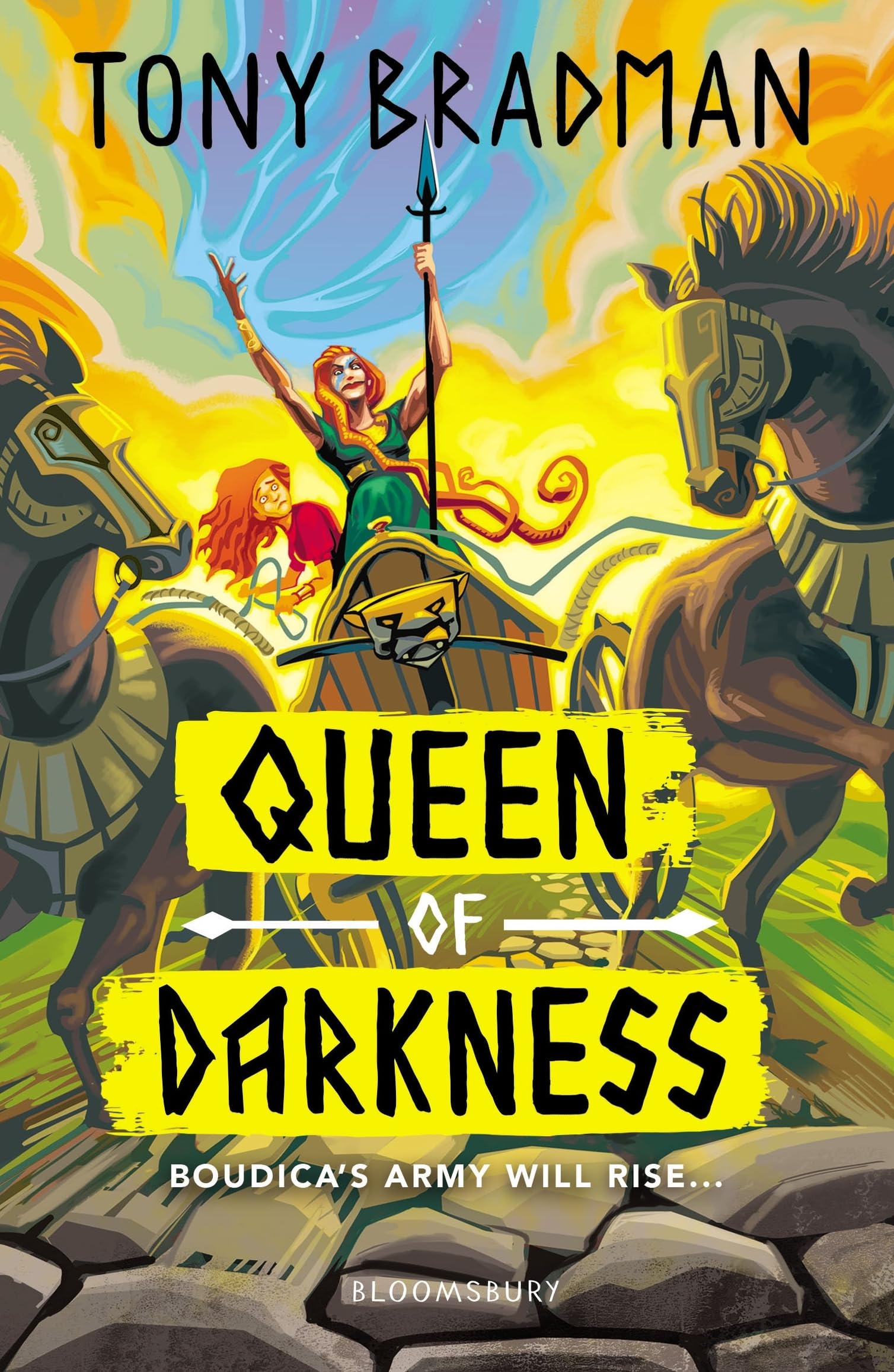
It links directly to our new history topic: Romans and Anglo-Saxons.
“Young Rhianna is relieved when Queen Boudica takes in her and her sister when their parents die. But there’s a darkness in Boudica that’s waiting to be unleashed and the Romans will suffer for their crimes against her. Soon, Rhianna witnesses much more than the kindness that Boudica has shown her and her sister. There’s a battle coming… and a terrible aftermath.”
Help at home: read the blurb with your child and make some predictions for what they think will happen in the story.
PE: Yoga
This morning in PE, we had our second Yoga session. Before we began, we spoke about the importance of Yoga for our strength, flexibility, coordination and mental health.
We started with some calm breathing exercises which made us feel relaxed. We noticed how this breathing slowed down our heart rates and made us feel much more peaceful.
We then learnt some of the Yoga poses: Warrior I, Warrior II, Triangle, Dancer and Twisting Dragon. It was difficult at times to hold our balance but we discussed how we could help with this…
- engage your core
- slow, deep breaths
- fix your gaze at a point
After getting the hang of each pose, we put them together to make it flow. We moved from Warrior I into Warrior II and then down to Triangle. It took lots of control and patience to move fluidly from one pose to the another.


We ended the session with a guided meditation about our happy places. I was very impressed with the children’s focus and engagement.
Help at home: ask your child to show you the poses they learnt this week in Yoga.
Living & Learning: democracy
This week in L&L, we’ve been focusing on one of our British Values – democracy. Democracy means that power is in the hands of the people.
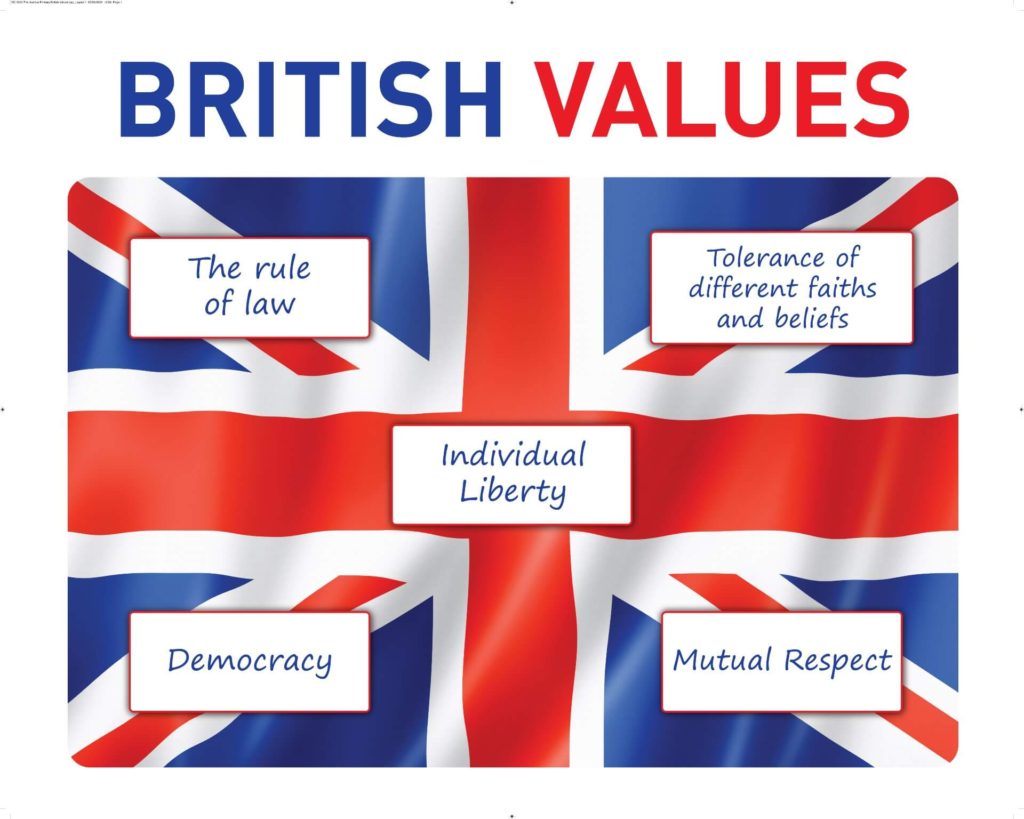
The word democracy comes from Greek:
- dêmos – people
- krátos – power/rule
We’ve learnt about democracy in our country and how this works. The children were really interested in learning about the central and local government and the roles of political parties. We also discussed how we’re involved in democratic decisions at school:
We get to vote for how we use our reward time.
We get to vote for our JLT in school.
At the start of the year we got to vote for the name of our class reward points.
Democracy is important. We spoke about some reasons why…
- Law and order – we have laws that are created by and voted on by MPs we elect. We all have to follow them as they help keep us all safe.
- Freedom of speech – we have the right to say what we think about something as long as we do not say anything hurtful to others.
- Equality – living in a democracy helps us to treat each other fairly and equally.
Help at home: watch this video (https://www.bbc.co.uk/bitesize/articles/z76gr2p#zbxddp3) and discuss democracy in the UK.
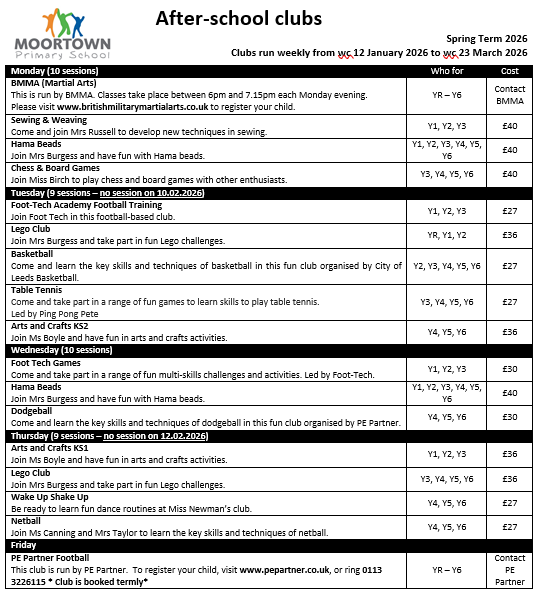
Spring term after-school clubs
UPDATE 21.01.26
The following clubs have availability and can still be booked.
Tuesday
Foot-Tech Football Y1-Y3 – last 3 places
Table Tennis Y3-Y6 – last place
Wednesday
Foot Tech Games Reception-Y3 – last 2 places
Dodgeball Y3-Y6 – last place
Thursday
Wake up Shake up Y4-Y6 – last place
The after-school clubs for next term will be available for booking on Monday 29th December ready to start w/c 12 January.
We hope your child/children can get involved with our extra-curricular activities. We will update you with club availability after the holidays.
Please contact the office if you have any queries about the after-school clubs.
We’re artists!
This week, Year 4 finished their Wassily Kandinsky inspired sculptures. We used our concentric circles, skewers and strips of black card to create these. They turned out incredibly – I was so impressed with how effective they looked. Here are some of your children’s creations…


Help at home: over the Christmas break, have a go at creating some Napaltjarri or Kandinsky inspired artwork. Think about line, colour, shape and composition.